The Crown Jewel of Göbekli Tepe
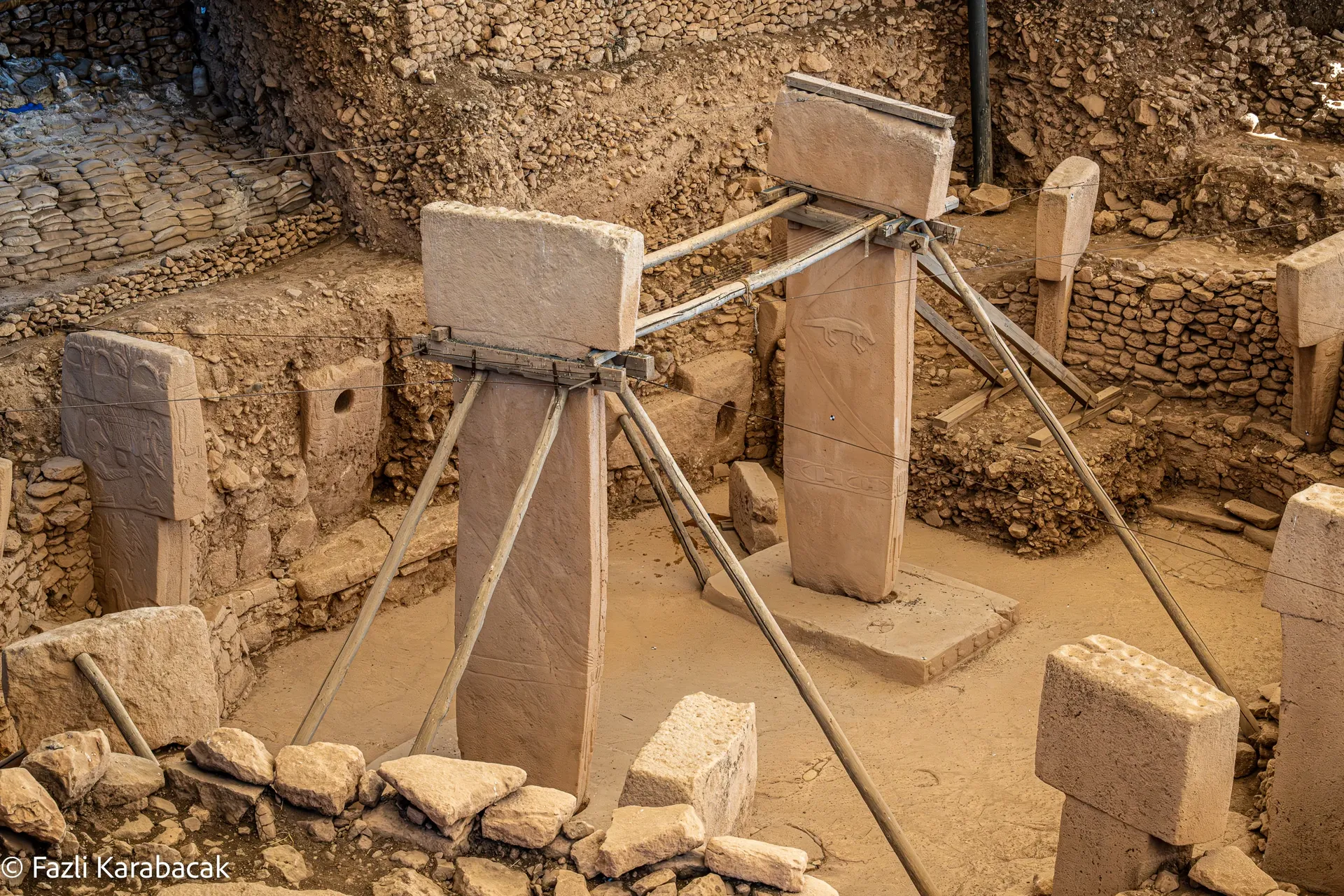
Enclosure D is the fourth circular structure discovered at Göbekli Tepe, but it is by far the largest and most richly decorated. Dating to the Pre-Pottery Neolithic A period (approximately 9500–9000 BCE), it was one of the earliest structures built at the site and represents the pinnacle of Neolithic monumental architecture.
The enclosure is roughly oval in plan, measuring approximately 12 metres across. A ring of smaller T-shaped pillars — at least twelve have been excavated — forms the perimeter, set into low stone walls. At the centre stand two massive pillars, designated Pillar 18 and Pillar 31, rising over 5 metres from floor to cap.
Today, Enclosure D sits beneath a modern protective shelter that allows visitors to view it from elevated walkways. It remains the most visited and most photographed part of the site.
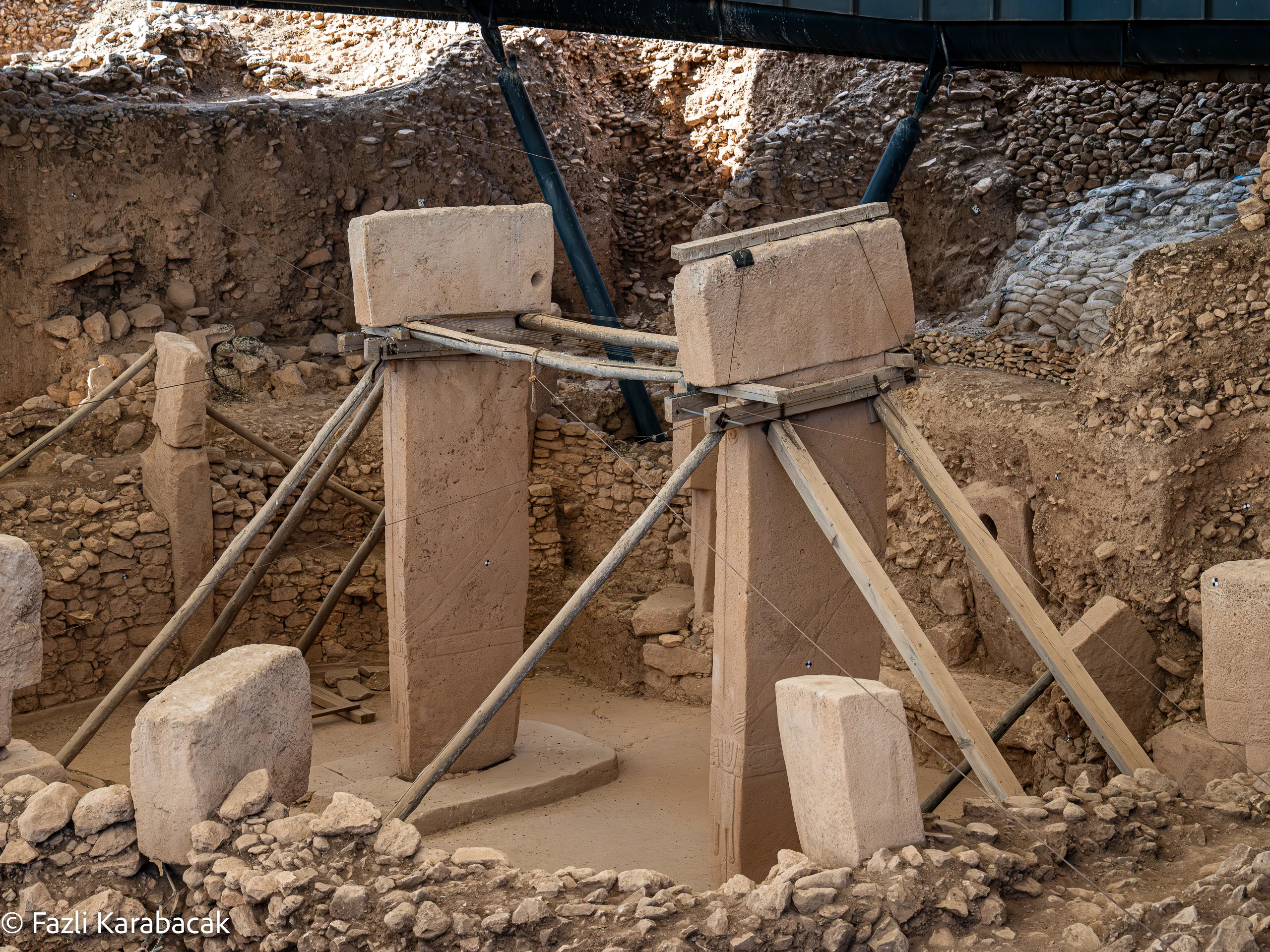
Enclosure D viewed from the eastern walkway, showing the twin central pillars and surrounding ring of T-shaped monoliths.
The Twin Central Pillars
Pillar 18 and Pillar 31, the twin central monoliths of Enclosure D, are among the tallest and heaviest at Göbekli Tepe. Each stands approximately 5.5 metres tall and weighs an estimated 10 tonnes. They were quarried from the limestone plateau a few hundred metres to the southwest and transported — without wheels, draft animals, or metal tools — to their current positions.
Unlike the peripheral pillars, the central pair are notably anthropomorphic. Both display arms carved in low relief along their sides, with hands meeting at the front above a carved belt and loincloth. The suggestion is unmistakable: these are stylised human figures. Who or what they represent — ancestors, deities, spirit guardians — is the subject of ongoing scholarly debate.
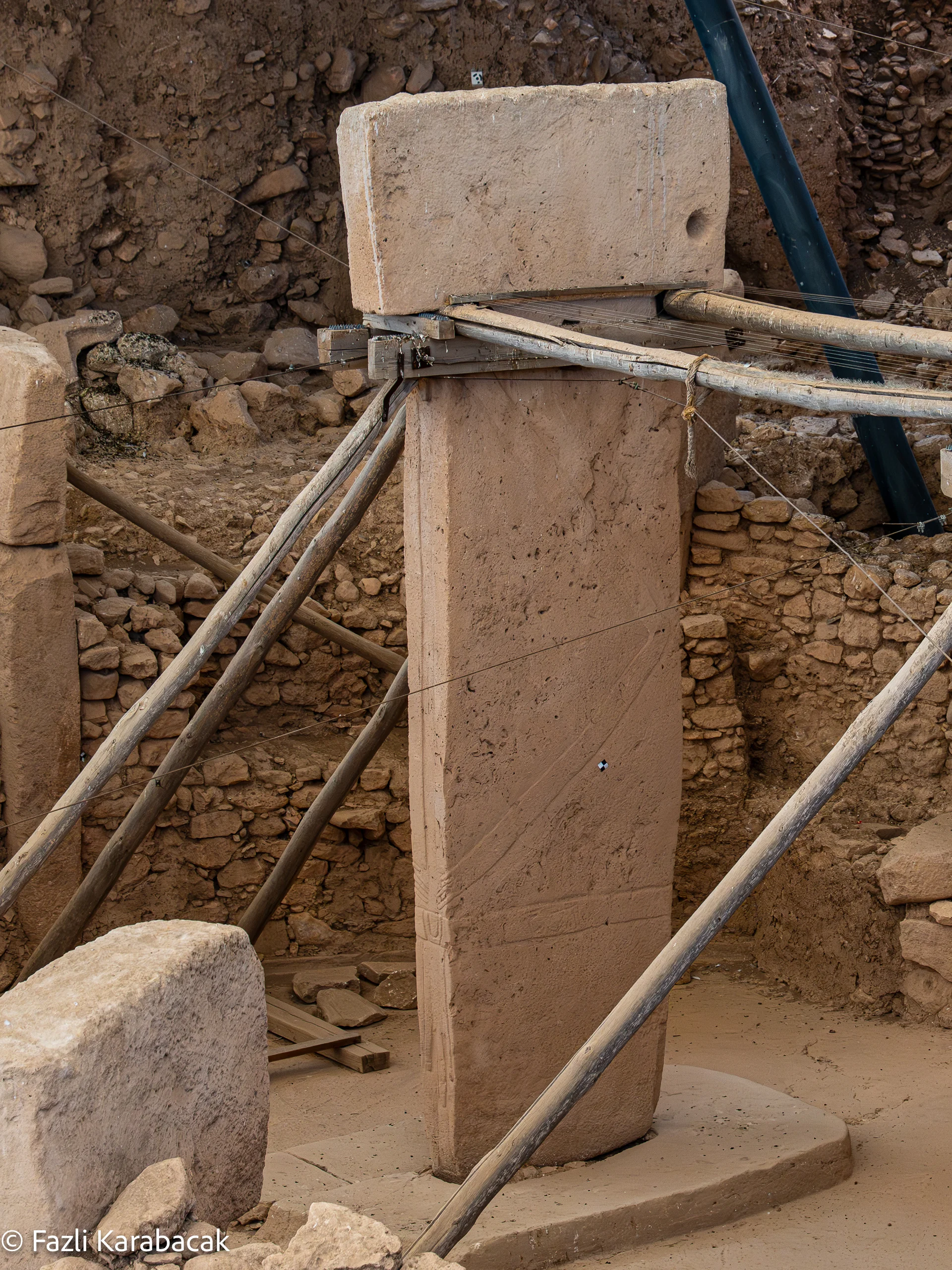
Pillar 18 showing carved arms and belt.
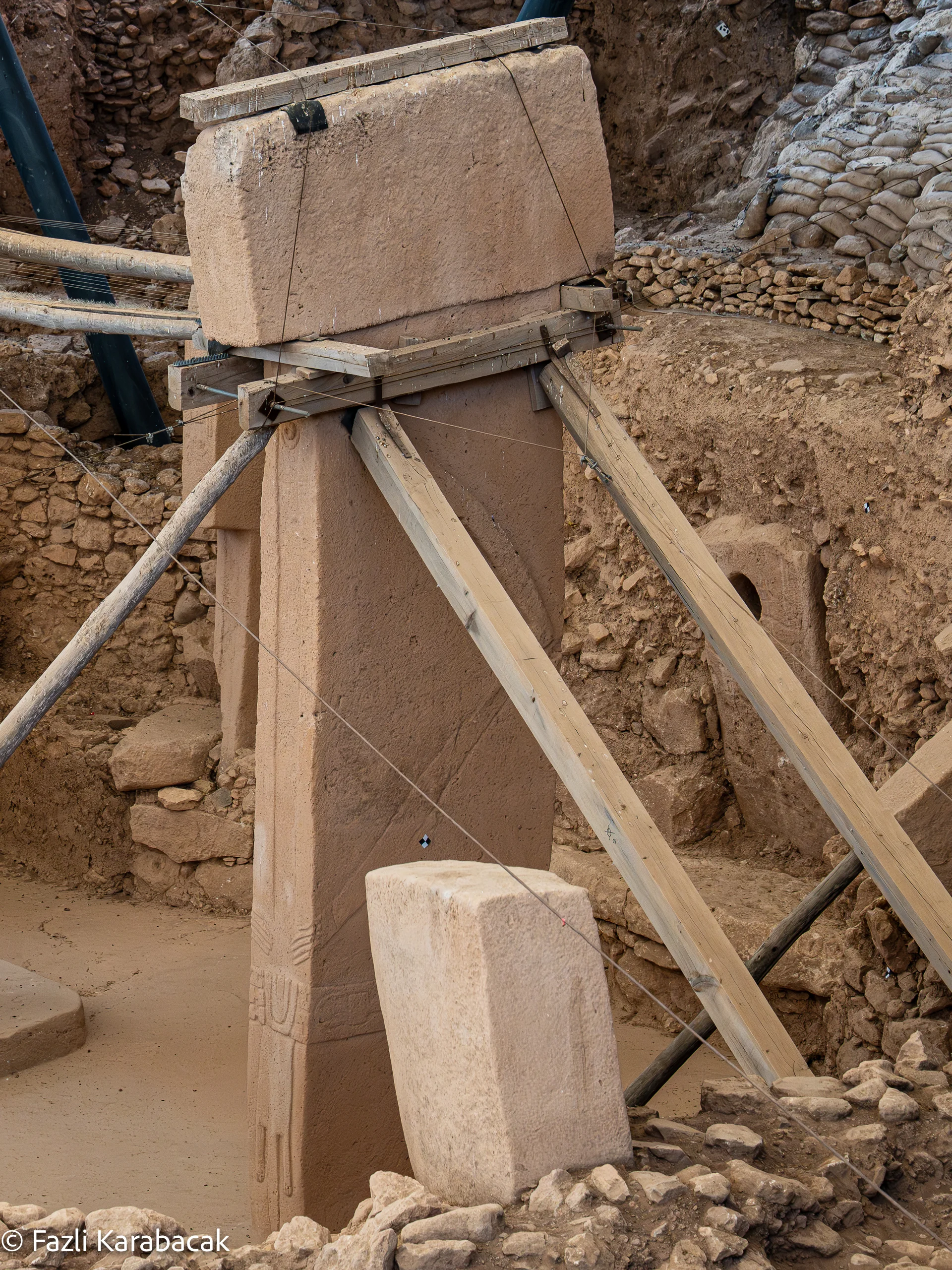
Pillar 31 with loincloth detail.
A Menagerie in Stone
The pillars of Enclosure D are covered in some of the finest animal carvings at Göbekli Tepe. These are not decorative motifs — they are large, dynamic, and rendered with striking naturalism. The species depicted tell us much about the world these builders inhabited and the creatures they considered symbolically powerful.
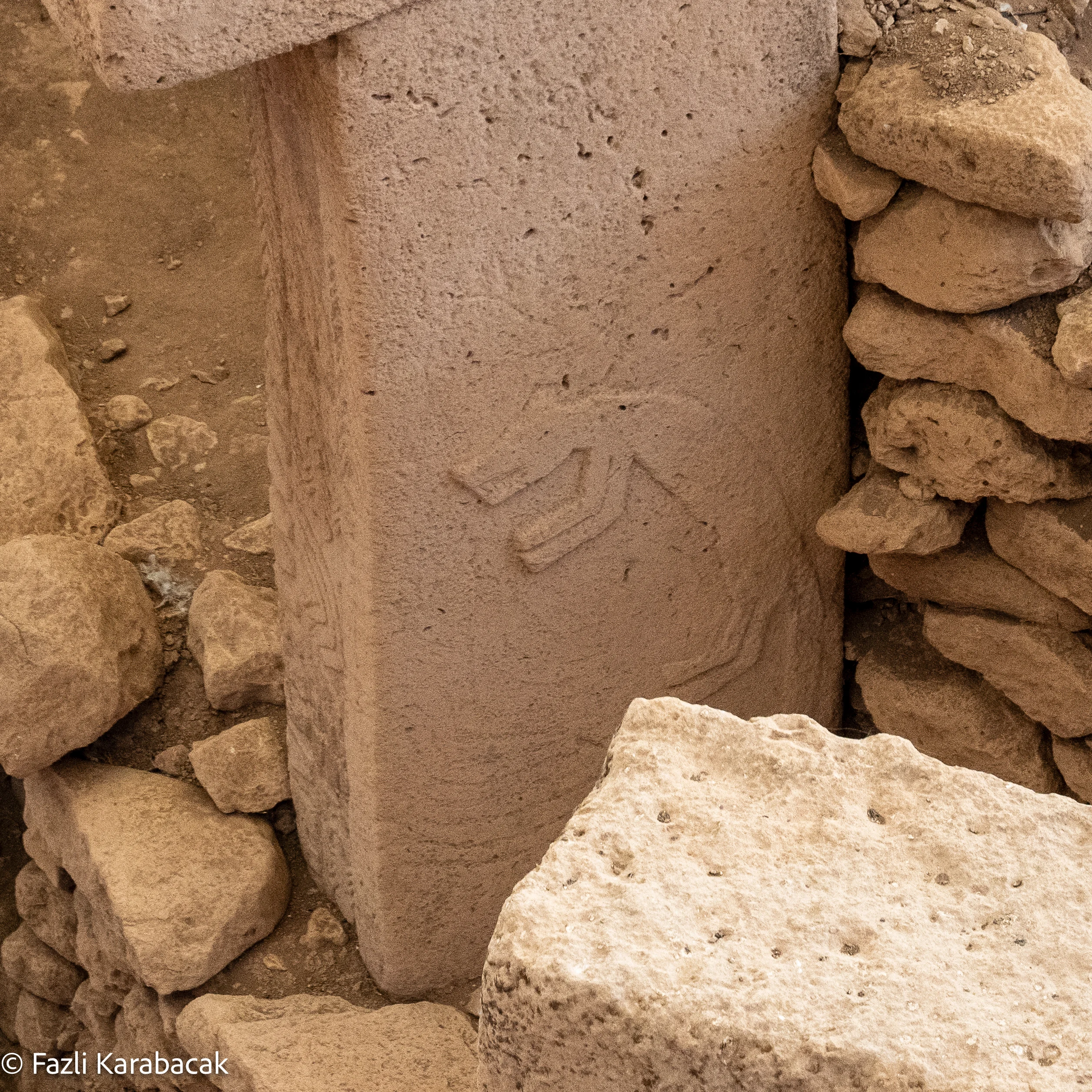
Foxes
Foxes are the most frequently depicted animal in Enclosure D, appearing on multiple pillars. One striking relief shows a fox leaping downward along the narrow side of a pillar. The prominence of foxes here and across the site suggests they held deep symbolic significance — possibly connected to death, trickery, or the liminal world.
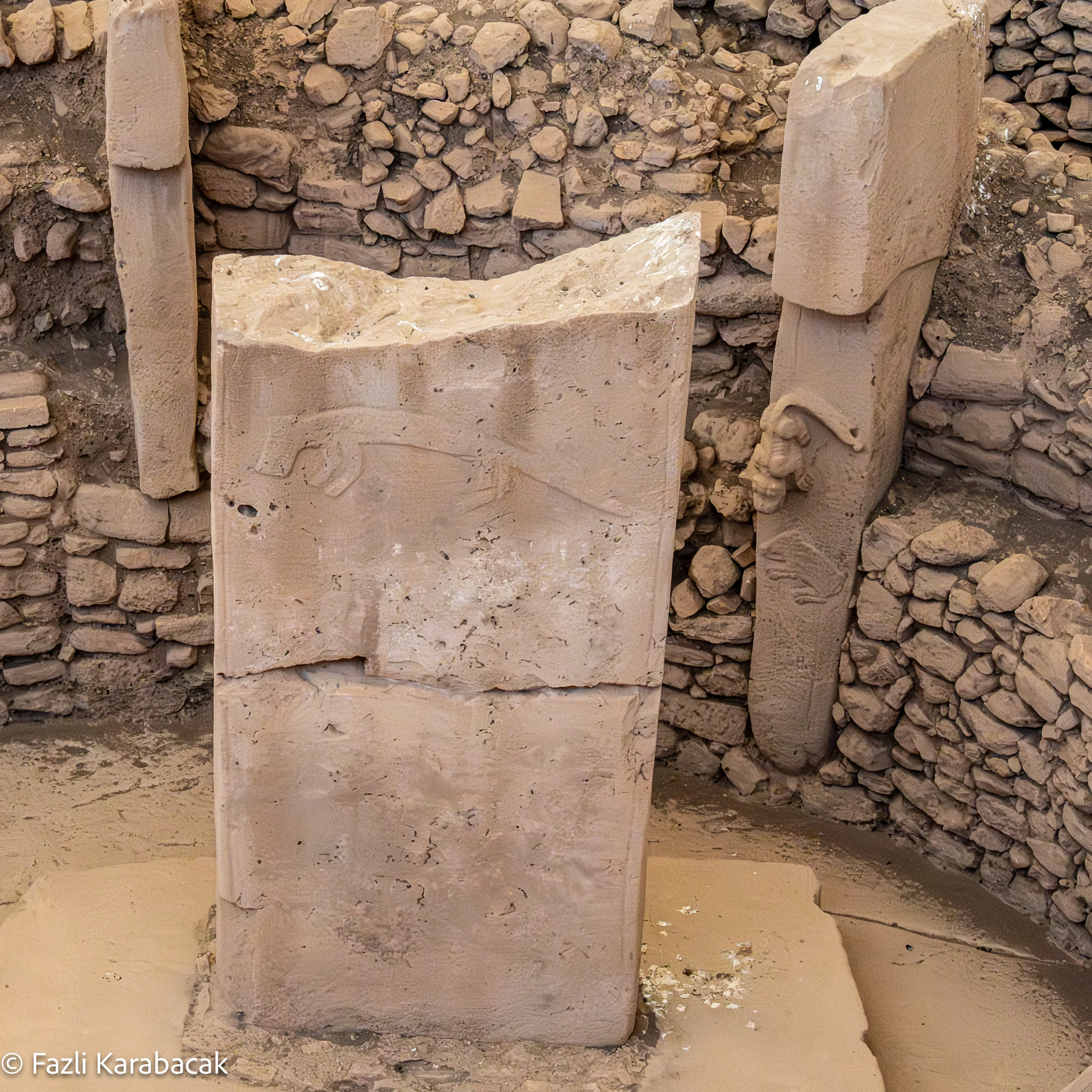
Wild Boar
A dramatic boar relief adorns Pillar 27 in Enclosure D. The animal is shown in high relief, nearly three-dimensional, with its bristly back and tusks clearly rendered. Boar were a major food source for the communities that used Göbekli Tepe, based on the faunal remains found on site.
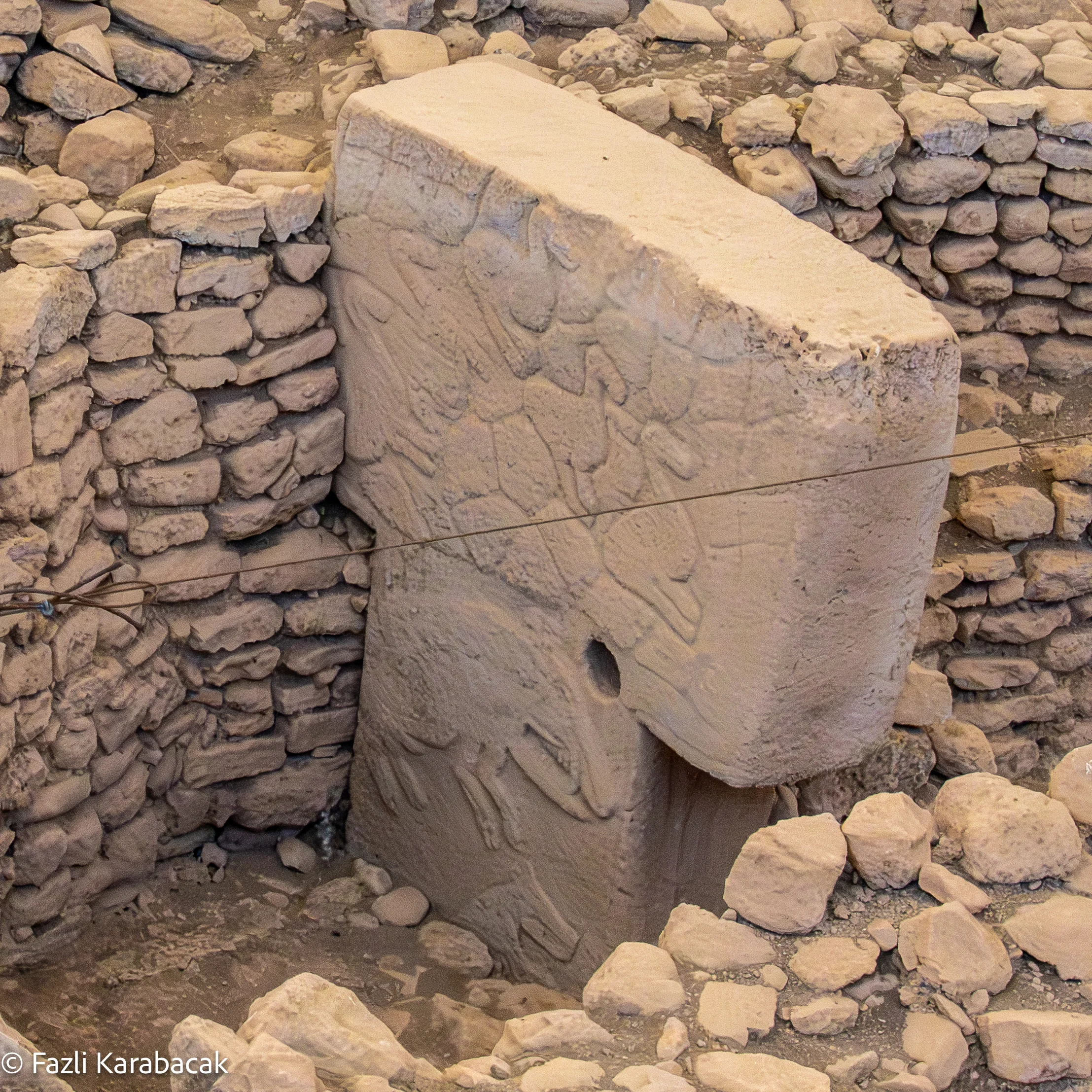
Cranes & Birds
Cranes and other wading birds appear on several pillars, sometimes with outstretched wings. Their prominence may relate to rituals involving death and the soul's journey — a connection echoed in many later Near Eastern traditions linking birds to the afterlife and the sky realm.
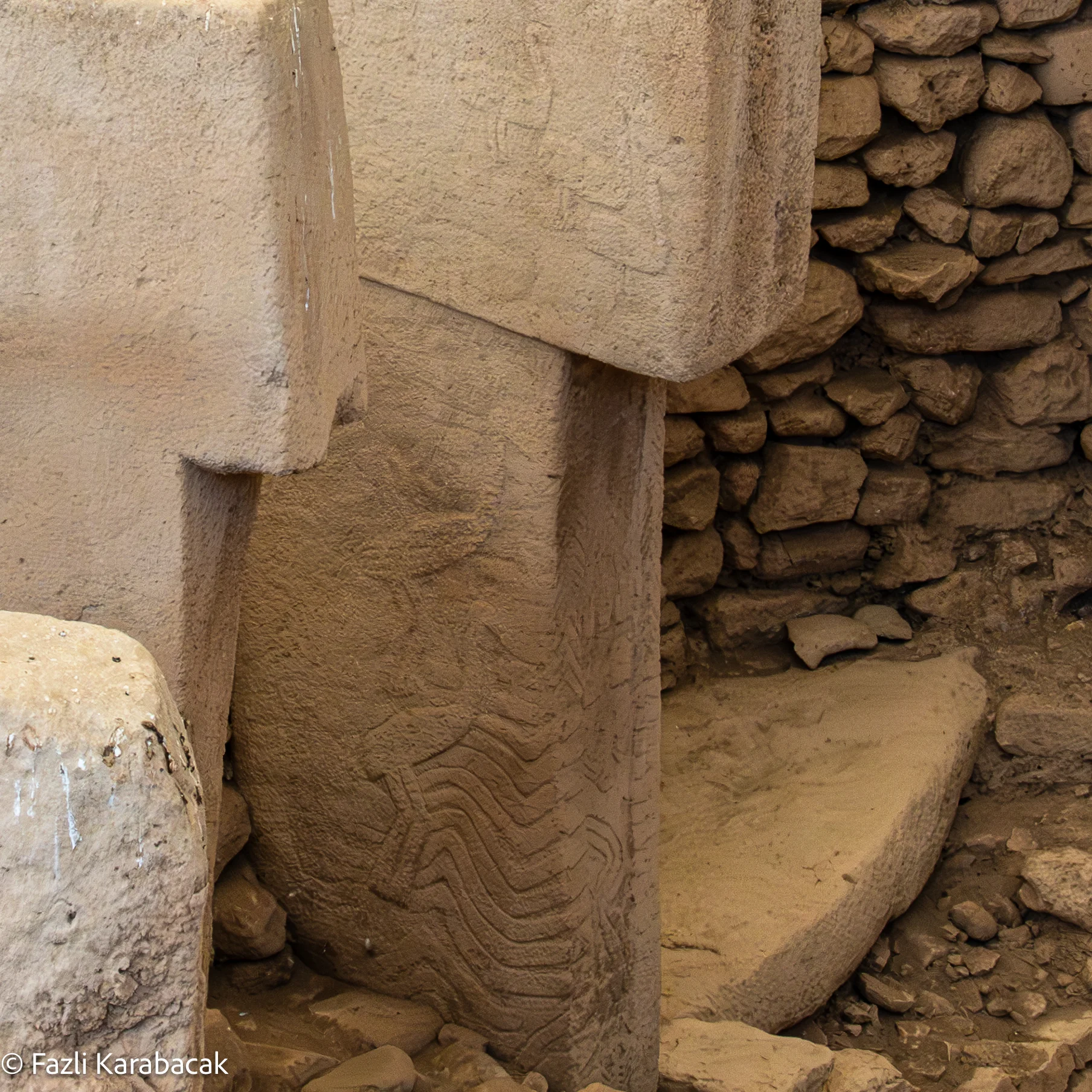
Snakes
Serpents slither across multiple pillars in Enclosure D, sometimes in groups of three or more. These are among the most commonly depicted creatures across the entire site. Snakes' association with the earth, renewal (shedding skin), and danger makes them a potent symbol in virtually every ancient culture.
Bench-Like Structures
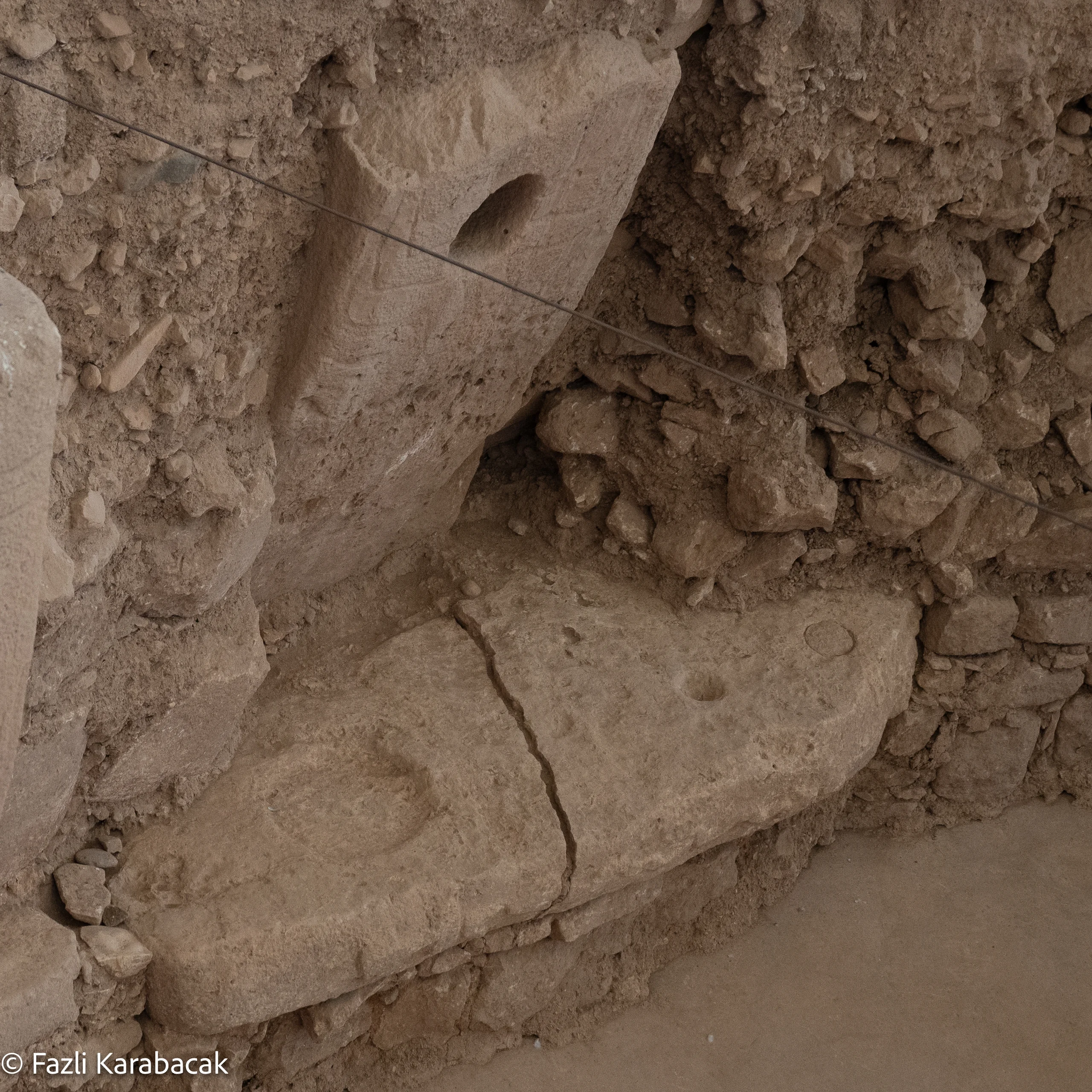
Bench-like structures along the inner walls of Enclosure D.
Running along the inner walls of Enclosure D, between the peripheral pillars, are low stone benches. These features are present in several enclosures but are particularly well-preserved in D. Their function is debated: were they seating for participants in rituals? Platforms for offerings? Sleeping areas for pilgrims?
The presence of benches strengthens the interpretation of the enclosures as gathering spaces — places where people came together, sat, and participated in communal activities. Combined with evidence of large-scale feasting (animal bone deposits and stone vessels found nearby), the picture emerges of a place designed for collective ritual experience.
What Was Enclosure D For?
The function of Enclosure D — and of Göbekli Tepe as a whole — remains one of the great open questions in archaeology. Several competing interpretations have been proposed by researchers:
Temple or Sanctuary
Klaus Schmidt's original interpretation. He argued that Göbekli Tepe was a purely ritual site — a "cathedral on a hill" — with no evidence of permanent habitation. The animal carvings, the monumental scale, and the effort required to build it all point toward a place of deep symbolic and spiritual significance.
Communal Meeting Place
Some archaeologists, including members of the current DAI team, have suggested a more social interpretation. The enclosures may have served as meeting halls where different groups of hunter-gatherers came together for feasting, alliance-building, and the negotiation of social relationships — with ritual as part of that broader social function.
Astronomical Observatory
A minority view, but one that attracts public interest. Researchers like Giulio Magli have noted possible alignments of the enclosures and pillars with the star Sirius and other celestial bodies. While most archaeologists remain cautious about these claims, the idea that the builders tracked the sky is not implausible for societies whose survival depended on seasonal cycles.
The truth may incorporate elements of all these interpretations. In a pre-literate society, the boundaries between "temple," "meeting hall," and "observatory" may not have existed as we understand them. What is certain is that Enclosure D was a place of extraordinary effort, meaning, and communal investment.
Continue Exploring
Discover more of Göbekli Tepe's structures and symbols.