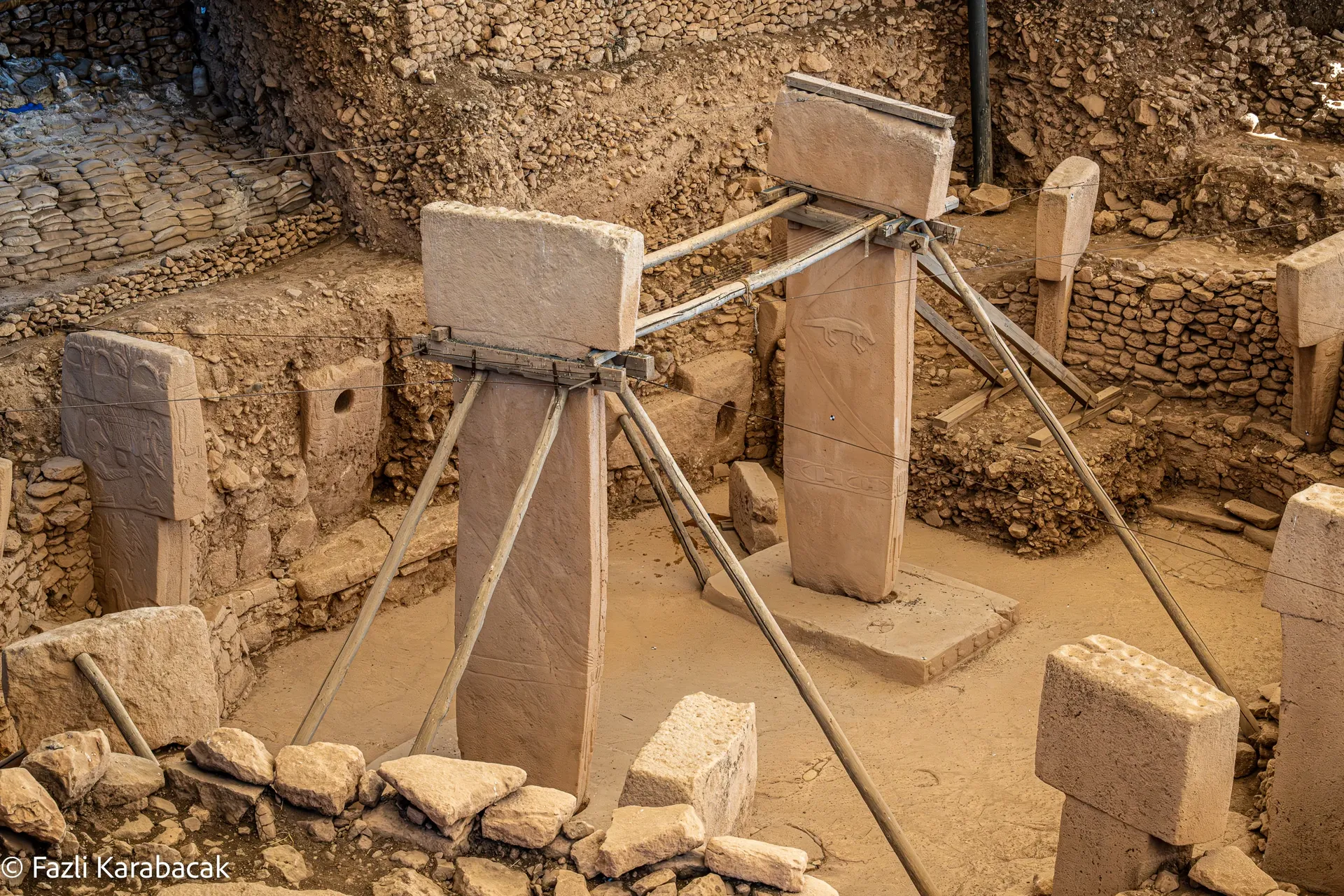
Structure
Enclosure D
The largest and most elaborate enclosure — twin central pillars standing over 5 metres tall, surrounded by a ring of smaller pillars carved with foxes, snakes, and wild boar.
Explore →
Southeastern Turkey · 9,600 BCE
Built by hunter-gatherers 7,000 years before Stonehenge, Göbekli Tepe changed everything we thought we knew about the origins of civilisation.
Göbekli Tepe is a Pre-Pottery Neolithic archaeological site on an artificial mound roughly 12 km northeast of Şanlıurfa. It consists of massive circular enclosures with T-shaped limestone pillars — some over 5 metres tall and weighing up to 10 tonnes — carved with intricate animal reliefs. It was built, used, and then deliberately buried by communities of hunter-gatherers who had not yet developed agriculture, pottery, or metalworking.
~12,000
Years Old
Pre-Pottery Neolithic A
200+
T-Shaped Pillars
Up to 5.5 m tall, 10 tonnes
20+
Circular Enclosures
Identified via geophysical survey
UNESCO
World Heritage
Inscribed 2018
Three of the most celebrated discoveries from a site that has fundamentally reshaped the study of human prehistory.
Structure
The largest and most elaborate enclosure — twin central pillars standing over 5 metres tall, surrounded by a ring of smaller pillars carved with foxes, snakes, and wild boar.
Explore →
Pillar
Perhaps the most famous carved pillar in the world — depicting vultures, a headless figure, a scorpion, and other symbols. Some scholars believe it records a celestial event.
Explore →
Architecture
Massive limestone monoliths with carved arms, hands, belts, and loincloths — believed to represent stylised human figures. The defining architectural element of the Taş Tepeler world.
Explore →The arc of Göbekli Tepe's story — from its Neolithic construction and mysterious burial to Klaus Schmidt's revelation and UNESCO recognition.
~9500 BCE
The earliest monumental structures at Göbekli Tepe are built during the Pre-Pottery Neolithic A period — thousands of years before Stonehenge, the Pyramids, or even pottery.
~8000 BCE
The site is intentionally filled in and buried under tonnes of sediment. The reasons remain one of archaeology's great mysteries.
1963
A joint Istanbul-Chicago survey team identifies the mound but dismisses it as a medieval cemetery. The true significance remains hidden.
1994
German archaeologist Klaus Schmidt recognises the T-shaped pillars on the surface and begins systematic excavation, instantly realising the site's extraordinary age.
2014
The visionary archaeologist dies suddenly. The German Archaeological Institute and Turkish teams continue his work.
2018
Göbekli Tepe is inscribed as a UNESCO World Heritage Site, recognising it as one of the most important archaeological discoveries in modern history.
2019–Present
The broader Taş Tepeler (Stone Hills) project reveals Göbekli Tepe as part of a network of Neolithic sites including Karahantepe, expanding the story dramatically.
Sister Site
35 km away, the extraordinary Karahantepe site reveals carved heads, a pillar shrine, and a world contemporary with Göbekli Tepe. Discover the full story on our companion site.
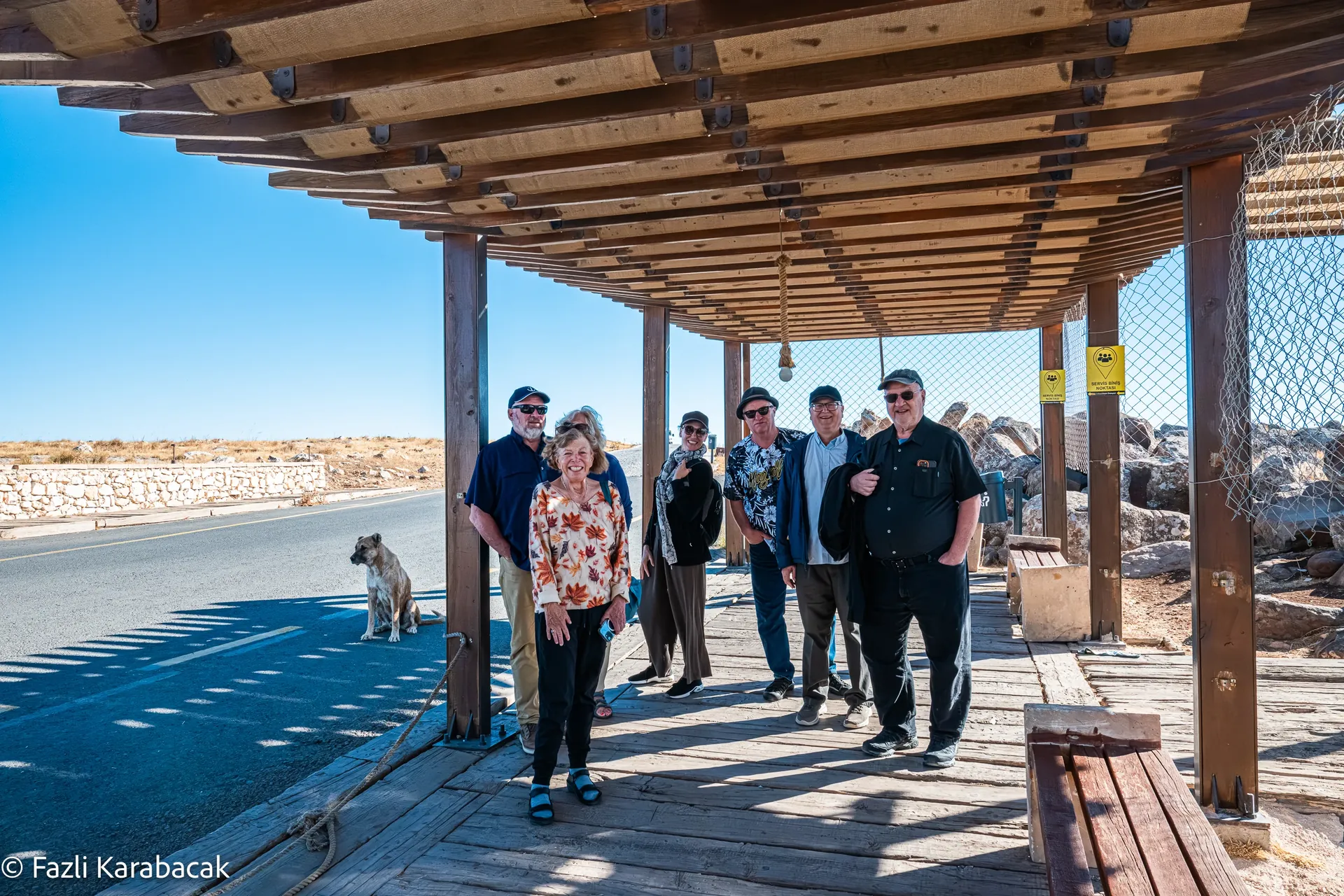
Plan Your Visit
Göbekli Tepe is open to visitors with a modern shelter, walkways, and a visitor centre. Whether you arrive independently from Şanlıurfa or join a guided archaeology tour, the experience of standing among 12,000-year-old pillars is unforgettable.
Combine your visit with Karahantepe, the Şanlıurfa Archaeology Museum, and the sacred pools of Balıklıgöl for the fullest Taş Tepeler experience.
Analysis, news, and deep explorations of Göbekli Tepe and Neolithic Anatolia.
Did religion begin at Göbekli Tepe? Explore the world's oldest ritual architecture, Schmidt's 'temple-first' hypothesis, and Cauvin's symbolic revolution.
Was Göbekli Tepe built by a lost civilisation like Atlantis? A tour guide separates archaeological evidence from pseudoscientific speculation.
A tour guide explores thematic parallels between Göbekli Tepe and the Epic of Gilgamesh — Enkidu, the Flood, and the human confrontation with mortality.
The complete Taş Tepeler experience
Our flagship 14-day Treasures of Ancient Turkey tour brings you to Göbekli Tepe and Karahan Tepe with a TÜRSAB-licensed guide — alongside Cappadocia, Ephesus, and Istanbul. Small groups of no more than 8 travellers.