A Story Written in Stone
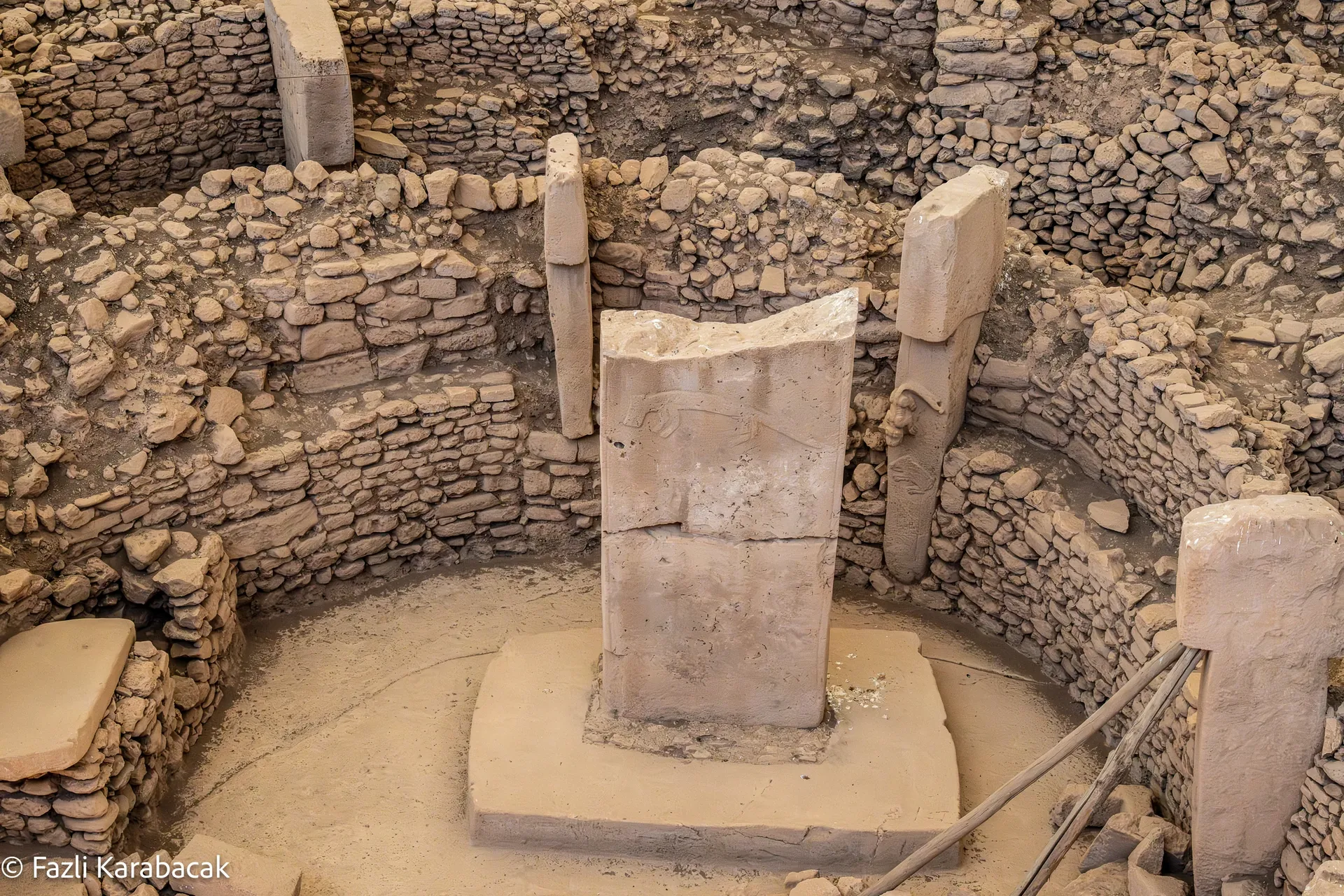
Göbekli Tepe's history spans an almost incomprehensible arc of time. Its massive T-shaped pillars were quarried, carved, and erected around 9500 BCE — more than 6,000 years before Stonehenge and 7,000 years before the Great Pyramid of Giza. The site was used for roughly 1,500 years before being deliberately and carefully buried under tonnes of sediment around 8000 BCE.
For the next 10,000 years, the sanctuary lay hidden beneath a barren hilltop. Local farmers ploughed over it. Survey teams walked past it. It was not until 1994 that a German archaeologist named Klaus Schmidt recognised the limestone slabs on the surface for what they truly were — and set in motion the excavation that would reshape our understanding of human civilisation.
Timeline
Key milestones in the life, burial, and rediscovery of the world's oldest temple.
~9500 BCE
Construction begins
The earliest monumental structures at Göbekli Tepe are built during the Pre-Pottery Neolithic A period — thousands of years before Stonehenge, the Pyramids, or even pottery.
~8000 BCE
Deliberate burial
The site is intentionally filled in and buried under tonnes of sediment. The reasons remain one of archaeology's great mysteries.
1963
First survey
A joint Istanbul-Chicago survey team identifies the mound but dismisses it as a medieval cemetery. The true significance remains hidden.
1994
Klaus Schmidt begins excavation
German archaeologist Klaus Schmidt recognises the T-shaped pillars on the surface and begins systematic excavation, instantly realising the site's extraordinary age.
2014
Klaus Schmidt passes away
The visionary archaeologist dies suddenly. The German Archaeological Institute and Turkish teams continue his work.
2018
UNESCO World Heritage inscription
Göbekli Tepe is inscribed as a UNESCO World Heritage Site, recognising it as one of the most important archaeological discoveries in modern history.
2019–Present
Taş Tepeler project
The broader Taş Tepeler (Stone Hills) project reveals Göbekli Tepe as part of a network of Neolithic sites including Karahantepe, expanding the story dramatically.
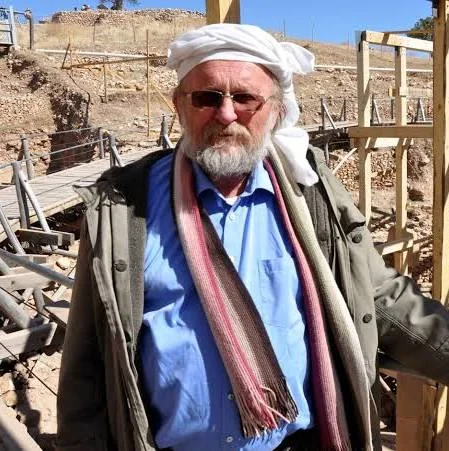
Klaus Schmidt (1953–2014)
Klaus Schmidt — The Man Who Saw
Born in 1953 in Feuchtwangen, Germany, Klaus Schmidt studied prehistoric archaeology at the universities of Erlangen and Heidelberg. By the early 1990s he was an experienced field archaeologist specialising in the Neolithic of southeastern Turkey.
When he arrived at Göbekli Tepe in October 1994, he did what no one before him had done: he looked at the exposed limestone slabs and realised they were the tops of enormous carved pillars. Within days of beginning to dig, he knew the site was Pre-Pottery Neolithic — and that it was monumental.
Schmidt directed excavations at Göbekli Tepe for 20 years, publishing extensively and transforming public awareness of Neolithic Anatolia. He argued passionately that the site was a sanctuary — a place of ritual gathering for surrounding communities — rather than a settlement. His famous aphorism, "First came the temple, then the city," became a rallying cry for a new understanding of the Neolithic Revolution.
Schmidt died suddenly on 20 July 2014 while swimming near Erlangen. He was 60 years old. The German Archaeological Institute (DAI) continues excavations under Lee Clare, building on Schmidt's foundational work.
The German Archaeological Institute (DAI)
The Deutsches Archäologisches Institut has been the primary international research partner at Göbekli Tepe since Klaus Schmidt began digging in 1994. Their Istanbul department manages the excavation in close collaboration with the Şanlıurfa Museum and Turkish Ministry of Culture and Tourism.
Under Lee Clare's direction, the DAI team has applied modern techniques including ground-penetrating radar, photogrammetric 3D modelling, archaeozoological analysis, and residue analysis of stone vessels. These methods have revealed that the site was used not only for ritual carving but also for large-scale feasting — involving the processing and consumption of wild game, especially gazelle and aurochs.
Radiocarbon dating campaigns have refined the site's chronology, confirming that the monumental Layer III enclosures date to the PPN-A period (roughly 9500–8800 BCE), while the smaller, rectangular Layer II structures belong to the later PPN-B (roughly 8800–8000 BCE).
The Taş Tepeler Project
In 2019, the Turkish government launched the Taş Tepeler ("Stone Hills") research initiative to investigate a growing number of Neolithic sites discovered across the Şanlıurfa region. The project reframed Göbekli Tepe not as an isolated anomaly but as part of a broader network of contemporaneous monumental sites.
Key sites in the network include Karahantepe (with its extraordinary pillar shrine and carved heads), Harbetsuvan Tepesi (where carved human-like figures were found), Sayburç (featuring a remarkable narrative relief of a figure between leopards), and Gürcütepe (one of the earliest villages in the region).
Together, these discoveries suggest that the Şanlıurfa plain was home to a complex web of interacting communities during the 10th and 9th millennia BCE — people who built on a monumental scale, communicated through shared symbolic systems, and gathered for rituals and feasts that helped bind their societies together.
Experience the History in Person
Walk the hilltop where Klaus Schmidt made his discovery. See the pillars that overturned a century of archaeological assumptions. Plan your visit or join a guided archaeology tour.