Quick Answer
The semi-subterranean enclosures at Göbekli Tepe were not just visually dramatic — they were acoustic environments designed to amplify ritual performance. Acoustic analysis by Kieran McBride (2014) demonstrated that a speaker positioned near the central pillars could be clearly heard throughout the enclosure while remaining visually obscured, creating a disembodied voice effect. Three probable bullroarers — bone instruments producing deep, pulsing tones — have been recovered from the site, placing Göbekli Tepe within a broader Pre-Pottery Neolithic musical tradition that included flutes, raptor-call aerophones, and likely drums.
At a Glance
- Acoustic study: Kieran McBride (2014), discussed in Dietrich 2023
- Key finding: Central pillars project sound while blocking line of sight → “disembodied voice” effect
- Audience capacity: ~20–30 people per enclosure
- Instruments at the site: Three probable bullroarers (bone)
- Broader PPN soundscape: Bone flutes, raptor-call aerophones (Eynan-Mallaha, 2023), likely drums
- Resonance range: Stone chambers typically resonate at 95–120 Hz — frequencies linked to altered brain-wave states
There is something that happens when you stand inside one of the enclosures at Göbekli Tepe that no photograph can convey. You feel it before you understand it. The curved stone walls rise around you, the massive T-shaped pillars loom overhead, and the acoustics change. Your voice takes on a different quality — fuller, more present, subtly amplified by the stone that surrounds you. A whisper carries further than it should. In twenty-five years of guiding visitors through Turkey’s archaeological sites, I have watched hundreds of people experience this shift, and it always produces the same reaction: a hush, followed by an instinctive lowering of the voice. The architecture commands it.
This is not an accident. The builders of Göbekli Tepe, working twelve thousand years ago, created semi-subterranean spaces that were — among other things — acoustic environments. Recent archaeological and acoustical research has begun to reveal just how central sound was to whatever rituals took place within these structures.
Architecture as Instrument
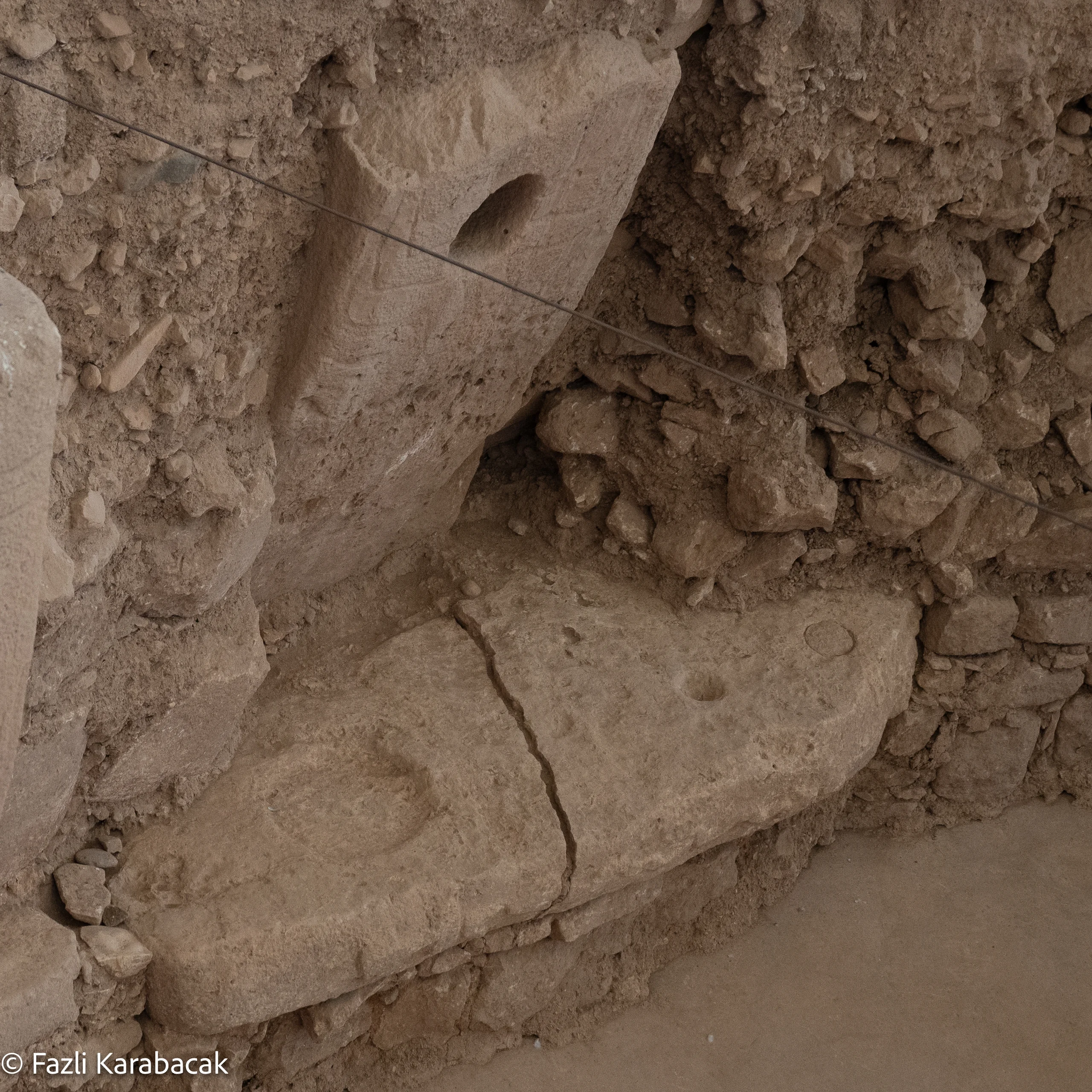
The enclosures at Göbekli Tepe are not simple pits in the ground. They are carefully constructed semi-subterranean chambers, cut into the limestone bedrock and lined with dressed stone walls that curve inward, creating oval spaces ten to thirty metres in diameter. Massive T-shaped pillars — some weighing over ten tonnes — stand in rings around the perimeter, with two even larger central pillars facing each other in the middle of each enclosure.
Every one of these features has acoustic consequences. Curved walls reflect and focus sound rather than scattering it. Semi-subterranean construction isolates the interior from external noise while creating a natural reverberation chamber. Massive stone surfaces are excellent reflectors of sound, particularly at lower frequencies. The overall effect: a space in which voices resonate, rhythmic sounds sustain, and low-frequency tones are amplified by the enclosed stone volume.
Kieran McBride’s 2014 acoustic study of the Göbekli Tepe enclosures — discussed in detail in Oliver Dietrich’s 2023 analysis of shamanism at the site — produced one of the most revealing findings about how these spaces actually functioned. McBride demonstrated that a speaker positioned near the central pillars could be heard clearly throughout the enclosure, but the broadsides of the tall central pillars simultaneously blocked the visual line of sight between speaker and audience. The voice was present, projected throughout the chamber, but the person producing it was hidden.
The implications are extraordinary. What McBride described is, in effect, a disembodied voice — a sound that seems to come from the pillars themselves, or from nowhere, or from everywhere at once. For an audience of twenty to thirty people arranged on the stone benches around the perimeter, the experience would have been deeply powerful. In the flickering light of fires, a voice emanating from the direction of the central pillars, with their carved arms, hands, belts, and fox-pelt loincloths, would have blurred the line between human speaker and animate stone figure. The pillars, as Klaus Schmidt long argued, represent anthropomorphic beings. McBride’s research suggests they could also have been made to speak.
Instruments of Trance: Bullroarers at Göbekli Tepe
Among the finds from Göbekli Tepe are three bone fragments identified as probable bullroarers — one of the most ancient and widespread sound-producing instruments known to humanity. A bullroarer is deceptively simple: a flat, elongated piece of bone attached to a cord and swung in circles overhead. The spinning blade cuts through the air and produces a deep, pulsing, roaring tone that carries over enormous distances, characteristically producing infrasonic and low-frequency sound — the kind of deep vibration that is felt in the chest and gut as much as heard with the ears.
The identification at Göbekli Tepe is significant for several reasons.
First, bullroarers are among the most cross-culturally consistent elements of shamanic and initiatory ritual. In Aboriginal Australian traditions, the sound of the bullroarer is the voice of ancestral beings. In many traditions across Oceania, Africa, and the Americas, bullroarers are sacred objects whose sound is forbidden to the uninitiated. The ethnographic parallel is robust and remarkably consistent.
Second, their acoustic properties are precisely suited to enclosed stone chambers. Research at other stone monuments has shown that enclosed chambers tend to resonate at frequencies of 95–120 Hz, and that tones in this range have measurable effects on human neurophysiology, including alterations in brain-wave patterns associated with trance states. A bullroarer swung within one of the Göbekli Tepe enclosures would have produced exactly this kind of deep, body-penetrating sound, sustained and amplified by the stone architecture.
Third, the use of bullroarers is characteristically associated with secrecy and restricted knowledge. This aligns powerfully with the architecture of the enclosures, particularly Building C, where a narrow, corridor-like entrance identified by Helmut Piesker in 2014 would have controlled access and created a dramatic threshold between the outside world and the acoustic environment within.
On the ground: On our Göbekli Tepe day tour, I sometimes ask groups to close their eyes for a moment near the viewing walkway above Enclosure D. Even now — roofed, restricted, full of visitors — the acoustic quality persists. The stone is still stone. A quiet word carries further than you expect.
The Broader Musical Landscape of the Pre-Pottery Neolithic
The bullroarers from Göbekli Tepe did not emerge from silence. They belong to a broader tradition of sound-producing instruments in the Pre-Pottery Neolithic and its immediate precursors.
The Natufian culture of the southern Levant, which preceded the Neolithic transition, has yielded bone flutes — among the earliest known melodic instruments in the Near East. A remarkable recent discovery has added new depth to this picture: Davin and colleagues (2023) identified seven small perforated bones from Eynan-Mallaha as aerophones designed to mimic the calls of raptors, specifically the Eurasian sparrowhawk and common kestrel. These instruments were found in deposits dating to roughly 12,000 years ago, contemporary with the earliest phases of Göbekli Tepe. At Göbekli Tepe, raptors and vultures appear prominently in the carved imagery, and the connection between raptor calls, hunting, and possible shamanic transformation is difficult to dismiss.
From Nevalı Çori — the PPNB site just sixty-five kilometres from Göbekli Tepe that also produced T-shaped pillars — excavations recovered a limestone vessel bearing a carved scene that appears to depict figures dancing in a circle. Whether these figures dance to music is impossible to prove, but the communal, rhythmic nature of the scene is consistent with traditions in which dance and sound are inseparable. Ethnographic research shows that rhythmic movement and rhythmic sound are among the most reliable and widespread techniques for inducing altered states of consciousness.
Were there drums at Göbekli Tepe? No unambiguous drum has been recovered, but this is not surprising. Drums made of animal skin stretched over a frame or vessel are almost entirely perishable. Laurent Lustig has documented the appearance of drums in the Neolithic record of the Near East and proposed deep roots for drumming in the region’s ritual traditions. At Göbekli Tepe, the limestone vessels, abundant animal skins, and acoustic properties of the enclosures all create conditions in which drumming would have been both technically feasible and ritually powerful.
Sound and the Architecture of Experience
What begins to emerge from these converging lines of evidence is a picture of the enclosures as integrated sensory environments — spaces in which visual, auditory, and kinesthetic experience were deliberately orchestrated to produce specific psychological effects.
Consider the experience from the perspective of a participant — perhaps someone undergoing initiation. You approach the hilltop. You are led to one of the enclosures. You enter through a narrow passage — in Building C, the corridor-like entrance that forces you to squeeze through a constricted space. You descend into the semi-subterranean chamber.
The light changes. The light comes only from fires — flickering, casting moving shadows across the carved animals on the pillars. Snakes writhe in the shifting firelight. Foxes snarl. The great central pillars, three metres tall or more, loom over you with their carved arms and hands, faceless T-shaped heads rising into the darkness above.
Then the sound begins. A deep, pulsing roar — the bullroarer spinning somewhere in the space, its tone amplified by the stone walls until it vibrates in your bones. Or rhythmic drumming that fills the enclosure and synchronises with your heartbeat. Or a voice — a voice that seems to come from the pillars themselves, resonant and disembodied. The curved walls catch the sound and send it back. The distinction between the sound in the room and the sound inside your body dissolves.
This is not speculation layered on speculation. Every element I have described is attested in the archaeological record: the semi-subterranean construction, the controlled entrances, the firelight, the carved imagery, the bullroarers, the acoustic properties measured by McBride. Taken together, they tell us about experience.
Harvey Whitehouse’s theory of “imagistic” modes of religiosity offers a useful framework. Whitehouse distinguished between “doctrinal” religion — frequent, low-intensity rituals that reinforce teachings through repetition — and “imagistic” religion, characterised by rare, high-intensity, multisensory events that produce what psychologists call “flashbulb memories.” The architecture and instruments of Göbekli Tepe are consistent with imagistic ritual: intense, overwhelming events designed to be experienced rather than taught.
Echoes in Later Traditions
What happened at Göbekli Tepe did not exist in isolation — it was among the earliest expressions of a relationship between sound, sacred architecture, and ritual transformation that would resonate through millennia. Yuval Gabbay’s 2018 study of Mesopotamian kettledrum theology documents a tradition in which the sacred drum — the lilissu — was regarded not merely as an instrument but as the living body of a divine being, its sound the voice and heartbeat of a bull-god.
I mention this not to suggest a direct line of transmission — the chronological gap is too great — but the ancient Near East’s idea of sound as a bridge between human and divine had extraordinarily deep roots. The bull is among the most prominent animals in Göbekli Tepe’s carved bestiary. The later development of bull-drums may represent not an invention but the formalisation of associations that stretched back to the very dawn of monumental architecture.
Studies of Palaeolithic cave systems by Iegor Reznikoff have demonstrated that the locations of cave paintings at sites like Lascaux correlate with points of maximum acoustic resonance. The painted chambers are, in many cases, the most sonorous chambers — suggesting that the relationship between sound and sacred space precedes the Neolithic by tens of thousands of years.
Listening to What the Stones Tell Us
What I want visitors to understand is that the people who built these enclosures were not primitive. They were not fumbling toward religion, or accidentally creating impressive spaces. They were sophisticated architects of human experience. They understood — in practical, empirical terms — that a curved stone wall amplifies a voice. That a deep, semi-subterranean chamber creates a hush that makes every sound more powerful. That the pulsing tone of a bullroarer, combined with firelight and carved imagery and the physical constriction of a narrow entrance, produces a state of heightened awareness and awe.
They understood, in short, that sound is not merely decoration added to ritual. Sound is ritual. It is the medium through which invisible powers are made real, through which stone pillars become speaking ancestors. The archaeology of Göbekli Tepe has taught us to see what the builders created. We are only now beginning to learn how to listen.
Key Takeaways
- McBride’s 2014 acoustic analysis showed the enclosures function as natural amplifiers — a speaker near the central pillars can be heard clearly while remaining visually hidden.
- Three probable bullroarers have been identified from Göbekli Tepe — instruments capable of producing deep, pulsing, low-frequency tones amplified by the stone architecture.
- The broader Pre-Pottery Neolithic tradition included bone flutes, raptor-call aerophones (Eynan-Mallaha, 2023), and likely drums.
- The semi-subterranean architecture — curved walls, massive pillars, controlled entrances — created integrated sensory environments designed for transformative experience.
- Later Mesopotamian kettledrum theology, where the drum was the heartbeat of a bull-god, may echo associations stretching back to the PPN.
- Palaeolithic cave acoustics suggest the relationship between resonant spaces and sacred imagery extends far deeper than the Neolithic.
Planning Your Visit
The acoustic quality of Göbekli Tepe is not something you can hear in a photograph or read about in a book. It is something you stand inside. On our Göbekli Tepe and Karahan Tepe guided day tour, I take time to draw attention to the spatial and acoustic design features that turn these enclosures from piles of ancient stone into performance spaces still doing their work twelve thousand years later.
Your Next Read
Suggested path: Shamanism at Göbekli Tepe → Was Göbekli Tepe the First Religion? → The T-Shaped Pillars → Ancestor and Skull Cult.
Frequently Asked Questions
Were musical instruments found at Göbekli Tepe? Three bone fragments have been identified as probable bullroarers — instruments swung on a cord that produce a deep roaring tone. No flutes or drums have been confirmed from the site itself, but bone flutes and bird-call aerophones are known from contemporary sites like Eynan-Mallaha in the Natufian tradition.
How did the enclosures at Göbekli Tepe affect sound? The semi-subterranean construction, curved stone walls, and massive limestone pillars created natural reverberation and amplification. Acoustic studies showed that the central pillars simultaneously projected sound while blocking visual lines of sight, producing a disembodied voice effect for audiences seated around the perimeter.
Could the builders deliberately design for acoustics? While we cannot prove intentional acoustic design, the consistency of the architectural features across multiple enclosures suggests these acoustic properties were recognised and deliberately replicated. The presence of sound-producing instruments confirms that sound was part of the ritual practice.
What is a bullroarer? A bullroarer is a flat piece of bone, wood, or stone attached to a cord, swung in circles overhead. It produces a deep pulsing roar and is one of the most ancient and cross-culturally widespread ritual instruments. In many cultures, the bullroarer’s sound represents the voice of spirits or ancestors and is restricted to initiatory contexts.
How many people could attend rituals in the enclosures? Based on the architecture and acoustic modelling, the enclosures appear designed for audiences of approximately twenty to thirty people — small enough for the acoustic properties to work effectively, large enough for a significant communal experience.
Fazlı Karabacak is a licensed Turkish tour guide with over 25 years of experience and the founder of Serendipity Turkey. He specialises in archaeological and cultural tours across Turkey, with particular expertise in Göbekli Tepe and the Pre-Pottery Neolithic sites of southeastern Anatolia.