Quick Answer
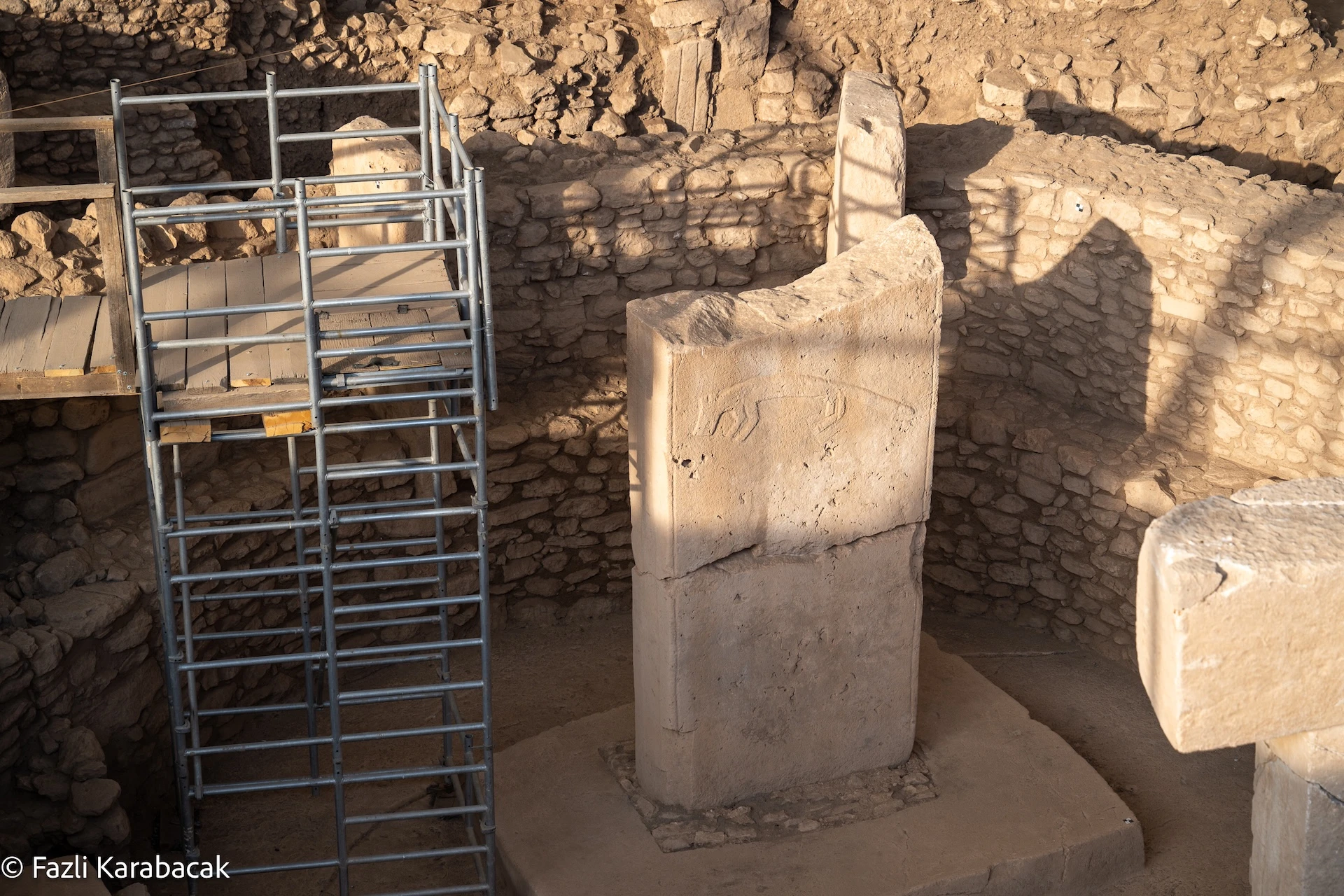
The fox is one of the most significant animals at Göbekli Tepe. It appears repeatedly across the carved programme, is especially associated with Enclosure B, and is uniquely connected to the great central pillars in Enclosure D, where fox pelts appear as part of the pillars’ bodily imagery. That combination of frequency, placement, and intimacy suggests that the fox meant far more than an ordinary wild animal to the builders of the site.
At a Glance
- Animal type: Fox
- Why it matters: One of the most repeated and symbolically charged animals at the site
- Strongest association: Enclosure B
- Most striking detail: Fox pelts appear on the central anthropomorphic pillars in Enclosure D
- Main question: Was the fox a group marker, a liminal guide, a ritual emblem, or several things at once?
When people think about Göbekli Tepe’s carved animals, they usually jump first to vultures, snakes, or the famous imagery on Pillar 43. But the fox deserves just as much attention.
In many ways, it is one of the site’s most revealing creatures. Not because it is the largest or the most dramatic, but because of where it appears and how closely it is tied to the human-like pillar beings at the heart of the enclosures.
Why the Fox Stands Out
The fox is not a minor decorative detail at Göbekli Tepe. It appears often enough, and in important enough places, to suggest that it carried real symbolic weight.
One of the strongest observations in the scholarship is that Enclosure B seems especially tied to fox imagery. This has encouraged the idea that certain enclosures may have had their own preferred animal worlds, with one species functioning as a kind of visual signature for the group that built or used that space.
If that reading is broadly right, the fox was not just a creature represented in stone. It may have been a marker of identity.
The Fox on the Body of the Pillars
What makes the fox especially important is its relationship to the central pillars in Enclosure D.
These great T-shaped pillars are widely understood as anthropomorphic forms. They have carved arms, hands, belts, and garments. And on them, the fox does not appear as a distant carved animal alone. It appears as part of what the pillars are wearing.
That detail matters. It creates a much more intimate relationship between animal and pillar-being than we see with most other creatures at the site. The fox is not simply nearby. It is incorporated into the body’s symbolic language.
This is one reason the fox has attracted so much interpretive attention.
Enclosure B and Group Identity
One of the most useful ways to think about the fox is through enclosure identity.
At Göbekli Tepe, the major enclosures do not all present the same animal balance. Instead, certain species dominate certain spaces. This is one of the reasons scholars such as Oliver Dietrich have discussed the possibility that different enclosures reflected different social entities or communities.
In that framework, the fox is especially important because Enclosure B appears to be the place where it is most at home. That does not prove a clan system in the strict anthropological sense, but it does suggest that the fox may have served as a visual emblem within a shared ritual landscape.
If you want to see that broader pattern more clearly, it helps to pair this article with Each Enclosure, a Different World. For the strongest comparison animal at the site, continue with Snake Symbolism at Göbekli Tepe.
Beyond Decoration
The fox also matters because it shows that the animal imagery at Göbekli Tepe was not simply about diet or daily life.
The people who built the site clearly knew foxes as real animals in the surrounding landscape. But the carvings do not behave like a record of ordinary subsistence. Some of the most economically important animals are not necessarily the most symbolically dominant in the reliefs.
That tells us the carved programme was selective. Animals were chosen because they meant something.
The fox appears to belong to that symbolic layer rather than to any straightforward documentary one.
Trickster, Liminal Figure, or Guide?
Interpretations of the fox vary.
Some readers are drawn to the idea of the fox as a liminal animal — a creature associated with thresholds, cunning, movement between boundaries, and the uncertain edges between worlds. Others prefer to think of it as a group emblem or identity marker. Still others connect it to wider themes of death, mediation, or ritual transition.
None of these readings can be proven in a final way. That is important to say clearly.
But the fox does seem to invite this kind of layered interpretation. It is frequent, prominent, and unusually intimate in its connection to the central pillar beings. That is enough to justify treating it as one of the key animals in the symbolic world of Göbekli Tepe.
Why the Fox Still Feels Important Today
Even for modern visitors, the fox has a peculiar power.
It is not as immediately theatrical as the Vulture Stone, and it does not carry the same instant shock as the great snake scenes. But once you begin noticing fox imagery — especially in connection with the central pillars — it becomes difficult to ignore.
The fox helps reveal that Göbekli Tepe was built through a sophisticated visual logic. The animals are not random. They are placed with intention. They help shape enclosure identity, ritual focus, and the emotional atmosphere of the site.
What the Fox Tells Us About Göbekli Tepe
The fox tells us that Göbekli Tepe’s builders were not simply depicting the natural world around them. They were turning selected animals into carriers of meaning.
In the fox, they seem to have found a creature suitable for identity, presence, and symbolic closeness to the great pillar beings. That makes the fox one of the best entry points into the wider question of how animal imagery worked at the site.
Key Takeaways
- Why does the fox dominate Enclosure B? Possibly because it served as a group emblem or identity marker.
- The fox pelts draped on Enclosure D’s central pillars create the closest animal-to-pillar bond anywhere at the site.
- This is not an animal of subsistence — the fox carries ritual weight that goes far beyond the hunt.
- Group emblem, liminal figure, ritual sign? Probably some combination of all three.
- Bottom line: The fox is the strongest single argument that Göbekli Tepe’s animal imagery was deliberate, selective, and loaded with meaning.
Your Next Read
Suggested path: The T-Shaped Pillars → The Vulture Stone → What Is Göbekli Tepe?. Planning a trip? Start with Plan Your Göbekli Tepe Trip.
Frequently Asked Questions
Why is the fox so important at Göbekli Tepe? The fox stands out because it appears far more frequently than subsistence patterns would suggest. More importantly, it is especially concentrated in Enclosure B and is the only animal depicted as part of the central pillars’ bodies themselves — fox pelts appear on the pillars’ waists and garments, creating an intimate symbolic bond between animal and pillar-being. This combination of frequency and proximity suggests the fox carried profound ritual or identity significance.
Which enclosure is the fox most strongly associated with? Enclosure B is the stronghold of fox imagery at Göbekli Tepe. This pattern has encouraged interpretations that different enclosures may have carried different animal emphases, possibly reflecting different social groups, clans, or ritual communities using the same overall site.
Did the fox represent a clan totem or group identity? It is tempting to read the fox as a totem marker in the strict anthropological sense. However, the evidence suggests something more general: that the fox may have functioned as a group emblem or identity marker for the community or communities using Enclosure B. Whether this rises to the level of formal clan organisation is uncertain and should be approached carefully.
Why are the fox pelts on the central pillars so significant? The fox pelts appear as part of the pillars’ garments — draped around the waists of these anthropomorphic stone beings. This is far more intimate than typical animal imagery elsewhere at the site. It suggests the fox was not merely nearby or symbolically distant, but was incorporated into the very identity or costume of the pillar beings themselves.
How confident are archaeologists about the fox interpretation? The fox’s presence and concentration in Enclosure B is clear and well-documented. The interpretation that it functioned as an enclosure or group identity marker is more interpretive but aligns with broader patterns in how animal imagery is distributed across the site. The shamanic/spirit-helper interpretation is also plausible but, like all interpretations of a 12,000-year-old site, remains speculative.
Are there representations of foxes visible at the site today, or are they all in museums? Some original fox reliefs remain visible on the pillars at Göbekli Tepe itself, especially in Enclosure B and on the central pillars of Enclosure D. However, many of the finest portable sculptures and carved fragments are now housed in the Şanlıurfa Archaeology Museum, where you can see them under controlled lighting and in close detail.
Fazlı Karabacak is a licensed Turkish tour guide with over 25 years of experience and the founder of Serendipity Turkey. He specialises in archaeological and cultural tours across Turkey, with particular expertise in Göbekli Tepe and the Pre-Pottery Neolithic sites of southeastern Anatolia.