Quick Answer
Archaeological evidence suggests beer may have been brewed at Göbekli Tepe more than 10,000 years ago. Six large limestone vessels — some holding up to 160 litres — were found with chemical traces of calcium oxalate, a byproduct of cereal fermentation. Combined with massive feasting deposits and the site’s position in the wild cereal heartland, this supports the theory that the desire for fermented drinks may have helped drive the domestication of grain.
At a Glance
- Date: Approximately 10,000–9,000 BC (Pre-Pottery Neolithic B)
- Key find: Six limestone vessels, up to 160 litres capacity
- Chemical evidence: Calcium oxalate residues (a fermentation marker)
- Location context: Within the “Golden Triangle” of wild cereal domestication
- Feasting scale: Tens of thousands of animal bone fragments found in backfill
- Core theory: Beer production may have preceded — and motivated — the domestication of grain
- Status of evidence: Promising but preliminary; further analysis ongoing
Imagine standing among 12,000-year-old stone pillars and learning that the people who built them may also have brewed beer here — in stone troughs large enough to fill two hundred bottles. That is one of the most surprising discoveries at Göbekli Tepe, and it changes how we think about why humans first began cultivating grain.
In my twenty-five years of guiding visitors through southeastern Turkey’s archaeological landscapes, I have watched this idea evolve from an academic curiosity into one of the most compelling debates in Neolithic studies. And nowhere does it resonate more powerfully than at Göbekli Tepe, where the evidence for large-scale food and drink preparation sits alongside the oldest monumental architecture on Earth.
What Did the Limestone Vessels Actually Contain?
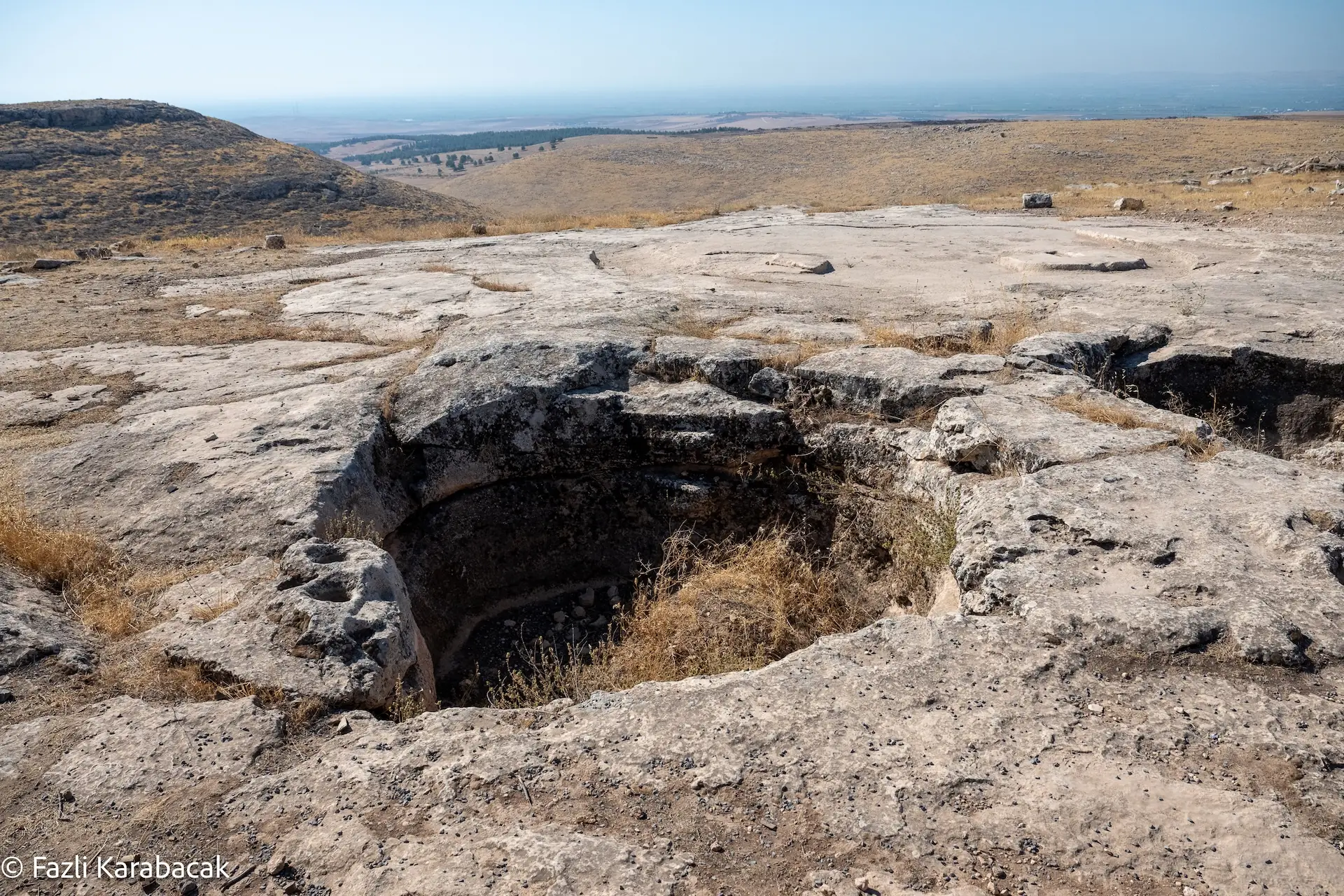
The most direct evidence for brewing at Göbekli Tepe comes from six large limestone vessels discovered in Pre-Pottery Neolithic B contexts at the site. As Oliver Dietrich and his colleagues from the German Archaeological Institute reported in their landmark 2012 study in Antiquity, these vessels are barrel- and trough-shaped, carved from the local limestone, and were found within the enclosure areas. Their capacities reach up to 160 litres — far too large for individual use and far too carefully crafted to be dismissed as simple storage containers.
When I guide groups through the site and we discuss these vessels, I always point out the scale involved. A hundred and sixty litres is roughly two hundred standard beer bottles. Even accounting for the fact that any prehistoric brew would have been significantly thicker and cloudier than modern beer — more like a fermented porridge or gruel — this is an enormous quantity of liquid. It speaks to communal events involving significant numbers of people.
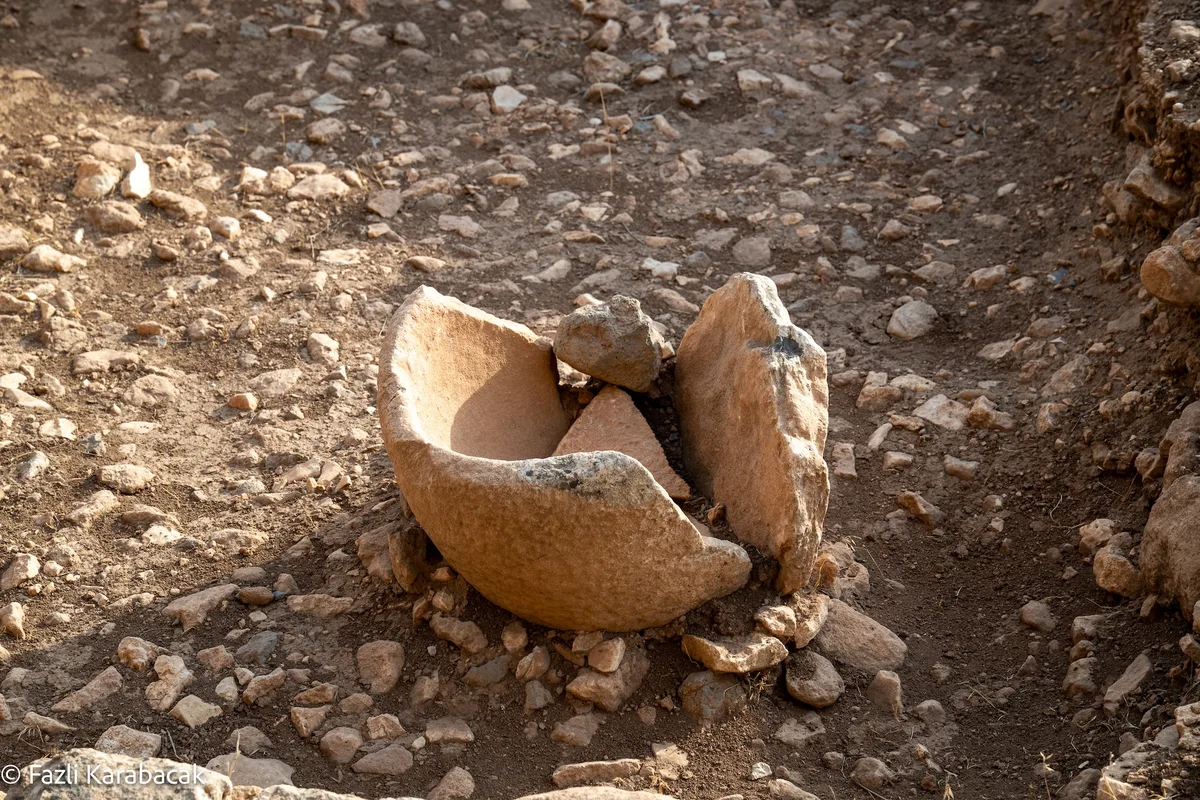
What makes these vessels particularly significant is what was found adhering to their interior surfaces. Chemical analyses conducted by Martin Zarnkow of the Technical University of Munich at Weihenstephan — one of the world’s foremost centres for brewing science — returned results that were partly positive for calcium oxalate. This compound develops specifically during the soaking, mashing, and fermenting of cereal grains. It is, in essence, a chemical signature of the brewing process.
The excavators themselves emphasise that these results are preliminary rather than conclusive — initial indications for the brewing of beer at Göbekli Tepe, not definitive proof. But even as preliminary findings, they are extraordinary. If confirmed, they would represent evidence for beer production thousands of years before the earliest previously confirmed brewing in the ancient Near East.
How Was Ancient Beer Made?
To understand what might have been happening in those limestone troughs, it helps to understand the basic biochemistry of ancient brewing. As Jiajing Wang and colleagues demonstrated in their 2017 experimental study in the Journal of Archaeological Science: Reports, the transformation from starch to beer follows a two-phase process.
Saccharification is the first phase — breaking down complex starches into fermentable sugars. Grains are soaked in water, allowed to sprout (activating starch-converting enzymes), then ground and mixed with warm water. Fermentation is the second — wild yeasts convert those sugars into alcohol and carbon dioxide. In the ancient world, wild yeasts present in the environment or on grain surfaces would have driven this process naturally.
Wang’s experimental work also established the microscopic signatures that brewing leaves on starch granules. Malted grain shows characteristic pitting from enzymatic attack. Fermented starches display a distinctive collapsed “pizza crust” appearance. These diagnostic signatures give archaeologists a methodological toolkit for identifying ancient brewing residues — one that can now be applied to the Göbekli Tepe vessels and to other Neolithic contexts.
Why Does the Site’s Location Matter So Much?
One of the most striking aspects of the beer hypothesis is Göbekli Tepe’s geographical position within what botanists call the “Golden Triangle” of wild cereal distribution. Genetic analyses conducted by a team from the Norwegian University of Life Sciences demonstrated that the earliest domestication of einkorn wheat occurred in the vicinity of the Karacadağ mountain range — in the immediate vicinity of Göbekli Tepe itself.
This is a detail I always share with my tour groups because it transforms how we think about the relationship between monumental architecture and agriculture. The wild progenitors of the crops that would eventually feed civilisation — einkorn, emmer wheat, barley — grew in abundance on the rolling limestone plateaus surrounding the site. The people who built Göbekli Tepe did not need to travel far to gather the raw materials for brewing.
The site’s archaeobotanical assemblage confirms this: grinding stones, mortars, and pestles are abundant throughout the occupation layers. What remains debated is whether this processing was aimed primarily at producing food or drink — or whether the desire for fermented beverages might have been the original motivation for intensive harvesting and eventual domestication.
On the ground: When you visit Göbekli Tepe and look out across the surrounding plateau toward Karacadağ, you are looking at the landscape where wheat was first domesticated. On our Göbekli Tepe and Karahan Tepe day tour, we always pause at this viewpoint to let the connection sink in — the same hills that fed the builders may also have supplied the grain for their brews.
What Do the Animal Bones Tell Us About Feasting?
The beer evidence does not exist in isolation. It sits within a much larger pattern of feasting activity. When the enclosures at Göbekli Tepe were eventually decommissioned and deliberately backfilled — a process I discuss in Why Was Göbekli Tepe Buried? — the fill material contained surprisingly large amounts of animal bones smashed for marrow, clearly the remains of communal meals.
The scale is remarkable. As Joris Peters and Klaus Schmidt documented, the bone assemblage runs into tens of thousands of identified specimens. Gazelle dominates with nearly eight thousand fragments, followed by aurochs with over twenty-five hundred, then fox, boar, and an array of birds.
These are not the remains of quiet, solitary meals. They represent accumulated debris from repeated, large-scale consumption events. And crucially, Göbekli Tepe was not a settlement — no permanent residential structures, no household storage, and remarkably, almost no evidence of fire. As Schmidt noted in his 2010 excavation report, contact with fire would have preserved organic materials through carbonisation, yet almost no carbonised material has been found at the site. This absence confirms that the enclosures were not domestic cooking spaces — they were purpose-built gathering places, provisioned from outside for specific communal events.
Compelling parallels exist at other Early Neolithic sites. At Tappeh Asiab in Iran (c. 9660–9300 cal BC), a sealed pit within a communal structure contained the skulls of at least nineteen wild boars — enough meat to feed between 350 and 1,200 people at a single event. This mirrors what we see at Göbekli Tepe, where boar imagery dominates Enclosure C and boar bones appear consistently in the faunal record.
What Is a “Work Feast” and Why Does It Matter Here?
Perhaps the most powerful framework for understanding beer and feasting at Göbekli Tepe is the ethnographic concept of the work feast — a pattern observed in traditional societies worldwide where organisers attract and motivate collective labour by promising a feast, often featuring generous quantities of beer.
The fit with Göbekli Tepe is striking. Even a single enclosure required enormous coordinated labour. The limestone pillars of Enclosure D stand up to 5.5 metres tall and weigh many tonnes. Quarrying them, transporting them, and erecting them demanded sustained effort from dozens — perhaps hundreds — of workers.
Ethnographic parallels are instructive. On the Indonesian island of Nias, transporting a single megalith required 525 men hauling the stone over three kilometres — accomplished specifically because the organiser promised a lavish feast. In ancient Egypt, pyramid workers received daily beer rations. Across sub-Saharan Africa, communal construction is routinely organised around beer provision.
At Göbekli Tepe, this model explains several puzzling features simultaneously: the massive food remains without permanent habitation, the large vessels for communal liquid consumption, the proximity of wild cereals and grain-processing equipment, and how a pre-agricultural society could mobilise the labour needed for unprecedented monumental construction.
When I stand with my groups at the edge of the quarry area, where you can still see unfinished pillars partially freed from the bedrock, I ask them to imagine the scene: dozens or hundreds of people working together under the open sky, motivated by the promise of a shared feast — roasted game, ground grain, and quite possibly stone troughs brimming with a thick, nourishing, mildly alcoholic brew.
Were the Enclosures Used as Feasting Halls?
The architectural features support this reading. The enclosures contain stone benches running along interior walls — features consistent with communal meeting and gathering places. These could have seated significant numbers of people in a circular arrangement, all facing the central pillars, all participating in whatever rituals and consumption events took place within.
The imagery may also relate to feasting. The animal carvings on the pillars represent predominantly wild, dangerous species — the same kinds of animals whose bones appear in the feasting deposits. The boar of Enclosure C, the fox of Enclosure B, the crane and vulture of Enclosure D — these are not depictions of everyday prey. They are symbolically charged creatures whose hunting and consumption carried deep ritual significance.
Was Ancient Beer More Food Than Drink?
It is tempting to think of ancient beer primarily in terms of intoxication. But this misses a crucial dimension. As Dietrich and colleagues emphasised, beer in its ancient form was more nourishing than bread. The fermentation process breaks down complex starches and proteins, increases the bioavailability of essential nutrients, and produces B vitamins not present in unfermented grain. The resulting beverage — thick, cloudy, and only mildly alcoholic — was more food than drink.
Fermentation also offers practical advantages: the low pH inhibits harmful bacteria (effectively preserving grain products longer), the malting process reduces gluten toxicity, and the resulting product provides concentrated, easily transportable calories — exactly what you would need to sustain a large labour force working far from home settlements.
In this light, brewing at Göbekli Tepe appears not as luxury or indulgence but as practical necessity — a technology for feeding people, preserving food, and creating the social bonds required to sustain an unprecedented architectural project.
How Does Göbekli Tepe Compare to Other Early Brewing Sites?
Göbekli Tepe is not the only site where early brewing evidence has emerged. Here is how the key sites compare:
| Site | Date | Location | Evidence | Context |
|---|---|---|---|---|
| Raqefet Cave | c. 13,000 BP | Israel (Natufian) | Beer residues in stone mortars | Burial contexts |
| Göbekli Tepe | c. 10,000–9,000 BC | SE Turkey | Calcium oxalate in limestone vessels | Ritual/feasting |
| Körtik Tepe | PPN | SE Turkey | Tartaric acid traces | Necropolis vessels |
| Qiaotou | c. 9,000–8,700 BP | China | Fermented rice/grain starch | Burial pits |
This growing body of evidence suggests that brewing fermented beverages was not a late development but an early and widespread one — emerging independently in multiple regions at roughly the same time as, or even before, the domestication of the grains used to produce them. The implication is that the desire for beer may have been one of the driving forces behind the agricultural revolution itself.
From Feast to Farm: The Bigger Picture
The feasting hypothesis has profound implications for how we understand the transition from hunting and gathering to agriculture — arguably the most consequential transformation in human history.
The conventional narrative places agriculture first: people learned to farm, then they settled, then they built. Göbekli Tepe inverts this entirely. Here, monumental construction came first, and the social demands of that construction — the need to feed and motivate a large, temporary labour force — may have created the conditions under which systematic cultivation became necessary.
In this reading, beer was not a byproduct of agriculture. Agriculture was a byproduct of beer — or more precisely, of the social institutions that beer helped create and sustain. The work feast provided the social glue for a construction project spanning generations. And the need to provision those feasts reliably may have pushed communities toward deliberate management and eventual domestication of wild cereals.
I present this to my visitors as one of the most fascinating and well-supported theories to emerge from the excavations — not as settled fact, but as a hypothesis that the evidence increasingly supports. What is not debatable is the evidence for communal feasting at the site. Whatever was in those limestone troughs, it was produced and consumed communally, in quantities that speak to gatherings of impressive scale, in contexts that were unmistakably ritual in character.
Key Takeaways
- Six large limestone vessels (up to 160 litres) were found at Göbekli Tepe, some bearing calcium oxalate traces — a chemical byproduct of cereal fermentation.
- The site sits within the “Golden Triangle” where genetic studies place the earliest domestication of einkorn wheat, meaning wild cereals grew on its doorstep.
- Tens of thousands of animal bone fragments in the backfill represent the remains of repeated, large-scale feasting events.
- The “work feast” model explains how pre-agricultural societies could mobilise labour for monumental construction by offering communal food and drink.
- Ancient beer was more nourishing than bread, more easily preserved, and more digestible — a practical technology, not merely an intoxicant.
- The convergence of brewing evidence, feasting remains, and wild cereal proximity supports the hypothesis that the desire for beer may have contributed to the origins of agriculture.
Planning Your Visit
Göbekli Tepe’s feasting story comes alive when you stand in the enclosures and see the stone benches, imagine the troughs filled with fermenting grain, and look out toward the wild wheat fields of Karacadağ. These are details that most visitors walk past without knowing — unless they have a guide who can bring the invisible archaeology to life.
If you are planning a visit, our Göbekli Tepe and Karahan Tepe guided day tour covers both sites with the archaeological context that transforms a sightseeing stop into a genuine encounter with the deep past.
Your Next Read
Suggested path: Why Was Göbekli Tepe Buried? → Boar Symbolism at Göbekli Tepe → Enclosure Identities and Animal Totems → What Is Göbekli Tepe?. For the full site overview, start with Plan Your Göbekli Tepe Trip.
Frequently Asked Questions
Was beer actually brewed at Göbekli Tepe? The evidence is promising but not yet conclusive. Chemical analyses of six large limestone vessels returned partly positive results for calcium oxalate, a compound that forms during cereal fermentation. Combined with wild cereal proximity and grain-processing tools, many researchers consider the case strong.
How old would beer brewing at Göbekli Tepe be? If confirmed, it would date to approximately 10,000–9,000 BC — among the oldest evidence for brewing in the world.
What were the stone troughs used for? The six barrel- and trough-shaped vessels (up to 160 litres) are interpreted as vessels for communal liquid preparation. Chemical traces suggest fermented cereal beverages, though other uses cannot be excluded.
What is the “beer before bread” hypothesis? First proposed at the 1953 Braidwood Symposium, this hypothesis suggests early grain cultivation was motivated by brewing rather than baking. Early grain varieties were better suited to producing gruel or beer than bread.
What evidence exists for feasting at Göbekli Tepe? Tens of thousands of animal bone fragments (many smashed for marrow), abundant grinding stones and pestles, the large limestone vessels, stone benches for communal seating, and the absence of permanent residential structures.
Can I see the limestone vessels at the site today? Some of the finds are displayed at the Şanlıurfa Archaeology Museum, which we visit on our guided day tours. The museum provides important context that complements what you see at the hilltop site itself.
Fazlı Karabacak is a licensed Turkish tour guide with over 25 years of experience and the founder of Serendipity Turkey. He specialises in archaeological and cultural tours across Turkey, with particular expertise in Göbekli Tepe and the Pre-Pottery Neolithic sites of southeastern Anatolia.