Quick Answer
Göbekli Tepe’s monumental enclosures were deliberately backfilled with tonnes of sediment, animal bones, flint tools, and stone fragments — not destroyed by natural processes but intentionally buried by the same communities that built them, or by their descendants. The most widely accepted interpretation is ritual decommissioning: the enclosures completed their purpose, and burial was the culturally prescribed way to end their active life. Other explanations include cosmological closure, social transformation, and intentional preservation. The question remains one of the most fascinating unsolved puzzles in prehistoric archaeology.
At a Glance
- Short answer: Göbekli Tepe was buried on purpose
- Most accepted explanation: Ritual decommissioning
- Other theories: Cosmological closure, social change, preservation
- Why it matters: The burial helps explain how Neolithic communities treated sacred architecture
- What we still do not know: Whether all enclosures were buried for the same reason
Of all the mysteries at Göbekli Tepe, the one that stays with visitors longest is not how the site was built, but why it was buried.
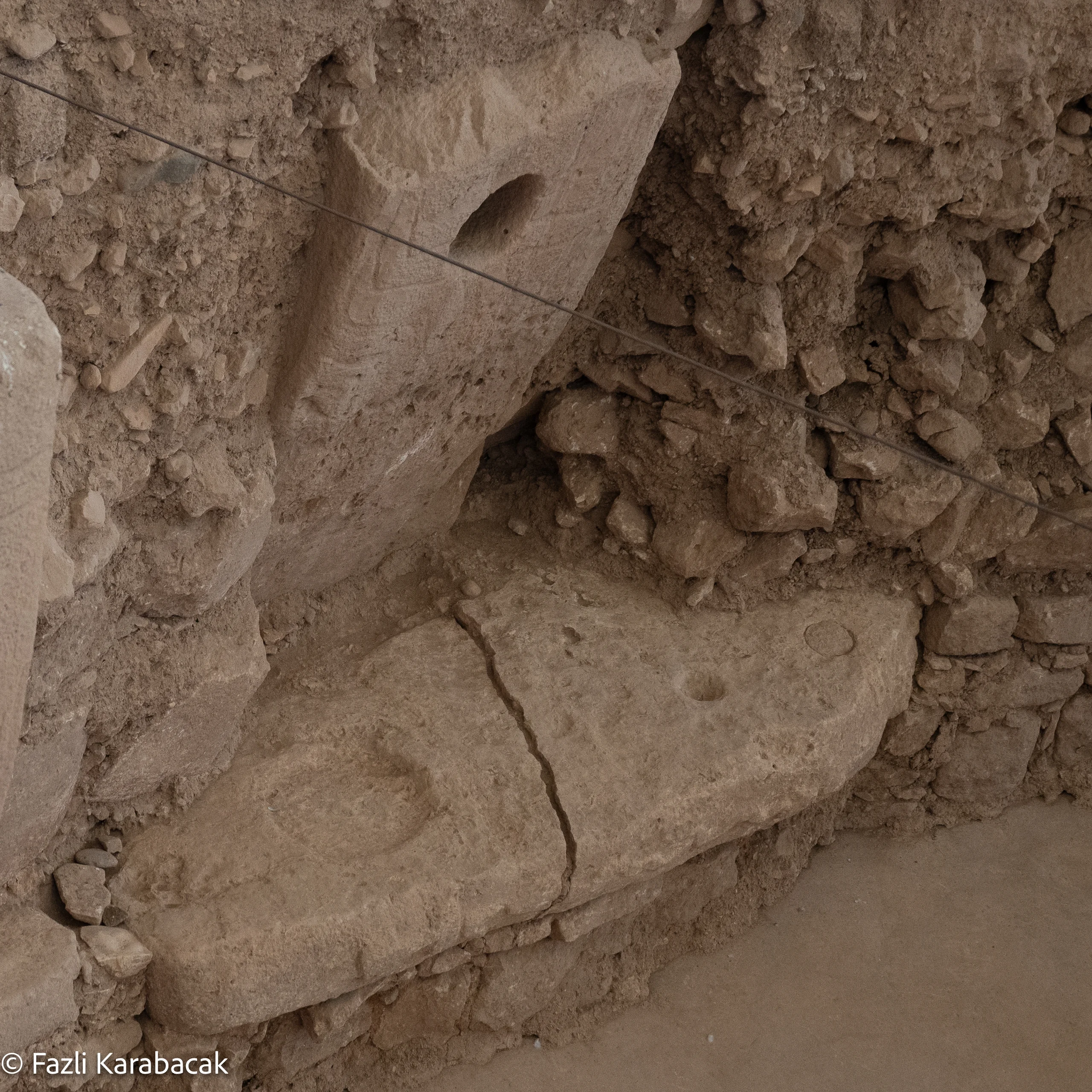
The archaeological evidence is unambiguous: the great enclosures of Layer III were deliberately filled with sediment. This was not erosion, not flood deposition, not the slow accumulation of centuries of abandonment. It was intentional backfilling, carried out with purpose, using a mixture of limestone rubble, animal bones, flint tool fragments, and other debris that excavators have painstakingly documented.
In over twenty-five years of bringing visitors to this site, I have watched archaeologists gradually piece together the evidence for this burial. Klaus Schmidt, who directed excavations from 1995 until his death in 2014, was among the first to recognise that the fill was deliberate rather than natural. Subsequent analysis has confirmed and expanded his observations. The enclosures were not abandoned and forgotten. They were decommissioned — shut down, covered over, and sealed away.
The question is: why?
The Evidence for Deliberate Burial
Before exploring interpretations, it is worth understanding what the evidence actually shows.
The fill material in the Layer III enclosures is not homogeneous soil. It is a complex mixture containing worked flint, animal bone fragments, broken stone vessels, and limestone chunks and chips. Some of this material appears to be construction debris from the quarrying and carving of new pillars, suggesting that the burial of older enclosures may have coincided with the construction of newer ones.
The fill was deposited relatively quickly in archaeological terms — not over millennia of gradual accumulation but in concentrated episodes. Stratigraphic analysis shows that the enclosures were filled to their rims and then covered with additional material, effectively turning each circular structure into a buried mound.
Crucially, the pillars within the enclosures show no signs of systematic destruction. They were not toppled, defaced, or broken. Whoever buried the site preserved the pillars rather than destroying them. This is a critically important observation: the act was burial, not demolition.
The later structures were built above and around the buried earlier enclosures. This tells us that activity at the site continued after the great enclosures were sealed. The burial of the earliest monumental phase was not the end of Göbekli Tepe — it was a transition.
Theory One: Ritual Decommissioning
The most widely discussed interpretation treats the burial as ritual decommissioning — the prescribed end of a structure’s active sacred life.
In this view, the enclosures were built for specific ritual purposes, served those purposes for a generation or several generations, and were then formally closed when their function was fulfilled or when their power was deemed exhausted. The burial was not destruction but completion — the final act in the lifecycle of a sacred structure.
This interpretation draws support from ethnographic parallels. Many traditional societies around the world practice deliberate burial or closure of sacred structures. The principle is consistent: sacred structures have lifespans, and their conclusion requires formal action.
If this interpretation is correct, the burial of the earliest enclosures was not a mystery at all to the people who carried it out. It was simply what you did when a sacred space had completed its work.
Theory Two: Cosmological Closure
A related but distinct interpretation emphasises cosmological rather than purely ritual motivations. In this view, the enclosures were understood as links between different realms — the human world, the animal world, the world of ancestors or spirits — and their burial represented the deliberate closing of those connections.
If the enclosures functioned as sites for interaction with spiritual or cosmological forces, then their burial may have been understood as the sealing of a portal. The connection had served its purpose, and leaving it open indefinitely would have been inappropriate or dangerous.
This interpretation is necessarily speculative, as we cannot directly access the cosmological beliefs of Pre-Pottery Neolithic communities. But it is consistent with what we know about how many traditional societies understand sacred space: as inherently powerful, requiring careful management, and subject to prescribed cycles of opening and closing.
Theory Three: Social and Economic Transformation
A more pragmatic interpretation connects the burial to the broader social and economic changes taking place in the Şanlıurfa uplands during the ninth and eighth millennia BCE.
In this reading, the great communal gathering places of the hunter-gatherer world became less relevant as communities shifted toward village-based, agricultural life. The monumental enclosures, which may have served as gathering points for dispersed groups coming together for seasonal rituals and feasting, lost their function as those same groups settled more permanently.
The burial, in this interpretation, was a way of formally acknowledging a transformation that had already occurred. The old sacred order was over. Agriculture and more settled forms of life were reshaping society. The great pillar enclosures belonged to a world that was passing away, and covering them was an act of cultural farewell.
Theory Four: Memory and Preservation
A more recent and intriguing possibility is that the burial was also an act of intentional preservation — that the builders buried the enclosures not to forget them but to protect them.
By covering the carved pillars with fill material, they effectively sealed them against weathering and time itself. Whether the builders intended this outcome, or whether preservation was a secondary consequence of a primarily ritual act, is impossible to determine. But burial undeniably protected the carvings for millennia.
What the Fill Material Tells Us
The composition of the backfill itself offers clues that no interpretation can ignore. The animal bones in the fill are consistent with feasting refuse. This has led several researchers to suggest that the burial itself was accompanied by large-scale communal feasting, similar to the feasting events believed to have accompanied the enclosures’ construction and use.
If this is correct, the burial was not a quiet, private affair but a major social event — communities gathering to feast, commemorate, and formally close the sacred space.
Which Theory Is Most Widely Accepted?
If you want the shortest serious answer, it is this: ritual decommissioning remains the most widely accepted interpretation.
That does not mean the debate is closed. It means that, based on the current evidence, many archaeologists find it the most convincing overall explanation. It best fits the deliberate nature of the fill, the lack of systematic destruction, the continued use of the site afterward, and the broader pattern of sacred spaces having formal life cycles.
At the same time, the other theories still matter. Social change, cosmological closure, and preservation may not be competing explanations in a strict either/or sense. Different motives may have overlapped, and different enclosures may have been treated somewhat differently across time.
The Ongoing Excavation
Only a small part of Göbekli Tepe has been excavated. As excavation continues, new evidence may clarify the burial sequence, reveal whether all enclosures were buried simultaneously or sequentially, and provide further data about the fill composition and its cultural significance.
The question of why Göbekli Tepe was buried may ultimately have more than one answer. Different enclosures may have been buried for different reasons, at different times, by communities with evolving beliefs and circumstances.
What remains beyond dispute is the act itself. Twelve thousand years ago, the people of this ridge deliberately covered one of the most ambitious construction projects in human history. They did it with care, preserving rather than destroying what they had built.
Key Takeaways
- This was no collapse or abandonment. Limestone rubble, animal bones, flint tools — everything was placed deliberately.
- The leading theory: ritual decommissioning. The enclosures fulfilled their purpose and were formally sealed, almost like a building funeral.
- Feasting debris in the fill suggests the burial itself was a ceremony.
- The same pattern appears at other Taş Tepeler sites — this was a regional practice, not a one-off event.
Go Further
For what happened next at the site’s sister locations, read Taş Tepeler: The Network beyond Göbekli Tepe. For the portable finds preserved by this burial, visit the Şanlıurfa Museum Guide. Building a trip? Start at Plan Your Göbekli Tepe Trip.
Frequently Asked Questions
Was Göbekli Tepe actually buried on purpose? Yes. The archaeological evidence is unambiguous: the Layer III monumental enclosures were deliberately filled with a mixture of limestone rubble, soil, animal bones, and flint fragments. This is not erosion or flood deposition — the fill composition, stratigraphy, and volume all point to intentional human action. The debate is about why, not whether.
How long did it take to bury the enclosures? We don’t know precisely, but the scale tells us it was a substantial project. The fill of a single major enclosure amounts to hundreds of cubic metres of material — not a single-day ceremony, but an organised, probably communal undertaking that may have unfolded over weeks or longer. Whether each enclosure was buried in one phase or several remains an open question in current excavation.
What is the leading explanation for the burial? The most widely accepted interpretation is ritual decommissioning — the idea that when an enclosure had completed its cycle of use, burial was the culturally prescribed way to end its active life. This pattern is known from later prehistoric monuments too. The alternative explanations (cosmological closure, social change, preservation) tend to overlap with this one rather than replace it.
Were the pillars damaged in the burial? No. That is one of the most telling details. If the community had wanted to destroy the site, they could have — the pillars are fragile at the shoulders and easily broken. Instead the pillars were preserved upright, protected by the fill, and left intact for twelve thousand years. This is preservation through burial, not iconoclasm.
Was Karahan Tepe buried in the same way? Evidence from Karahan Tepe suggests similar deliberate-fill patterns, though the architecture is different (carved from bedrock rather than built up in stone) so the burial looks different on the ground. It is almost certainly the same regional practice. The same pattern appears at other Taş Tepeler sites now under excavation, which strengthens the case for a shared cultural convention rather than isolated events.
Why does the burial matter for how we understand the Neolithic? Because it suggests that the people of this landscape had a sophisticated conception of architectural life-cycle — that a building could be born, used, and put to rest, like a living thing. That is a very different way of thinking about the built environment from ours. It is also, for me, one of the strongest pieces of evidence that these enclosures were not ordinary houses.
Fazlı Karabacak is a licensed Turkish tour guide with over 25 years of experience and the founder of Serendipity Turkey. He specialises in archaeological and cultural tours across Turkey, with particular expertise in Göbekli Tepe and the Pre-Pottery Neolithic sites of southeastern Anatolia.