Quick Answer
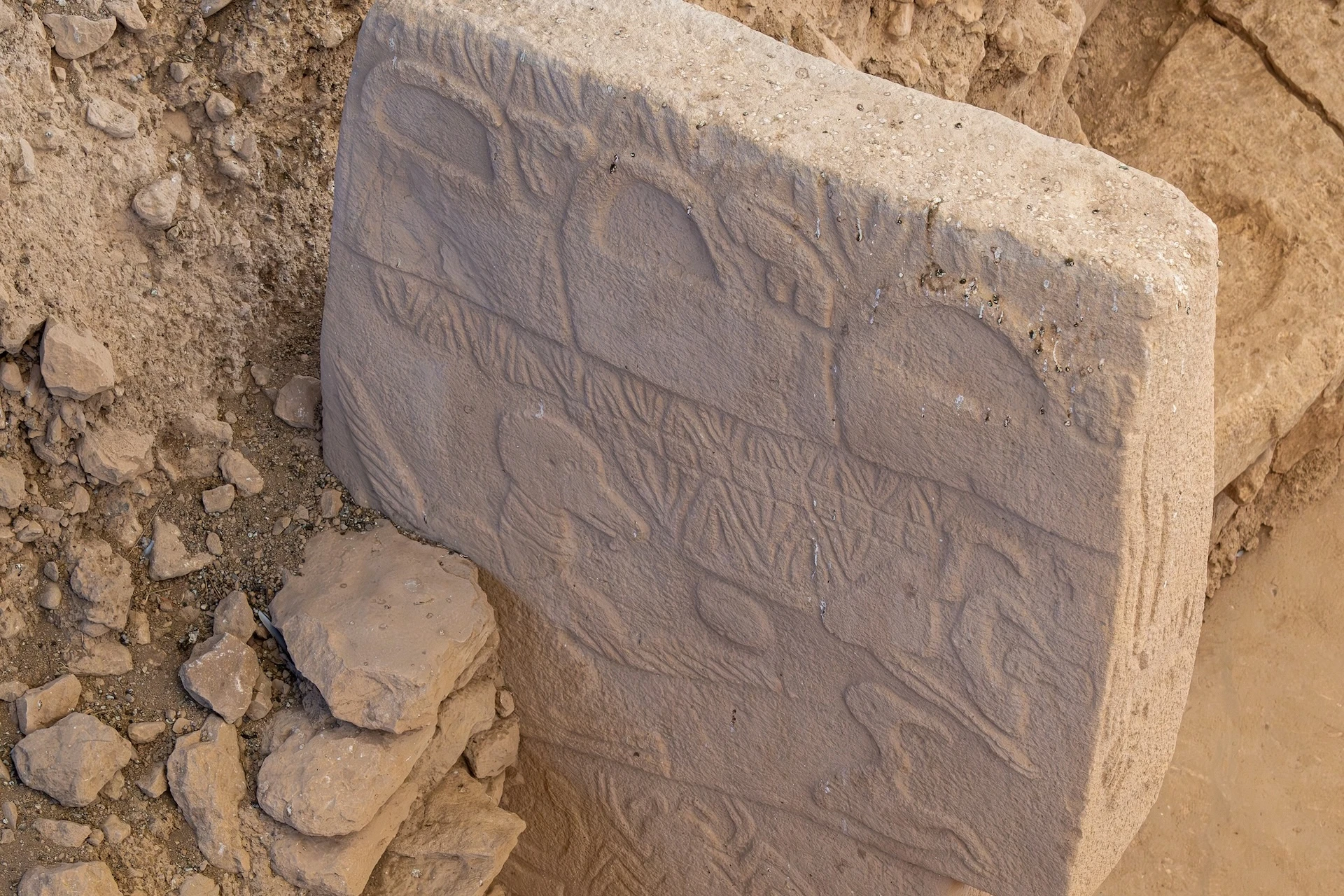
A famous theory proposes that the Vulture Stone records a catastrophic celestial event linked to the Younger Dryas. This idea became widely known because it combines astronomy, catastrophe, and one of the world’s most mysterious prehistoric carvings. It is a stimulating theory, but it remains controversial, and most archaeologists do not treat it as proven.
At a Glance
- Main claim: Pillar 43 may encode a comet-impact memory or star map
- Why it matters: one of the most publicised claims about Göbekli Tepe
- Main issue: the theory is intriguing, but heavily disputed
- Best approach: understand both the appeal and the objections
This is one of those theories that spreads fast because it is easy to remember.
Ancient monument. Cosmic disaster. Hidden warning in stone.
But the more dramatic a claim is, the more carefully it needs to be handled.
What the Theory Says
In broad terms, the claim is that some of the animal carvings on the Vulture Stone correspond to constellations, and that the overall composition encodes the memory of a catastrophic event — often linked to the Younger Dryas impact hypothesis.
That is the core of the star-map and comet-strike reading.
Why People Find It Convincing
The theory is attractive for a few reasons:
- Pillar 43 really is unusual and symbolically dense
- the scorpion invites astronomical comparison
- the composition looks ordered rather than random
- catastrophe narratives are naturally compelling
So the theory has real emotional and visual appeal, even before people assess the evidence closely.
Why Archaeologists Remain Cautious
The main archaeological objections are substantial. For a broader, less polarised overview of Pillar 43 itself, pair this with The Vulture Stone at Göbekli Tepe.
These include questions about:
- chronology
- how securely the carvings can be mapped onto constellations
- whether later viewers are imposing modern pattern recognition on ancient symbols
- whether the wider ritual context explains the pillar better than the catastrophe model
This does not automatically disprove the theory. But it does prevent it from being presented as solved.
The Ritual Alternative
A more conservative reading places Pillar 43 inside the symbolic and mortuary world of the Neolithic.
In that frame, the vulture, the headless human figure, and the surrounding animals belong to a ritual language shaped by death, transformation, danger, and mythic imagination. This approach usually fits more comfortably with the wider archaeological record.
If you want that side of the debate, pair this article with The Vulture Stone: Death, Soul, and Sky Burial.
Why the Theory Still Matters
Even if the comet theory is never accepted, it has played an important role.
It forced more people to look closely at Pillar 43, and it pushed the debate about Göbekli Tepe’s symbolic complexity into the mainstream. Sometimes a controversial theory is useful not because it is right, but because it forces better questions.
What This Tells Us About Göbekli Tepe
The real lesson may be that Göbekli Tepe is complex enough to support multiple layers of reading — ritual, cosmological, mortuary, and perhaps even celestial. The mistake is not asking the question. The mistake is acting as though the answer is already certain.
Key Takeaways
- The comet-strike reading of Pillar 43 is bold, headline-grabbing, and far from proven.
- It connects the Vulture Stone to the Younger Dryas impact hypothesis — an intriguing but heavily debated link.
- Most archaeologists still favour more cautious ritual or funerary interpretations.
- Bottom line: Treat this theory as a fascinating “what if,” not established fact.
Your Next Read
Best paired with: The Vulture Stone: Complete Guide for the full pillar overview, and Death, Soul, and Sky Burial for the rival interpretation. For the broader astronomy debate, see Göbekli Tepe and the Stars. When research turns into a real plan, visit Plan Your Göbekli Tepe Trip.
Frequently Asked Questions
Did Göbekli Tepe actually record a comet strike? There is no archaeological consensus that it did. The comet-strike reading of Pillar 43 is a hypothesis, published in 2017 by Martin Sweatman and Dimitrios Tsikritsis, that identifies certain carved animals with constellations and argues the composition encodes a specific celestial event. It is a stimulating hypothesis, but it is not accepted by the DAI excavation team or by most mainstream Neolithic archaeologists.
What is the Younger Dryas impact hypothesis, and why does it come up here? The Younger Dryas impact hypothesis — not to be confused with the Vulture Stone theory itself — proposes that a fragmented comet struck the Northern Hemisphere around 10,800 BCE, triggering the cold snap known as the Younger Dryas. The Vulture Stone claim links Pillar 43’s carvings to that event. Both hypotheses are contested within their respective fields; stacking one onto the other multiplies the uncertainty rather than dividing it.
Who supports the theory and who opposes it? The main academic proponents are Martin Sweatman (University of Edinburgh, chemical engineering) and collaborators; the theory has also been popularised through books by Graham Hancock. The main opposition comes from the archaeological community itself — including Lee Clare and Jens Notroff of the DAI team that excavates Göbekli Tepe — who have published detailed critiques of the chronology, the constellation identifications, and the underlying assumption that Pillar 43 is a “map” rather than a ritual composition.
What are the strongest objections? Three stand out. First, the chronology: the comet event is dated to c. 10,800 BCE; Pillar 43’s enclosure is dated roughly 9500–9000 BCE, leaving a gap of over 1,000 years with no intermediate record. Second, the constellation identifications rely on modern Western constellation boundaries that a Neolithic community would not have shared. Third, Pillar 43 fits very comfortably into the site’s known ritual and mortuary symbolism without needing a catastrophe narrative at all.
Does this mean the theory is useless? Not at all. Controversial theories often force better questions, and this one has pushed far more people to look carefully at Pillar 43 than would otherwise have done. It has also sharpened the debate about what counts as evidence for ancient astronomy. Those are real contributions, even if the specific comet reading turns out to be wrong.
How should I present this to visitors or in my own reading? Honestly, and with the distinction between hypothesis and fact kept very clear. I tell guests on tours: here is the theory, here is why it is appealing, here are the three main reasons most archaeologists do not accept it, and here is what we actually know about the pillar. Letting people sit with the uncertainty is more respectful of the evidence — and of their intelligence — than pretending the case is closed in either direction.
Fazlı Karabacak is a licensed Turkish tour guide with over 25 years of experience and the founder of Serendipity Turkey. He specialises in archaeological and cultural tours across Turkey, with particular expertise in Göbekli Tepe and the Pre-Pottery Neolithic sites of southeastern Anatolia.