Quick Answer
The people of Göbekli Tepe did not need telescopes or writing to observe the sky carefully. A clear horizon, repeated observation, and long-term communal memory were enough to notice seasonal changes, star risings, and the movement of celestial patterns over time. The real question is not whether they watched the sky, but how that sky-watching fit into their ritual and symbolic world.
At a Glance
- Main topic: how Neolithic people could observe the sky
- Why it matters: it helps explain why astronomical questions at Göbekli Tepe are reasonable
- Core idea: observation, memory, and ritual may have worked together
- Best takeaway: prehistoric sky knowledge should not be underestimated
Modern people often assume ancient astronomy required advanced instruments.
It did not.
The Horizon Was the Instrument
The most basic astronomical tool is the horizon itself.
If you watch the same horizon over many months and years, you can track where the sun rises, where it sets, when certain stars appear, and how the sky changes with the seasons. None of this requires metal tools or writing.
It requires attention.
Why This Matters at Göbekli Tepe
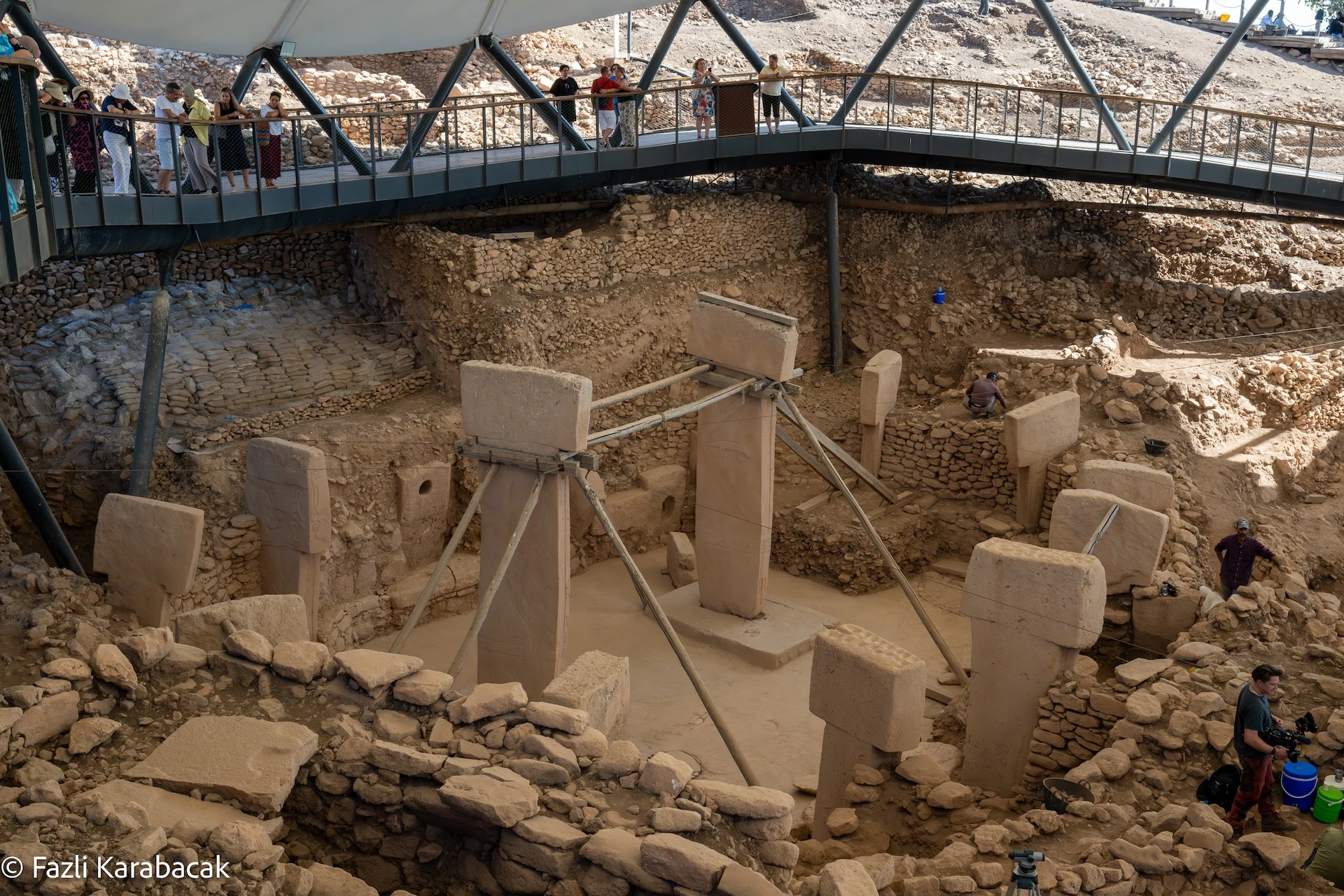
Göbekli Tepe sits on a commanding high point with wide views across the landscape. That makes sky observation entirely plausible.
Whether the site encoded formal alignments is still debated, but the idea that its builders knew the sky well should not surprise us. For the two clearest debate branches, see Göbekli Tepe and the Stars and Göbekli Tepe and the Solstices.
Observation and Memory
Prehistoric astronomy depended on repetition.
A community that watches the same horizon over generations can build an extremely reliable memory of seasonal and stellar patterns. Knowledge does not need to be written if it is ritually transmitted, repeated, and socially valued.
That is one reason astronomy and ceremony often belong together in ancient cultures.
Ritual Specialists and Cosmology
At Göbekli Tepe, some scholars have argued that ritual specialists may have helped maintain and transmit symbolic knowledge.
If that is right, celestial awareness may have been preserved not as abstract science alone, but as part of myth, ceremony, and cosmology. In many cultures, the people who keep sacred time are also the people who keep sky knowledge.
Why We Should Not Underestimate Prehistoric Knowledge
The people who built Göbekli Tepe were capable of monumental planning, symbolic design, and long-term communal coordination. It would be strange to imagine that such people ignored the sky.
A more reasonable position is that they watched it closely — while still recognising that we do not yet know exactly how they transformed that knowledge into architecture or symbol.
What This Tells Us About Göbekli Tepe
The site becomes even more impressive when we stop asking whether Stone Age people were “advanced enough” and start asking what forms of intelligence mattered in their world.
Patient observation, horizon awareness, ritual memory, and symbolic transmission may have been enough to create a very sophisticated relationship with the sky.
Key Takeaways
- No telescopes, no instruments — just the horizon, patience, and generations of memory. That was enough.
- Göbekli Tepe sits on open high ground with wide sightlines. Serious sky observation here is not just plausible; it would have been hard to avoid.
- The real question is not whether these builders watched the sky, but what they did with what they saw.
Take the Next Step
For the specific debate about Sirius, read Göbekli Tepe and the Stars. For the solar angle, read Göbekli Tepe and the Solstices. Travellers ready to stand on the hilltop themselves can start at Plan Your Göbekli Tepe Trip.
Frequently Asked Questions
Could Stone Age people really track the sky accurately without instruments? Yes — astonishingly accurately. Ethnographic and archaeological work from Australia, the Americas, and Northern Europe has shown that pre-literate communities routinely tracked solstices, lunar cycles, and the heliacal risings of major stars to within a day or two, purely through patient horizon observation and oral transmission across generations. What they lacked in instruments they made up for in continuity.
Did Göbekli Tepe’s builders need telescopes or writing to do this? No. The horizon itself is the instrument. If you watch the same horizon from the same spot over a few years, the sun’s extreme northern and southern rising points become obvious, the returning stars of each season announce themselves, and the moon’s month becomes unmissable. None of this requires technology — only attention, memory, and a site with a clear view. Göbekli Tepe has exactly that.
Why do astronomy and ritual get linked together so often? Because in most early societies the person who keeps sacred time is also the person who keeps calendrical time. Seasonal ceremonies, hunting cycles, gathering rhythms, and cosmology travel together. Separating “scientific astronomy” from “religious astronomy” is a modern habit; for the people of Göbekli Tepe, those almost certainly were the same activity.
Does this mean Göbekli Tepe was an observatory? Not in any formal sense. Saying that its builders watched the sky seriously is a very different claim from saying the architecture was designed to measure the sky. The first is almost certainly true; the second remains debated. The distinction matters, because lazy popular writing tends to collapse them.
What’s the strongest evidence that sky knowledge was part of their world? The animal reliefs themselves. Many of the species depicted — cranes, scorpions, vultures — are strongly associated with seasonal movement in this landscape. Whether those species were also connected to specific stars or constellations, as some researchers argue, is another question; but a people who chose to carve migratory species into their monumental architecture were clearly thinking in terms of time.
What’s the safest thing I can tell visitors who ask about Neolithic astronomy? That the people who built Göbekli Tepe almost certainly watched the sky, tracked the seasons, and carried detailed knowledge across generations — but that the specific claims about which star or solstice is encoded in which enclosure are hypotheses, not facts. Respect both the sophistication of the builders and the honesty of the evidence.
Fazlı Karabacak is a licensed Turkish tour guide with over 25 years of experience and the founder of Serendipity Turkey. He specialises in archaeological and cultural tours across Turkey, with particular expertise in Göbekli Tepe and the Pre-Pottery Neolithic sites of southeastern Anatolia.