Quick Answer
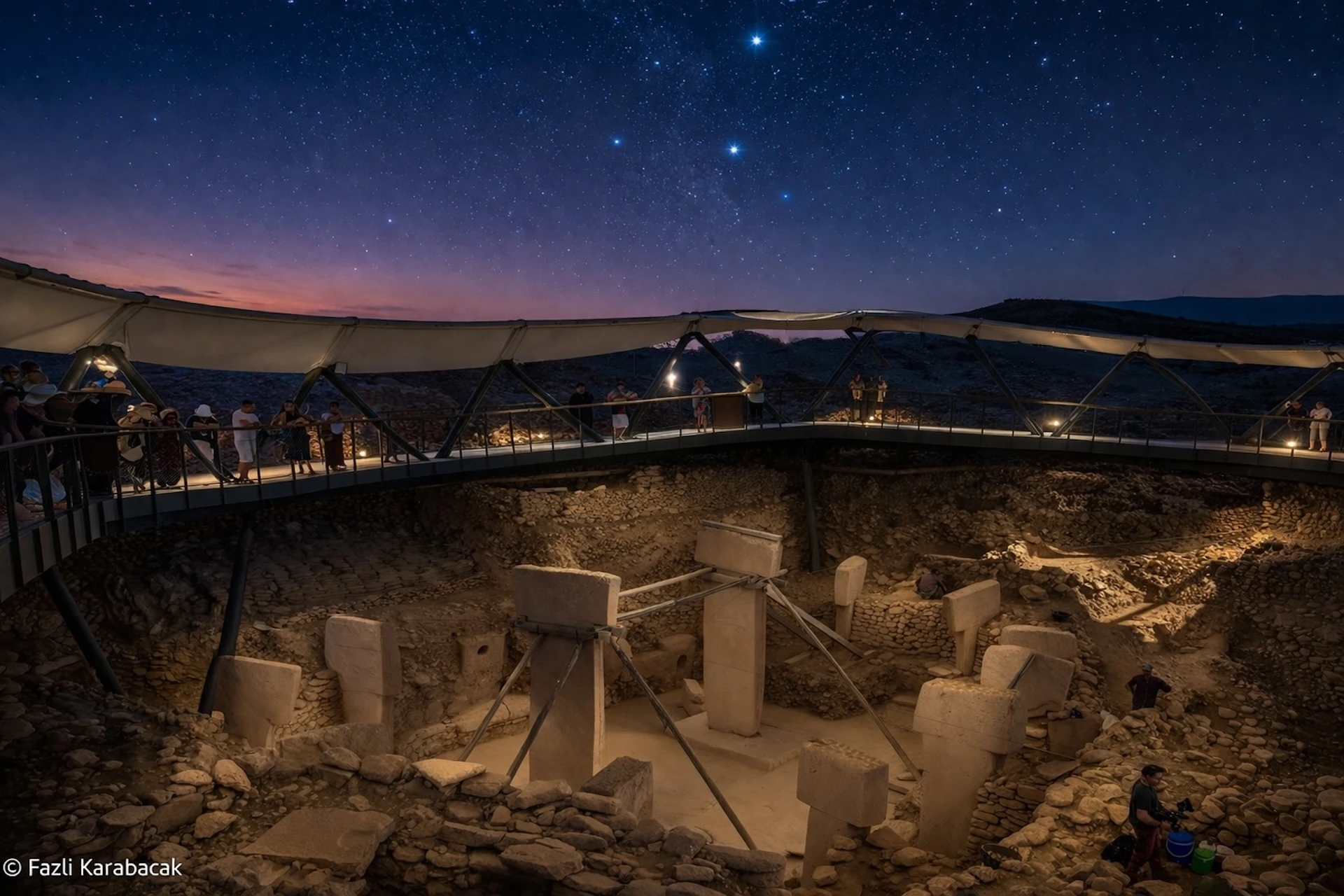
Some researchers have proposed that parts of Göbekli Tepe were oriented toward important stars, especially Sirius. The most careful version of this argument suggests that enclosure orientations may reflect changing stellar rising points over time. It is an intriguing hypothesis, but it remains a hypothesis rather than settled fact.
At a Glance
- Main topic: Göbekli Tepe and possible stellar alignment
- Best-known candidate: Sirius
- Why it matters: it raises the question of whether the builders tracked the sky in architectural form
- Current status: interesting, but still debated
Whenever people ask whether Göbekli Tepe was an observatory, the best answer is: not proven — but the question is worth taking seriously.
Why the Sirius Theory Attracts Attention
The Sirius hypothesis is compelling because it is more disciplined than many sensational claims.
Rather than simply saying “the site must be astronomical,” it looks at enclosure orientations and asks whether they could correspond to the changing rising position of a significant star.
That is a serious question.
What the Theory Suggests
In broad terms, the argument is that some of the major enclosures may face directions consistent with the rising of Sirius during the period when Göbekli Tepe was in use.
Because the sky changes slowly over long periods through precession, a star’s rising point also shifts. If builders noticed that movement across generations, they may have responded to it architecturally.
That is the basic logic behind the Sirius reading.
Why Caution Is Still Necessary
Interesting does not mean proven. If you want to compare the stellar debate with the solar one, continue with Göbekli Tepe and the Solstices.
Several archaeological objections remain important:
- enclosure orientations are not yet the same as definitive astronomical proof
- building histories are complex
- some structures may have been modified over time
- ritual architecture does not automatically equal observatory function
So while the theory deserves attention, it should not be presented as established certainty.
Astronomy and Ritual Need Not Be Opposites
One of the most useful ways to think about this debate is to stop forcing a choice between “ritual site” and “astronomical site.”
Those categories can overlap.
A place may be primarily ritual while still incorporating celestial awareness. In fact, if the builders cared deeply about cosmology, seasonality, and symbolic orientation, we should expect some relationship between architecture and sky.
Why the Debate Matters
This discussion matters because it expands the way people think about Neolithic intelligence.
If the builders were tracking the sky carefully, that tells us something important about time, memory, and long-term observation in the world of Göbekli Tepe. Even if the Sirius theory is only partly right, it still pushes us to take prehistoric sky knowledge seriously.
What This Tells Us About Göbekli Tepe
At minimum, the debate suggests that Göbekli Tepe should not be reduced to either pure engineering or pure symbolism. It may also belong to a wider ancient habit of connecting sacred architecture with celestial events and directional meaning.
That possibility is one reason the astronomy debate remains worth following.
Key Takeaways
- Sirius is the most credible stellar candidate proposed for Göbekli Tepe’s enclosure orientations — but it remains a hypothesis.
- The methodology behind this claim is stronger than most popular astronomical theories about the site.
- Ritual purpose and celestial awareness are not mutually exclusive; they may have coexisted.
- Bottom line: The Sirius question deserves serious attention and careful scepticism in equal measure.
Continue Exploring
This article is part of a three-piece astronomy series. Read them together for the full picture: Göbekli Tepe and the Solstices · Astronomy in the Stone Age · The Vulture Stone. Ready to visit the site? Plan Your Göbekli Tepe Trip.
Frequently Asked Questions
Was Göbekli Tepe aligned to Sirius? Possibly, but it has not been definitively proven. The best-known version of the argument comes from Giulio Magli, who proposed that the orientations of Enclosures D, C, and B could correspond to the heliacal rising of Sirius at three different dates during the site’s long use. The hypothesis is internally consistent, but it depends on assumptions about which direction each enclosure “faces” that are not universally accepted.
Why does Sirius matter in this debate? Sirius is the brightest star in the night sky, its disappearance and reappearance follow a distinctive annual cycle, and because of precession its rising point drifts measurably over centuries. That makes Sirius a rare candidate — a star so bright that Neolithic observers would certainly have tracked it, and whose movement over time could in principle be recorded in architecture.
Does this mean Göbekli Tepe was an observatory? Almost certainly not in the modern sense. If there is a celestial element to the design, it is woven into ritual architecture rather than bolted on as a scientific instrument. The builders were not producing star catalogues — they were, at most, marking a sky they already lived under and considered sacred.
What do mainstream archaeologists like the DAI team think? The German Archaeological Institute team that has led work at the site since 1995 has been cautious about astronomical claims. Their position is generally that the enclosure orientations are not yet sufficiently documented, that later modifications complicate the picture, and that we should not assume a Neolithic “observatory” on the basis of geometry alone.
Can I see any of this for myself when I visit? You can, and it is one of the more interesting things I point out on tours. Stand at the central pillars of Enclosure D and look out along the axis — the geometry is unmistakable even if the astronomical claim behind it is contested. I try to show both the case for and the case against, because standing inside the enclosure is exactly the place where you should be asking the question yourself.
Should the Sirius theory be taken seriously? Yes — seriously, but cautiously. It is one of the more disciplined astronomical hypotheses about the site, published in peer-reviewed journals, and it is worth knowing about. But it is a hypothesis, not a fact, and anyone presenting it as proof is running ahead of the evidence.
Fazlı Karabacak is a licensed Turkish tour guide with over 25 years of experience and the founder of Serendipity Turkey. He specialises in archaeological and cultural tours across Turkey, with particular expertise in Göbekli Tepe and the Pre-Pottery Neolithic sites of southeastern Anatolia.