Quick Answer
One of the strongest interpretations of the Vulture Stone is that it reflects Neolithic ideas about death, bodily transformation, and the treatment of the dead. Rather than reading Pillar 43 primarily as an astronomical code, many archaeologists see it as part of a funerary and mortuary world in which vultures, skull removal, and symbolic transition played a central role.
At a Glance
- Main focus: death symbolism on Pillar 43
- Key themes: excarnation, skull treatment, ritual transition
- Why it matters: it offers one of the most serious readings of the Vulture Stone beyond sensational theories
- Main question: did Göbekli Tepe encode a ritual understanding of death rather than a celestial event?
When people first hear about the Vulture Stone, they often encounter the most dramatic or speculative theories first. But there is another reading — quieter, more grounded, and in many ways more powerful.
That reading begins with death.
Looking at Pillar 43 Differently
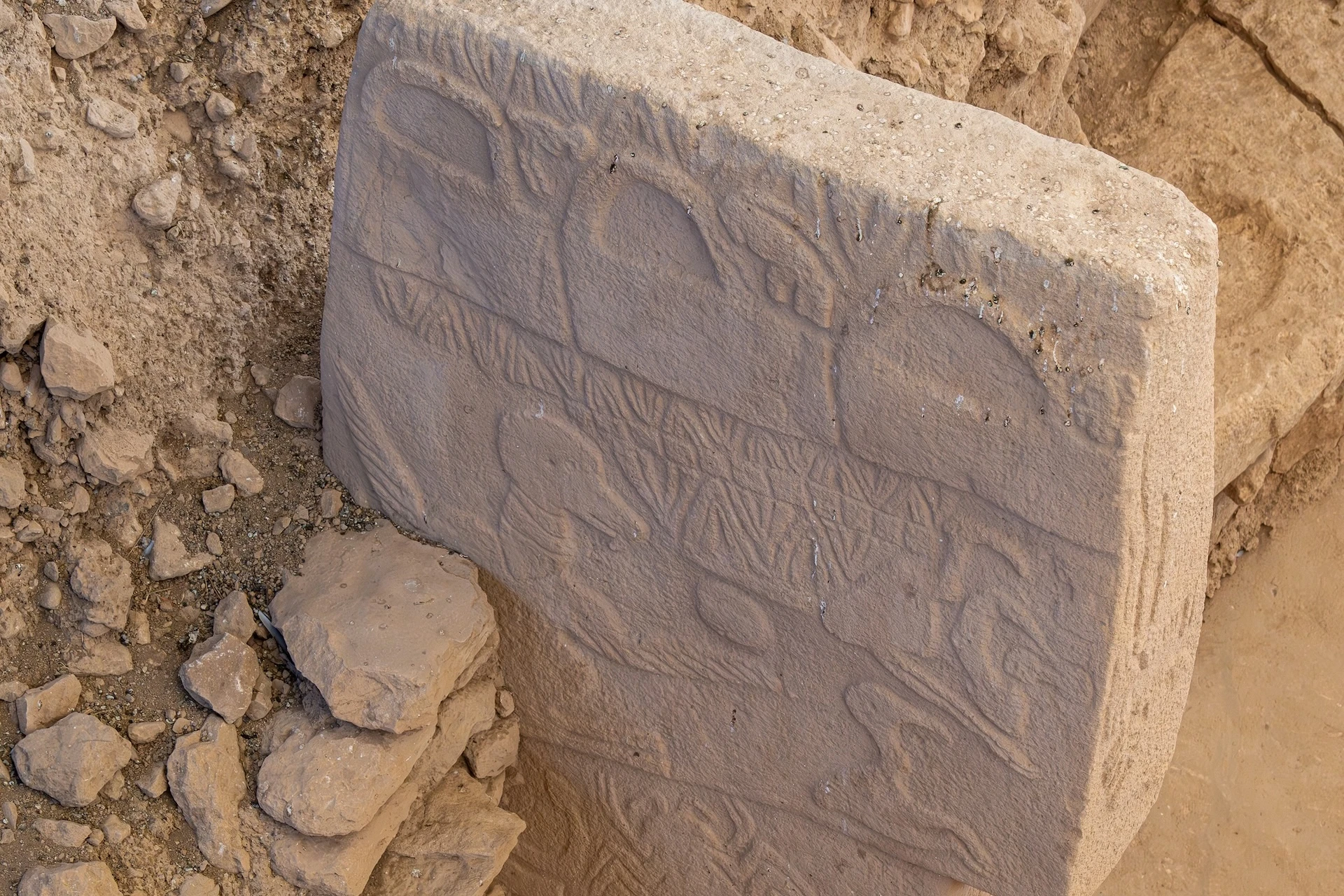
The Vulture Stone includes a large bird, a headless human figure, and a dense symbolic composition that has long encouraged interpretation. One of the most serious ways of approaching it is to ask whether the scene belongs to a mortuary world rather than to a cosmological spectacle.
That does not solve every detail. But it does give the pillar a stronger archaeological context.
If you want the broader introduction first, start with The Vulture Stone at Göbekli Tepe.
Death and the Treatment of the Body
Across the Pre-Pottery Neolithic world, there is strong evidence that death was not handled in the same way modern visitors often imagine. Bodies could be treated in stages. Skulls could be removed, curated, displayed, or modified. Human remains were part of ongoing ritual relationships between the living and the dead.
Within that wider context, a headless human figure beside a large bird becomes especially significant.
It invites comparison not only with abstract symbolism, but with real practices involving death, exposure, and the separation of skull from body.
Vultures as Agents of Transition
To modern eyes, the vulture can seem sinister. But in ritual terms, the bird may have represented passage rather than horror.
A vulture is a creature that moves between body and sky, flesh and disappearance. That alone makes it symbolically powerful in any culture thinking seriously about what happens after death.
In this reading, the vulture is not just a scavenger. It is an agent of transformation.
Excarnation and Sky-Burial Comparisons
Some scholars compare the imagery to forms of excarnation — the exposure of the dead to birds and the elements before later treatment of the bones. The phrase “sky burial” is sometimes used as a rough comparison, though it should be handled carefully because it comes from much later traditions.
Even so, the comparison is useful at a basic level. It reminds us that not every funerary system centres on immediate burial in the modern sense. Some systems understand bodily unmaking as part of sacred transition.
That makes the Vulture Stone feel less like a puzzle to be sensationalised and more like a window into a radically different relationship with death.
Skull Treatment and Neolithic Memory
The wider Neolithic world offers repeated evidence that skulls mattered.
At several sites across the region, skulls were removed, preserved, modified, or treated as socially significant remains. This is one reason the headless figure on Pillar 43 feels so important. It fits a broader world in which the head was not merely anatomical. It was symbolically charged.
At Göbekli Tepe itself, modified skull fragments have also strengthened the case that ritual skull treatment belonged to the site’s real practices and not just to its imagery.
Why This Reading Matters
This mortuary interpretation matters because it is both intellectually serious and emotionally revealing.
It suggests that Göbekli Tepe was not only a place of monumentality or abstract symbolism. It may also have been a place where the living negotiated their relationship with the dead through imagery, architecture, and ritual memory.
That possibility gives Pillar 43 a very different weight.
Caution Still Matters
None of this means every detail of the Vulture Stone has been decoded.
It has not.
But the death-and-transformation reading has an important advantage: it fits the wider archaeological world of the Neolithic more comfortably than the most extreme astronomical claims. It is not certainty. But it is grounded.
What This Tells Us About Göbekli Tepe
This reading suggests that Göbekli Tepe’s symbolic world was deeply concerned with thresholds: life and death, body and spirit, flesh and memory, burial and transformation.
The Vulture Stone may therefore be one of the clearest windows we have into how these communities thought about mortality — not as a single event, but as a process.
Key Takeaways
- Not a horror scene — a transition scene. The vulture may be carrying the dead toward something, not away from everything.
- The headless human figure is the strongest single piece of evidence for a funerary reading of Pillar 43.
- Modified skull fragments from Göbekli Tepe and the wider Neolithic world make the excarnation connection hard to dismiss.
- Bottom line: If this reading is right, death, memory, and transformation sit at the very heart of Göbekli Tepe’s symbolic world.
Deeper Reading
For the full pillar overview, start with The Vulture Stone: Complete Guide. For the competing astronomical interpretation, read Star Map or Comet Record?. Planning a visit? Begin at Plan Your Göbekli Tepe Trip.
Frequently Asked Questions
Is the Vulture Stone really depicting a scene of death or the dead? Possibly — and this interpretation has significant archaeological support. The headless human figure is the strongest single indicator, combined with the prominent vulture imagery. However, this reading should be treated as one serious interpretation among several, not proven fact. The evidence is suggestive rather than definitive.
What is excarnation, and why is it relevant to interpreting the Vulture Stone? Excarnation is the exposure of the dead to the elements or to scavenging birds (especially vultures) before the bones are later collected, modified, or ritually treated. This practice is well-documented in Neolithic contexts across the Near East. The headless figure and vulture on Pillar 43 fit naturally into a mortuary reading that sees the pillar as encoding ideas about the body, death, and the transitional journey of the dead.
What evidence for skull treatment exists at Göbekli Tepe itself? Several modified skull fragments have been found at the site, showing signs of deliberate removal, curation, or ritual alteration. This archaeological evidence strongly supports the idea that skulls held special ritual significance at Göbekli Tepe. When paired with imagery on Pillar 43, it creates a coherent picture of a site deeply concerned with death and the treatment of human remains.
How does the death-and-transformation reading differ from the astronomical interpretation? The death-and-transformation reading locates the Vulture Stone within the known Neolithic mortuary world — excarnation practices, skull modification, funerary imagery — and argues that the pillar encodes ideas about ritual transition. The astronomical reading proposes that the figures correspond to stars or celestial events. The death reading is anchored in archaeological evidence; the astronomical reading is more speculative.
Is there consensus among archaeologists that the Vulture Stone is about death? Not absolute consensus, but it is one of the strongest interpretations. Many of the leading excavators and scholars at the DAI (German Archaeological Institute) favour a reading that emphasises death, ritual, and transformation. This interpretation is considered far more grounded in the broader Neolithic archaeological context than the more dramatic astronomical theories.
If this interpretation is correct, what does it tell us about Göbekli Tepe’s purpose? It suggests that Göbekli Tepe may have functioned as a centre for ritual engagement with death and the dead — a place where communities gathered to enact mortuary rituals, treat human remains, and maintain relationships with ancestors or the deceased. This would explain the site’s complexity, monumental effort, and the intensity of its symbolic world.
Fazlı Karabacak is a licensed Turkish tour guide with over 25 years of experience and the founder of Serendipity Turkey. He specialises in archaeological and cultural tours across Turkey, with particular expertise in Göbekli Tepe and the Pre-Pottery Neolithic sites of southeastern Anatolia.