Quick Answer
Karahan Tepe is a Pre-Pottery Neolithic site located 37 kilometres east-southeast of Göbekli Tepe in Turkey’s Tektek Mountains. Discovered by archaeologist Bahattin Çelik in the mid-1990s, it features T-shaped pillars, prominent snake reliefs, rock-cut shrine chambers, and a giant carved human head — elements that make it both a sibling of Göbekli Tepe and a site with its own distinct ritual identity. Excavations since 2019 under Prof. Necmi Karul have revealed three interconnected subterranean structures carved directly from bedrock, suggesting an elaborate ceremonial complex that may rival Göbekli Tepe in significance.
At a Glance
- Location: Tektek Mountains, southeast of Şanlıurfa
- Relation to Göbekli Tepe: Sister site within the Taş Tepeler network
- Known for: Snake symbolism, rock-cut chambers, giant stone head
- Best comparison point: Göbekli Tepe uses freestanding enclosures; Karahan Tepe often works directly in bedrock
- Why it matters: It shows Göbekli Tepe was part of a wider Neolithic world, not an isolated anomaly
For years, when people asked me about the most important archaeological site in Turkey, my answer was always the same: Göbekli Tepe. But in recent years, I have found myself adding a second name to that conversation — Karahan Tepe. The more I learn about this extraordinary place, the more I wonder whether we have been telling only half the story of humanity’s earliest monumental architecture.
A Hidden Giant in the Tektek Mountains
Karahan Tepe lies approximately 55 kilometres east of downtown Şanlıurfa, within the broader Tektek Mountains zone. It belongs to the Taş Tepeler — literally “stone hills” — a network of Pre-Pottery Neolithic sites scattered across the limestone plateau east of the Harran Plain.
The landscape here feels different from Göbekli Tepe. It is more rugged, more exposed, and in some ways more mysterious. The stepped limestone terrain helps explain why this wider region was once a natural setting for hunting, gathering, and eventually ritual construction.
The site itself is extensive. Surveys and excavations have shown that Karahan Tepe is not a minor appendix to Göbekli Tepe but one of the largest and most significant ritual centres in the wider Neolithic landscape.
From Survey to Excavation
Karahan Tepe was first documented by archaeologist Bahattin Çelik during regional survey work in the 1990s. Full-scale excavation began much later, and since 2019 the work led by Prof. Necmi Karul has transformed the site’s importance in the eyes of both archaeologists and the public.
What these excavations revealed was not just another pillar site. Karahan Tepe introduced a different architectural mood: bedrock-cut spaces, unusual sculptural forms, and spatial arrangements that feel more intimate and more visceral than the monumental enclosures of Göbekli Tepe.
Why Karahan Tepe Feels Different
The most obvious contrast is architectural.
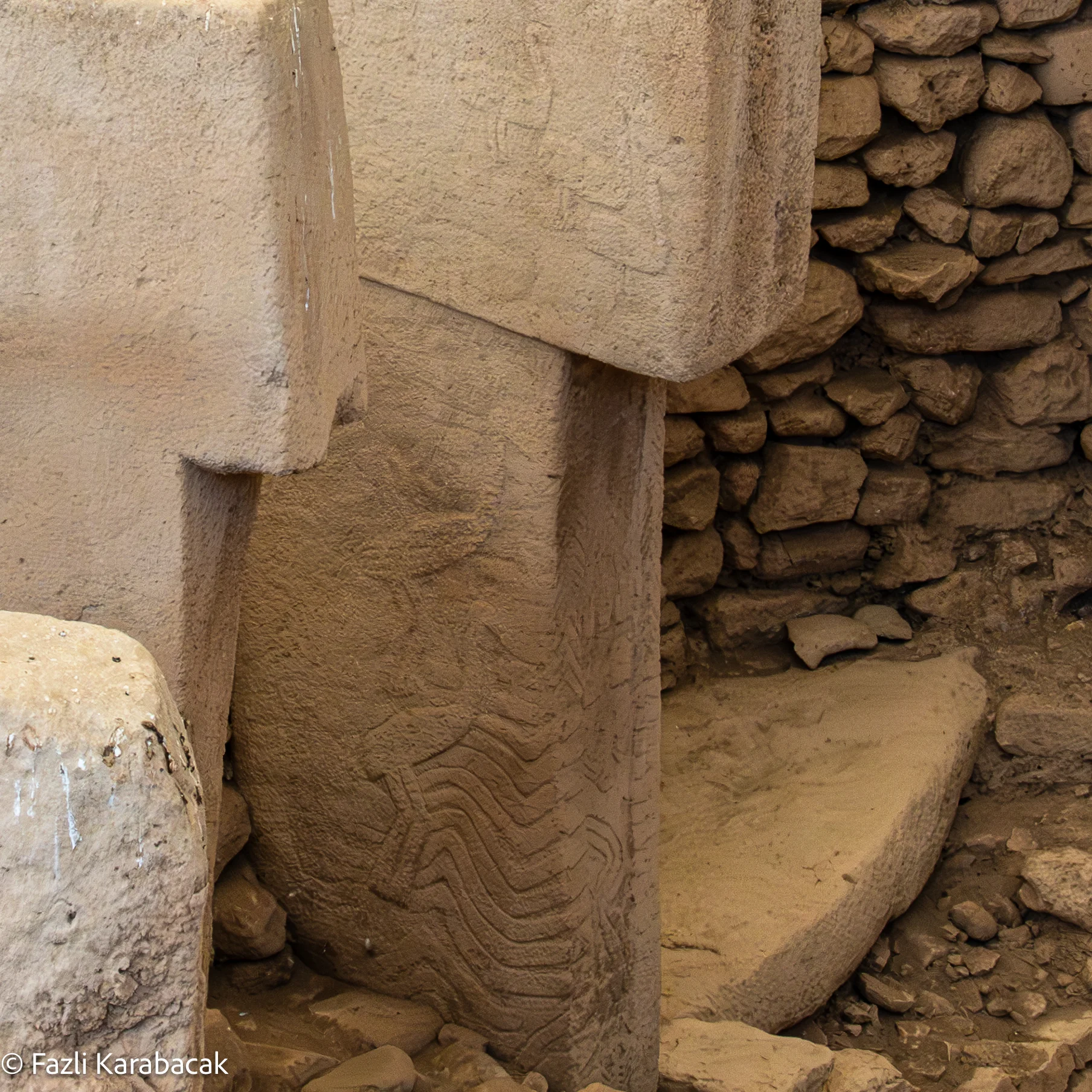
At Göbekli Tepe, the iconic spaces are large freestanding enclosures built with T-shaped pillars arranged around a central pair. At Karahan Tepe, some of the most dramatic spaces are carved directly into bedrock. Instead of building everything above ground, the creators of Karahan Tepe seem at times to have worked into the stone itself.
That difference matters. It changes the emotional effect of the site. Göbekli Tepe feels monumental and exposed. Karahan Tepe often feels enclosed, subterranean, and more psychologically charged.
The Giant Stone Head and the Rock-Cut Spaces
One of the most unforgettable features at Karahan Tepe is the giant carved stone head emerging from the bedrock. Even in photographs it is striking. In person, it changes your sense of what this site was trying to do.
Nearby rock-cut spaces, benches, and pillars reinforce the impression that Karahan Tepe was not simply copying Göbekli Tepe. It was part of the same broad world, but expressing that world differently.
If Göbekli Tepe gives us the image of communal monumentality in open stone enclosures, Karahan Tepe suggests something more interior, more sculptural, and perhaps more symbolically concentrated.
Snake Symbolism and a Distinct Ritual Identity
If there is one symbolic feature that defines Karahan Tepe most strongly, it is the prominence of the snake. For the Göbekli Tepe side of that symbolic comparison, it helps to read Snake Symbolism at Göbekli Tepe.
Göbekli Tepe also features snakes, of course, alongside foxes, boars, vultures, cranes, and other animals. But at Karahan Tepe, the serpent feels more central to the visual and symbolic atmosphere of the site.
This may point to a different local ritual emphasis or group identity within the wider Taş Tepeler network. It does not make Karahan Tepe alien to Göbekli Tepe — only distinct within the same broad symbolic language.
Deliberate Burial and Structural Closure
One of the strongest parallels between Karahan Tepe and Göbekli Tepe is the practice of deliberate burial or closure.
At Göbekli Tepe, the early monumental enclosures were intentionally filled and sealed — a process I discuss in Why Was Göbekli Tepe Buried?. Karahan Tepe presents similar evidence of spaces being deliberately filled, modified, or brought to an intentional end.
This matters because it suggests that Göbekli Tepe’s burial practices were not isolated. They were part of a wider regional pattern in which ritual architecture had formal lifecycles.
Sibling, Rival, or Something Else?
So how should we understand the relationship between the two sites?
I do not think “rival” is the best word. It is dramatic, but probably misleading. “Sibling” is closer, though even that can oversimplify things.
The best way to think about Göbekli Tepe and Karahan Tepe is as related ritual centres within a broader Neolithic world. They share enough architectural and symbolic logic to belong together, but they differ enough to show that this was never a one-site phenomenon.
In other words, Karahan Tepe does not diminish Göbekli Tepe. It expands it.
Quick Comparison: Göbekli Tepe vs Karahan Tepe
- Göbekli Tepe is the more famous and more internationally recognised site.
- Karahan Tepe feels more experimental, more visceral, and in some ways more mysterious.
- Göbekli Tepe is defined by monumental freestanding enclosures.
- Karahan Tepe is defined by rock-cut ritual architecture, snake imagery, and unusual sculptural forms.
- Together, they make more sense than either site does alone.
Visiting Karahan Tepe Today
For visitors, Karahan Tepe is best understood in relation to Göbekli Tepe rather than as a replacement for it.
If you can only visit one site, Göbekli Tepe remains the essential first stop because of its infrastructure, visibility, and foundational importance. But if you want the fuller story of the Taş Tepeler world, Karahan Tepe adds a crucial second layer.
The strongest practical route is the one I describe in Göbekli Tepe to Karahan Tepe Day Tour.
Why Karahan Tepe Matters So Much
Karahan Tepe changes the meaning of Göbekli Tepe.
Before Karahan Tepe entered the conversation fully, Göbekli Tepe could still be imagined as an anomaly — a singular miracle on a hill. Karahan Tepe makes that explanation harder to sustain.
Instead, we begin to see a regional network of monumental ritual places, each with its own identity, all participating in an unexpectedly rich Neolithic world. That is why Karahan Tepe matters so much. It does not just give us another site. It gives us a bigger map of the human past.
Where to Go from Here
Thinking of visiting both sites? The Day Tour Guide maps out a full Göbekli Tepe–Karahan Tepe itinerary with timing. For the wider network, read Taş Tepeler: Beyond Göbekli Tepe. Shape your trip at Plan Your Göbekli Tepe Trip.
Key Takeaways
- Karahan Tepe is not a copy of Göbekli Tepe — it shares the same ritual language but speaks with a distinctly different accent.
- Snake symbolism, rock-cut chambers, and the giant carved head give it an atmosphere all its own.
- Its existence proves Göbekli Tepe was part of a wider Neolithic network, not a solitary anomaly.
- Bottom line: Seeing both sites together is one of the most rewarding archaeological experiences in Turkey.
Frequently Asked Questions
Are Göbekli Tepe and Karahan Tepe really the same age? They overlap but are not identical in date. Both belong to the Pre-Pottery Neolithic A and early B horizon, roughly 9500–8000 BCE. Karahan Tepe’s best-studied structures currently date a little later than the earliest Göbekli Tepe enclosures, which is part of why the two sites are sometimes read as phases of a single cultural tradition rather than true contemporaries. As excavation at Karahan continues, this picture will become sharper.
What is the single biggest architectural difference? Karahan Tepe’s structures are carved directly into the bedrock. At Göbekli Tepe, stone was quarried and assembled to build the enclosures up; at Karahan Tepe, the builders worked subtractively, cutting chambers and benches down into the living rock. The result is an atmosphere that feels more intimate and sculptural at Karahan, and more monumental and open at Göbekli.
Which site is more important archaeologically? Neither, and the question itself is a bit of a trap. Göbekli Tepe broke the story open; Karahan Tepe is proving that the story is much larger than one site. What matters is that both belong to a shared Taş Tepeler network — more than a dozen sites now identified across the Şanlıurfa region — and that our understanding of any one of them depends on reading them together.
Are there symbolic differences between the two sites? Yes, and this is where it gets interesting. Göbekli Tepe’s reliefs emphasise a wide bestiary — foxes, cranes, boars, scorpions, vultures — and T-shaped pillars carved with arms and hands. Karahan Tepe has a stronger signature of snake imagery, remarkable phallic pillars emerging from the bedrock floor of Structure AB, and a set of naturalistic human heads quite unlike anything at Göbekli. These differences suggest different emphasis within a shared symbolic world, not a different culture.
Can I visit both in one day? Yes — and I recommend it if you can only do one day in Şanlıurfa. The drive between the two sites is about an hour (55 km), and combined with the Şanlıurfa Archaeology Museum you can see both properly between 9am and 5pm. My own day tours run exactly this itinerary, and the museum pairing is what makes the stones speak.
Is Karahan Tepe going to “overtake” Göbekli Tepe? In media coverage, possibly — Karahan Tepe is the newer and more dramatic excavation, and it photographs beautifully. In archaeological significance, no: each site reveals something the other does not. Göbekli Tepe is the larger, older, and more fully excavated site. Karahan Tepe shows us what’s coming next as the other Taş Tepeler sites are opened.
Fazlı Karabacak is a licensed Turkish tour guide with over 25 years of experience and the founder of Serendipity Turkey. He specialises in archaeological and cultural tours across Turkey, with particular expertise in Göbekli Tepe, Karahan Tepe, and the wider Pre-Pottery Neolithic world.