Quick Answer
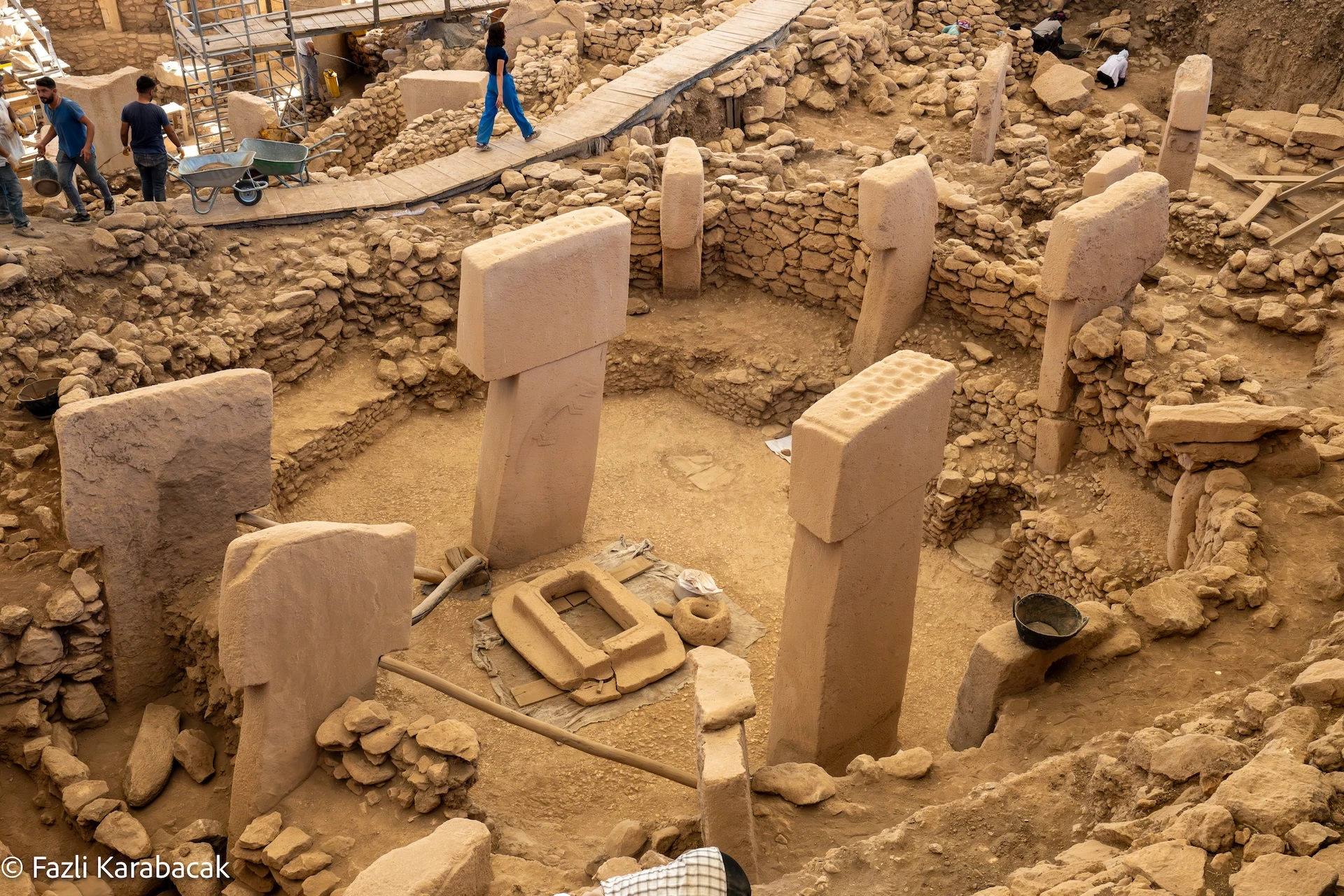
Some researchers have asked whether Göbekli Tepe’s enclosures reflect seasonal or solar alignment — especially solstices, sunrise positions, and calendar-like patterning. The evidence is suggestive, but not definitive. It is best to treat the solar-calendar interpretation as an open possibility rather than a settled conclusion.
At a Glance
- Main topic: solar alignment and seasonal timing
- Why it matters: it raises the possibility that Göbekli Tepe tracked annual cycles as well as ritual meaning
- Current status: intriguing, but still unproven
- Best approach: take the question seriously without overstating it
Solar alignment is often easier for people to imagine than complex star-map theories.
That makes it attractive — but it still requires caution.
Why the Solar Question Matters
Any community living closely with seasonality would have cared about the annual movement of the sun. That alone makes the question of sunrise, sunset, and seasonal turning points reasonable.
Göbekli Tepe sits in a landscape where horizon observation would have been possible and meaningful.
What Researchers Have Suggested
The main solar questions tend to focus on whether:
- some enclosures relate to solstice sunrise or sunset positions
- the site’s architectural orientation reflects seasonal awareness
- recurring signs or structural counts might encode a calendar-like logic
These ideas are not absurd. But they are also not yet conclusively demonstrated.
The Calendar Hypothesis
A more ambitious version of the theory suggests that some combinations of pillar counts and carved symbols may reflect a lunisolar or seasonal calendar. If you want the broader astronomy background first, start with Astronomy in the Stone Age.
This is one of the more creative readings of the site, and it may contain useful insights. But it also depends on several interpretive steps that remain debated.
For that reason, the calendar idea should be presented as a possibility — not a discovery.
Why Proof Is Difficult
The main challenge is that orientation alone rarely proves intention.
To move from “interesting directional pattern” to “deliberate solar architecture,” researchers need very strong measurement, context, and consistency. Göbekli Tepe clearly raises the question, but the evidence is not yet as unambiguous as at some later, more precisely studied monuments.
Ritual Time and Solar Time
Even if strict calendar claims remain unproven, the broader idea may still be meaningful.
A ritual centre can be sensitive to seasonal time without functioning like a modern observatory. In prehistoric contexts, ritual timing, communal gathering, and celestial awareness may have overlapped naturally.
That overlap may be the most sensible way to think about the site.
What This Tells Us About Göbekli Tepe
The solar-alignment debate reminds us that Göbekli Tepe was built by people who were deeply attentive to cycles — of season, gathering, construction, and symbolic renewal. Whether those cycles were encoded formally or more loosely, the site invites us to take prehistoric timekeeping seriously.
Key Takeaways
- Solar or seasonal awareness at Göbekli Tepe is plausible — but orientation patterns alone cannot prove it.
- The calendar hypothesis is worth investigating, not yet worth asserting.
- Ritual time and astronomical time may have been the same thing for these builders.
- Bottom line: “Interesting open question” is the most honest framing for the solstice debate.
Suggested Reading Path
- Astronomy in the Stone Age — the broader context
- Göbekli Tepe and the Stars — the Sirius hypothesis
- The Vulture Stone — where astronomy meets symbolism
When you are ready to see the enclosures yourself, start at Plan Your Göbekli Tepe Trip.
Frequently Asked Questions
Is Göbekli Tepe aligned to a solstice? Possibly, in some respects, but it has not been definitively shown. There are angles within the main enclosures that are broadly compatible with solstice sunrise or sunset azimuths at the site’s latitude, but compatibility is not the same as intention. Several later megalithic monuments can be shown to be solstice-aligned with high precision; Göbekli Tepe is not yet one of them.
What is the “calendar hypothesis” and who proposed it? The most detailed version was proposed by Martin Sweatman in a 2022 paper reading pillar symbols as a proto-lunisolar calendar, with particular animal reliefs standing in for constellations or days. It is an ambitious reading, and it has not been widely accepted by the archaeological community. The DAI excavation team have been explicit that they do not regard the evidence as sufficient.
Would Neolithic builders have cared about solstices at all? Almost certainly yes — but caring about the sun is not the same as encoding it in architecture. Every seasonal community tracks the turning points of the year, usually through the landscape (which ridge the sun rises behind in winter, for example) rather than through purpose-built monuments. Göbekli Tepe may be either; we cannot yet say.
Why is a solar alignment harder to prove than people assume? Because the horizon at 37 degrees north is wide. A great many enclosure orientations will land close to some solar event if you look hard enough. To argue deliberate alignment, you need tight measurement error, a hypothesis predicted in advance, and consistency across several independent structures. Those thresholds have been met at, say, Newgrange — they have not yet been met at Göbekli Tepe.
Does a ritual site exclude a calendar function? No, and I think this is the most important point. In prehistoric contexts, ritual time, communal gathering, and seasonal observation are usually the same activity. If Enclosure D’s orientation happens to frame a significant sunrise — whether by intention or coincidence — that does not diminish its ritual role; it deepens it.
How should I think about the solstice claim when I visit? Stand inside an enclosure at sunrise or sunset if you get the chance (the site now opens early enough in summer for this). You will immediately feel why the question arises — the sightlines are striking. Then remember: feeling aligned is not the same as being built to be aligned. That distinction is the whole debate.
Fazlı Karabacak is a licensed Turkish tour guide with over 25 years of experience and the founder of Serendipity Turkey. He specialises in archaeological and cultural tours across Turkey, with particular expertise in Göbekli Tepe and the Pre-Pottery Neolithic sites of southeastern Anatolia.