Quick Answer
From Göbekli Tepe’s harmel-scented enclosures to the kykeon of the Eleusinian Mysteries, the deliberate ritual use of psychoactive substances appears woven through the origins of organised religion. Archaeological chemistry, ancient texts, and comparative ethnography converge on a remarkable conclusion: across twelve millennia and multiple civilisations, altered consciousness was not peripheral to sacred experience — it was often its engine.
At a Glance
- Göbekli Tepe: Positive evidence for altered states; Peganum harmala grows wild nearby; vessel residues confirm fermentation
- Karahan Tepe: Serpent-dominated imagery; bedrock-cut pit shrine designed for physical descent and sensory deprivation
- Egypt: Bes-vase (Ptolemaic) analysed by Tanasi et al. (2023) — harmel alkaloids, blue lotus compounds, and fermented base confirmed
- Eleusis: Kykeon (ergot alkaloid theory proposed by Hofmann, Wasson & Ruck) — possibly the most famous ancient psychedelic ritual
- Vedic India: Soma of the Rigveda — unidentified plant (leading candidates: Ephedra, Amanita muscaria, Peganum harmala)
- Mesopotamia: Ninkasi Hymn describes beer; cylinder seals show divine figures with plant-filled cups
- Key principle: In every context, altered consciousness was embedded in ritual frameworks — not casual intoxication
The Question Everyone Asks (and Why It Deserves a Serious Answer)
There is a question I have been asked increasingly often in recent years, usually in a lowered voice and with a slightly apologetic look: “Were the people who built these places using psychedelic substances?”
In more than twenty-five years of guiding visitors through the archaeological landscapes of Turkey and the broader Near East — through the megalithic enclosures of Göbekli Tepe, the extraordinary bedrock shrines of Karahan Tepe, and the sun-baked ruins of ancient Mesopotamia — this has become one of the most important questions I am asked about the origins of human religion. And the evidence, accumulated slowly but with increasing precision over the past three decades, increasingly points toward a remarkable answer: yes. Not universally, not exclusively, and not always in the ways popular accounts suggest. But the ritual use of psychoactive substances appears to be among the oldest and most widespread practices in the human spiritual repertoire.
What I want to offer here is not sensationalism, but precision — a careful tour of what the science actually shows, from the limestone enclosures of southeastern Turkey to the temples of ancient Egypt and Greece.
What Does the Evidence from Göbekli Tepe Itself Show?
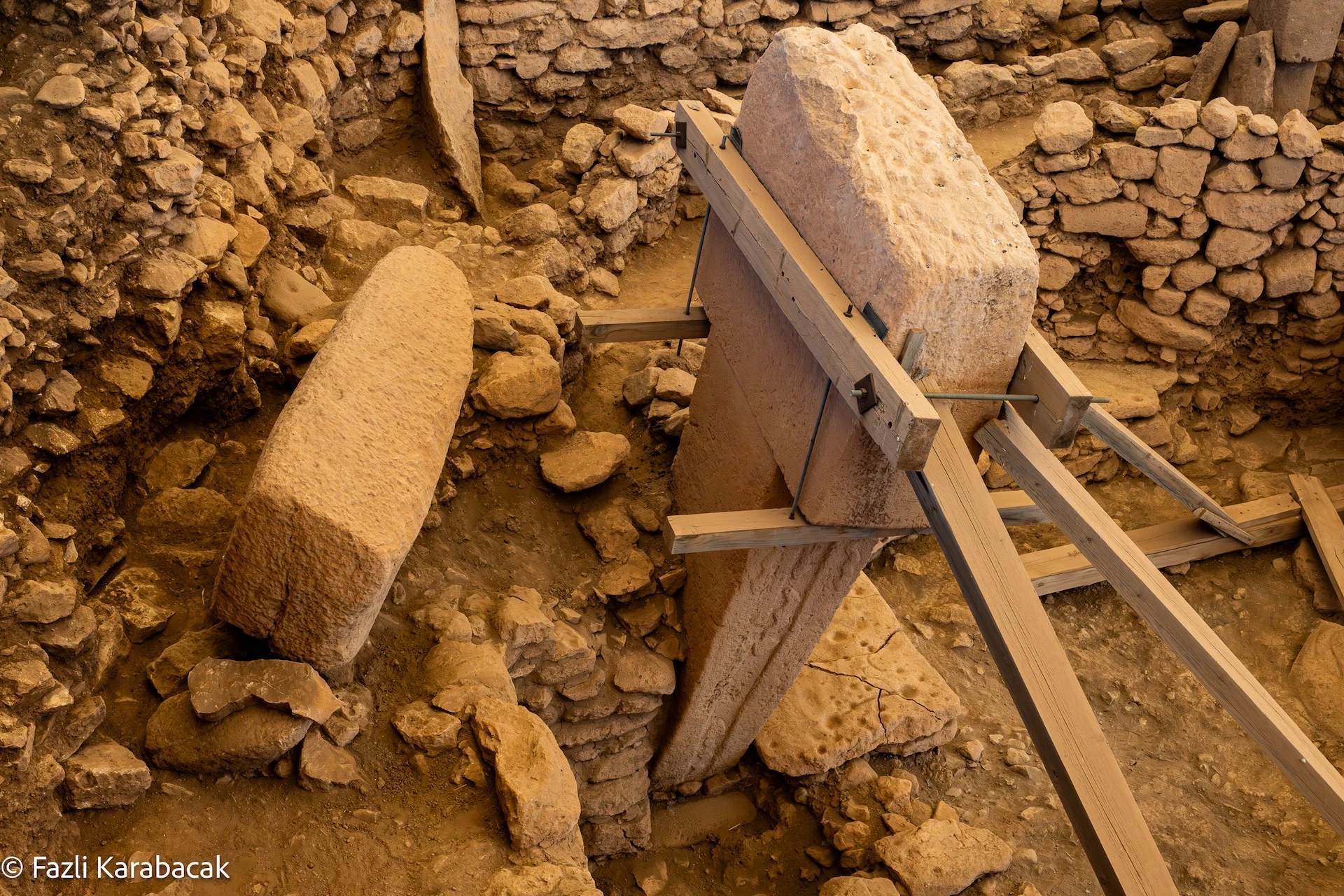
For the detailed evidence from Göbekli Tepe — the trance posture sculptures, the spirit helper figurine, the Peganum harmala candidate, the beer vessels, the three bags of Pillar 43 — I have covered this comprehensively in two companion articles: Psychoactive Plants and Altered States at Göbekli Tepe and Shamanism at Göbekli Tepe. What I want to do in this article is zoom out — to place Göbekli Tepe within the much larger story of psychoactive plant use in the ancient world, from its Neolithic roots through to the great civilisations that followed.
The key points from Göbekli Tepe to carry forward are these: a 2023 systematic study by Jutta Dietrich marks drug use evidence as positively present at the site; Peganum harmala grows abundantly in the surrounding landscape; the architecture of the enclosures was specifically designed to produce intense, disorienting psychological states; and the imagery of the pillars is consistent with trance experience across neuropsychological models. What remains missing is direct chemical analysis of the vessel residues for psychoactive alkaloids.
What Does Karahan Tepe Tell Us?
Thirty-seven kilometres east-southeast of Göbekli Tepe, in the rugged Tektek Mountains, Karahan Tepe has been revealing its secrets since systematic excavations began in 2019 under Prof. Necmi Karul of Istanbul University. I have visited the site multiple times since excavations began, and each time I come away with the conviction that this place operated within a ritual framework at least as sophisticated as Göbekli Tepe’s — but inflected by different symbolic priorities.
Where Göbekli Tepe’s enclosures were built from quarried and transported pillars, Karahan Tepe’s builders cut their sacred spaces directly into the living bedrock. The hill itself became the architecture. In Structure AB — the extraordinary Pillars Shrine carved entirely from bedrock — a crescent-shaped pillar carved from the living rock functions as a guardian snake at the shrine’s entrance. The giant stone face that protrudes from the western wall, its neck covered in parallel striations, blurs the boundary between human and serpent in a way that is deeply unsettling. Between Structures AB and AA runs a serpentine groove carved into the bedrock floor, connecting the two shrines.
Serpents are among the most consistently reported entities during psychedelic and deep trance experiences worldwide. In David Lewis-Williams and Thomas Dowson’s neuropsychological trance model, the serpent appears in the later stages of trance, associated with descent into the underworld and the dissolution of ordinary selfhood. At Karahan Tepe, the serpent’s dominance suggests a ritual tradition specifically focused on descent, transformation, and the crossing of thresholds — whether achieved through psychoactive substances, sensory deprivation, or some combination of techniques.
Structure AA — the Pit Shrine — contains a detail I find particularly suggestive. Cut into the floor at the structure’s northern end is an irregular pit descending approximately 2.3 metres into the bedrock, with a carved recess on its western side large enough for a person to enter. The practice of ritual descent — the katabasis — is documented across ancient and traditional cultures as a technique for inducing contact with the realm of the dead or the spirit world. Whether the pit at Karahan Tepe served precisely this function cannot yet be proven. But the physical experience of descending into it, enclosed by carved bedrock in near-darkness, would have been profoundly disorienting — and probably profoundly meaningful.
Visiting Karahan Tepe: Karahan Tepe is still being excavated and is accessible on select tours. On our Göbekli Tepe and Karahan Tepe guided tour, we visit both sites and explain the different symbolic languages of each — the contrast between Göbekli Tepe’s pillar-built enclosures and Karahan Tepe’s bedrock-cut shrines is one of the most intellectually rewarding experiences in Turkish archaeology.
What Did Ancient Egyptians Use for Sacred Intoxication?
The ancient Egyptians are not the first civilisation most people associate with psychedelic ritual, but the chemical evidence is now remarkably precise. In 2023, Davide Tanasi and colleagues published a multimodal analysis of the residues inside a Ptolemaic-period Bes-vessel from Egypt, dating to the second century BCE. Applying proteomics, metabolomics, ancient DNA metabarcoding, and synchrotron micro-FTIR spectroscopy, they identified an extraordinary pharmacological cocktail: Peganum harmala alkaloids (harmaline, harmine, and vasicine), compounds from Nymphaea nouchali var. caerulea (the blue Egyptian water lily, a mild psychoactive with sedative and hypnotic properties), and traces of a fermented fruit-based liquid.
The Bes-vase context is significant beyond its chemistry. Bes was an Egyptian deity associated with oracular dreams and divination — known in ancient sources as a “giver of dreams.” The vessel appears connected to the practice of ritual incubation: devotees would sleep in temple precincts after consuming ritual preparations, seeking prophetic visions. Peganum harmala’s pharmacological profile — its capacity to produce vivid, dream-like states and potentiate other compounds — makes it a natural fit for such practices.
The blue water lily appears independently in ancient Egyptian art with striking frequency. Nymphaea caerulea is depicted being held to the nose by figures in banqueting scenes, and lotus flowers appear in royal and divine contexts across Egyptian iconography. Recent pharmacological analysis has confirmed that the flower contains nuciferine and aporphine alkaloids with mild psychoactive and euphoric effects. The combination of lotus with harmel in the Bes-vase suggests a deliberate polypharmacy approach — stacking mild compounds for synergistic effect — that appears to have been standard practice in ancient ritual pharmacology.
What Was the Kykeon of the Eleusinian Mysteries?
The Eleusinian Mysteries were the most famous initiatory rites of the ancient world. For nearly two thousand years, from roughly the seventh century BCE to the closing of the sanctuary by the Christian emperor Theodosius in 392 CE, initiants travelled from across the Mediterranean world to Eleusis, near Athens, to undergo an experience they were sworn never to reveal. Ancient sources describe the Telesterion — the initiation hall — as a place where terrifying visions and profound transformations occurred. Many reported that the experience transformed their relationship to death.
The secret substance at the heart of the Eleusinian rite was the kykeon: a ritual drink prepared from barley, water, and mint. The formulation is described in the Homeric Hymn to Demeter but its pharmacological nature was a mystery for centuries. In 1978, Albert Hofmann (the chemist who first synthesised LSD), R. Gordon Wasson (the ethnomycologist who popularised the concept of ancient hallucinogenic mushroom use), and the classicist Carl Ruck published their landmark book The Road to Eleusis, arguing that the kykeon contained ergot alkaloids — specifically ergine (LSA), a compound closely related to LSD that occurs naturally in Claviceps fungi infecting the barley or other grasses used in the brew.
The ergot theory has been debated, but it has not been disproven. Ergot alkaloids have been identified in archaeobotanical contexts in other ancient Mediterranean sites, and the technology for producing an effective psychoactive infusion from naturally occurring ergot is well within the capabilities of ancient pharmacologists. A 2021 chemical analysis of wine residues from the Mas Castellar site in Spain identified ergot alkaloids in a ritual context dated to the fifth century BCE, providing direct archaeochemical evidence of ergot-enhanced preparations in ancient Mediterranean ritual settings.
What the Eleusinian evidence demonstrates is how deeply embedded psychoactive ritual could become within a complex, literate civilisation — not as a marginal practice but as the central transformative experience of a state-sponsored religious institution attended by emperors, philosophers, and ordinary citizens alike.
What Was the Vedic Soma?
In the Rigveda, the oldest sacred text of the Hindu tradition, the preparation and consumption of Soma occupies a central position. More than one hundred hymns are addressed to Soma directly. It is simultaneously a plant, a ritual beverage, and a deity — a compressed symbol of the transformative power of sacred intoxication. Soma is described as golden in colour, pressed from a plant, mixed with water and milk, and consumed by priests and the god Indra himself. Its effects include ecstasy, profound insight, a sense of immortality, and contact with the divine.
The identification of the original Soma plant remains one of the great unsolved mysteries of South Asian studies. R. Gordon Wasson proposed Amanita muscaria (fly agaric) — a striking but contested candidate. Alternatives include Ephedra species (which grow in Afghanistan and Central Asia, along the route of the Indo-Aryan migrations), Banisteriopsis caapi (the ayahuasca vine), and — notably for our purposes — Peganum harmala itself. The latter hypothesis, developed independently by several scholars, draws on the pharmacological match, the plant’s distribution across Central Asia and the Iranian plateau, and the remarkable similarity between harmaline’s visual effects and some of the Rigveda’s descriptions of the Soma experience.
The Avestan Haoma — the sacred plant of Zoroastrian ritual — appears to be a cognate of Vedic Soma, and its identification with Ephedra or Peganum harmala has been argued by multiple scholars. The geographic corridor connecting the Zagros Mountains, the Iranian plateau, and the Indus Valley passes through precisely the landscapes where Peganum harmala grows most abundantly — including southeastern Turkey.
What Does the Broader Picture Tell Us About Our Origins?
What connects all of these threads — Göbekli Tepe’s harmel-landscape, Karahan Tepe’s serpent shrines, the Egyptian Bes-vase, the Greek kykeon, and the Vedic Soma — is not simply the presence of psychoactive substances in ritual contexts. It is the consistent pattern of intentionality and embeddedness.
Across every tradition in which we have evidence, psychoactive substances were not consumed casually. They were prepared according to specific protocols, administered in specific ritual contexts, and the experiences they induced were interpreted through specific cosmological frameworks. The substances were not the religion. They were, in many traditions, the technology through which the religion was experienced — the means by which the boundary between the human and the divine was temporarily dissolved, and the practitioner was transformed.
The modern study of these traditions has been transformed by archaeochemistry. What was once pure speculation — were ancient people really using these substances? — is increasingly a question that analytical science can address directly. The Tanasi et al. study is one example. The Mas Castellar ergot analysis is another. As similar studies are applied to more sites and more materials, the picture of ancient pharmacological knowledge will become clearer.
For Göbekli Tepe and Karahan Tepe, the key studies remain to be done. But the framework is in place — and the landscape speaks clearly. The plants were there. The knowledge was there. The ritual spaces were designed for exactly the kind of experiences these plants produce.
The full picture, in person: The Göbekli Tepe–Karahan Tepe landscape is one of the richest archaeological environments on earth. On our full-day guided tour, we cover both sites and explain the ritual frameworks in full — including the pharmacological context that most tours leave out entirely.
Key Takeaways
- Göbekli Tepe and Karahan Tepe sit in a landscape rich with Peganum harmala, a potent psychoactive with a demonstrated ancient Near Eastern ritual history.
- Karahan Tepe’s serpent imagery, bedrock-cut shrines, and 2.3-metre pit are consistent with ritual traditions focused on descent, sensory deprivation, and threshold experiences.
- The 2023 Tanasi et al. study provides direct archaeochemical evidence of harmel and blue lotus in an ancient Egyptian ritual vessel — demonstrating the scientific detectability of these compounds.
- The Eleusinian Mysteries likely involved ergot alkaloids; direct chemical evidence of ergot-enhanced ritual beverages has been found in a fifth-century BCE Iberian site.
- Vedic Soma and Avestan Haoma remain unidentified, with Peganum harmala and Ephedra among the leading pharmacological candidates.
- Across every context, the pattern is the same: deliberate use, ritual embedding, cosmological interpretation.
Planning Your Visit
Visiting Göbekli Tepe without understanding the pharmacological and shamanic context is like visiting a cathedral without knowing what Christianity is. The architecture, the imagery, and the spatial sequence of the enclosures only make sense within a framework of intentional ritual transformation.
Our Göbekli Tepe and Karahan Tepe guided day tour provides this complete interpretive context — from the plants growing in the landscape to the meaning of the architecture to the cross-cultural parallels that bring the whole picture together.
Your Next Read
Suggested path: Psychoactive Plants at Göbekli Tepe → Shamanism at Göbekli Tepe → Ancestor Cult and the Skull Cult → Karahan Tepe: Göbekli Tepe’s Sibling or Rival?. Planning a trip? Start with Plan Your Göbekli Tepe Trip.
Frequently Asked Questions
Were psychedelics used at Göbekli Tepe? Direct chemical evidence has not yet been published from Göbekli Tepe’s vessel residues. However, a 2023 systematic archaeological analysis positively marks drug use evidence at the site, Peganum harmala grows wild in the surrounding landscape, and the imagery aligns with neuropsychological models of trance. The case is compelling but not yet chemically confirmed.
What is the Bes-vase and what was found in it? A Ptolemaic Egyptian ritual vessel associated with the dream deity Bes was analysed by Tanasi et al. (2023) using proteomics, metabolomics, and ancient DNA. They identified Peganum harmala alkaloids (harmaline, harmine, vasicine), blue water lily compounds, and a fermented base liquid — confirming the deliberate combination of psychoactive substances in an ancient Near Eastern ritual context.
What was the kykeon of the Eleusinian Mysteries? The kykeon was the ritual drink consumed by initiants at Eleusis, described in the Homeric Hymn to Demeter as a preparation of barley, water, and mint. Albert Hofmann, Gordon Wasson, and Carl Ruck proposed in 1978 that it contained ergot alkaloids from grain fungi — a theory supported by a 2021 chemical analysis of a contemporary Iberian ritual vessel that identified ergot alkaloids in archaeological residues.
What was Soma in the Rigveda? Soma was the sacred intoxicant of ancient Hindu ritual — simultaneously a plant, a beverage, and a deity. The original plant has not been conclusively identified. Leading candidates include Amanita muscaria, Ephedra species, and Peganum harmala. More than one hundred Rigvedic hymns are dedicated to Soma, describing its ecstatic effects and its role as a vehicle for divine encounter.
What is the significance of Karahan Tepe’s serpent imagery? Serpents are among the most universally reported entities in deep trance and psychedelic experience across cultures. The dominance of serpent imagery at Karahan Tepe — including a guardian snake pillar at the shrine entrance, a human-serpent hybrid face, and a serpentine groove connecting two shrines — suggests a ritual tradition focused on descent, transformation, and threshold crossing.
How does the pit shrine at Karahan Tepe relate to altered states? Structure AA at Karahan Tepe contains a 2.3-metre pit cut into the bedrock, with a carved recess large enough for a person to enter. Whether used for physical immersion or as a symbolic representation of descent into the underworld, the structure aligns with ancient practices of ritual katabasis (descent) documented across Mediterranean and Near Eastern cultures as a means of inducing visionary experiences.
Fazlı Karabacak is a licensed Turkish tour guide with over 25 years of experience and the founder of Serendipity Turkey. He specialises in archaeological and cultural tours across Turkey, with particular expertise in Göbekli Tepe, Karahan Tepe, and the Pre-Pottery Neolithic sites of southeastern Anatolia.