Quick Answer
The bull and the snake form one of the most striking symbolic pairings at Göbekli Tepe. In scenes such as the one on Pillar 20, they appear not as neutral animal neighbours but as forces in tension. The pairing suggests an opposition between visible strength and hidden danger, between the massive power of the aurochs and the concentrated threat of the serpent.
At a Glance
- Main pairing: bull and snake
- Key context: confrontation imagery, especially on Pillar 20
- Why it matters: it shows how Göbekli Tepe used animal relationships, not just individual animals, to create meaning
- Main question: what happens when the largest force in the landscape meets one of the most symbolically charged?
Some of the most important images at Göbekli Tepe are not about single animals alone. They are about relationships between animals.
The bull-and-snake pairing is one of the best examples.
Why This Pairing Matters
The aurochs and the snake represent two very different kinds of power.
The bull is visible, massive, muscular, and unmistakable. The snake is smaller, quieter, and in symbolic terms far more associated with hidden threat. When the two are brought together, the contrast is immediate.
That contrast is likely part of the point.
Pillar 20 and the Confrontation Scene
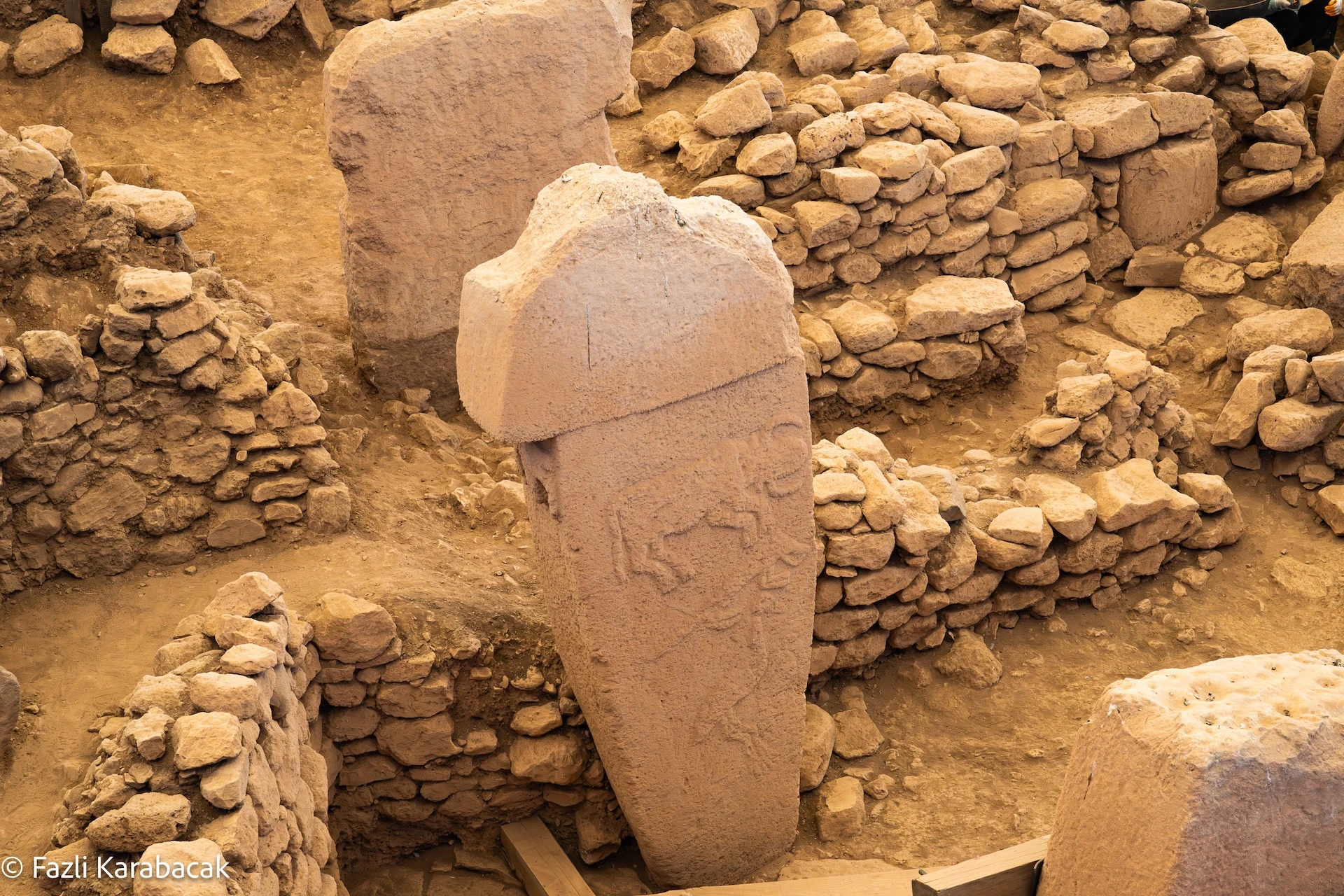
One of the most important examples appears on Pillar 20, where a snake descends toward a collapsing aurochs. This image has attracted serious scholarly attention because it does not feel decorative. It feels directional and dramatic.
Whether the scene shows attack, symbolic defeat, venom, or a more mythic opposition, it clearly stages a relationship rather than a random coexistence.
Two Forms of Strength
The bull and the snake can be understood as two different symbolic logics.
- the bull represents size, force, and visible presence
- the snake represents hidden danger, threshold power, and concentrated lethality
That is what makes the pairing so compelling. It is not simply animal variety. It is symbolic contrast.
More Than Natural Observation
Of course, the builders knew both animals from real life. They hunted large animals, moved through snake-inhabited landscapes, and understood risk directly.
But the carvings go beyond simple natural observation. They take the experienced world and compress it into a charged visual opposition.
That is why the bull-and-snake pairing feels larger than an anecdote from the hunt. It feels closer to symbolic structure.
Why It Resonates So Strongly
This pairing also resonates because it seems to operate at multiple levels at once.
It can be read as:
- danger confronting strength
- hidden force overcoming visible power
- a ritual or mythic opposition
- a distilled image of the dangerous world the builders inhabited
We should be careful not to force one final explanation. But the strength of the image lies precisely in that layered quality.
Bull, Snake, and the Wider Animal World
The pairing also makes more sense when placed inside Göbekli Tepe’s larger symbolic field. For the enclosure logic behind these animal relationships, pair this with Each Enclosure, a Different World.
If you read the site animal by animal, you notice different kinds of power emerging:
- fox = liminal and identity-rich
- snake = hidden, charged, transformative
- boar = aggressive and physical
- bull = massive, visible, and imposing
The bull-and-snake scene matters because it shows those powers in relationship, not just in isolation.
What This Tells Us About Göbekli Tepe
This pairing reminds us that Göbekli Tepe’s imagery was not just a collection of animal icons. It was also a system of tension, contrast, and symbolic staging.
The builders were not merely carving creatures they knew. They were arranging them into meaningful relationships.
That is one reason scenes like Pillar 20 remain so compelling.
Key Takeaways
- Pillar 20 stages one of Göbekli Tepe’s most dramatic scenes: a snake descending on an aurochs.
- Visible strength versus hidden danger — the confrontation is symbolic, not zoological.
- Bottom line: Göbekli Tepe’s builders thought in relationships between animals, not just individual creatures, and that layered thinking is what makes the site’s imagery so powerful.
Go Further
This pairing sits inside a wider animal world. For the snake side, read Snake Symbolism at Göbekli Tepe. For the full enclosure picture, see Each Enclosure, a Different World. Shaping a trip? Visit Plan Your Göbekli Tepe Trip.
Frequently Asked Questions
What does the bull-and-snake pairing at Göbekli Tepe represent? The pairing almost certainly represents a symbolic contrast between two opposing forces: the visible, massive power of the aurochs and the hidden, dangerous force of the snake. This kind of binary thinking — pitting opposed forces into relationship — appears repeatedly in Göbekli Tepe’s animal imagery and suggests that the builders thought in dualities and tensions rather than isolated symbols.
Where is the most famous bull-and-snake scene, and what does it show? The most striking example appears on Pillar 20 in one of the main enclosures, where a snake is carved in what appears to be an attacking or descending posture toward an aurochs (wild bull) that seems to be collapsing or dying. The composition is dynamic and clearly intentional, not a random arrangement of carved animals.
Is Pillar 20 definitely depicting a mythological scene or battle? That is difficult to prove with certainty. It may represent an actual hunting or animal behaviour scene, a spiritual encounter, a moral or cosmological lesson, or a combination. What is clear is that the composition is too structured and deliberate to be mere decoration. It belongs to a meaningful visual language, even if we cannot fully decode what that language says.
How is the bull-and-snake pairing different from other animal combinations at the site? At Göbekli Tepe, animals often appear in relationship to each other rather than in isolation. But the bull-and-snake pairing is distinctive because these are both among the site’s most powerful animals, and their interaction seems to be the main point of the composition. Other pairings may be less explicitly confrontational or dramatic.
Does the snake always attack or dominate the bull in these scenes? The visual relationship seems to show the snake in an active, predatory, or at least dangerous posture. The aurochs appears vulnerable or overwhelmed. Whether this reflects actual animal behaviour, a moral narrative, or spiritual symbolism is a matter of interpretation. But the visual hierarchy seems clear.
Do bull-and-snake scenes appear at other Neolithic sites in the region? The combined symbolism of these animals appears at other Taş Tepeler sites, though not always in the same dramatic confrontational form. This suggests that the bull-and-snake relationship was part of a wider Neolithic symbolic vocabulary in southeastern Anatolia, not unique to Göbekli Tepe.
Fazlı Karabacak is a licensed Turkish tour guide with over 25 years of experience and the founder of Serendipity Turkey. He specialises in archaeological and cultural tours across Turkey, with particular expertise in Göbekli Tepe and the Pre-Pottery Neolithic sites of southeastern Anatolia.